Smarter Capacity Planning for Growing Firms
As accounting firms grow, they quickly discover that simply counting hours or staff isn’t enough to ensure success.
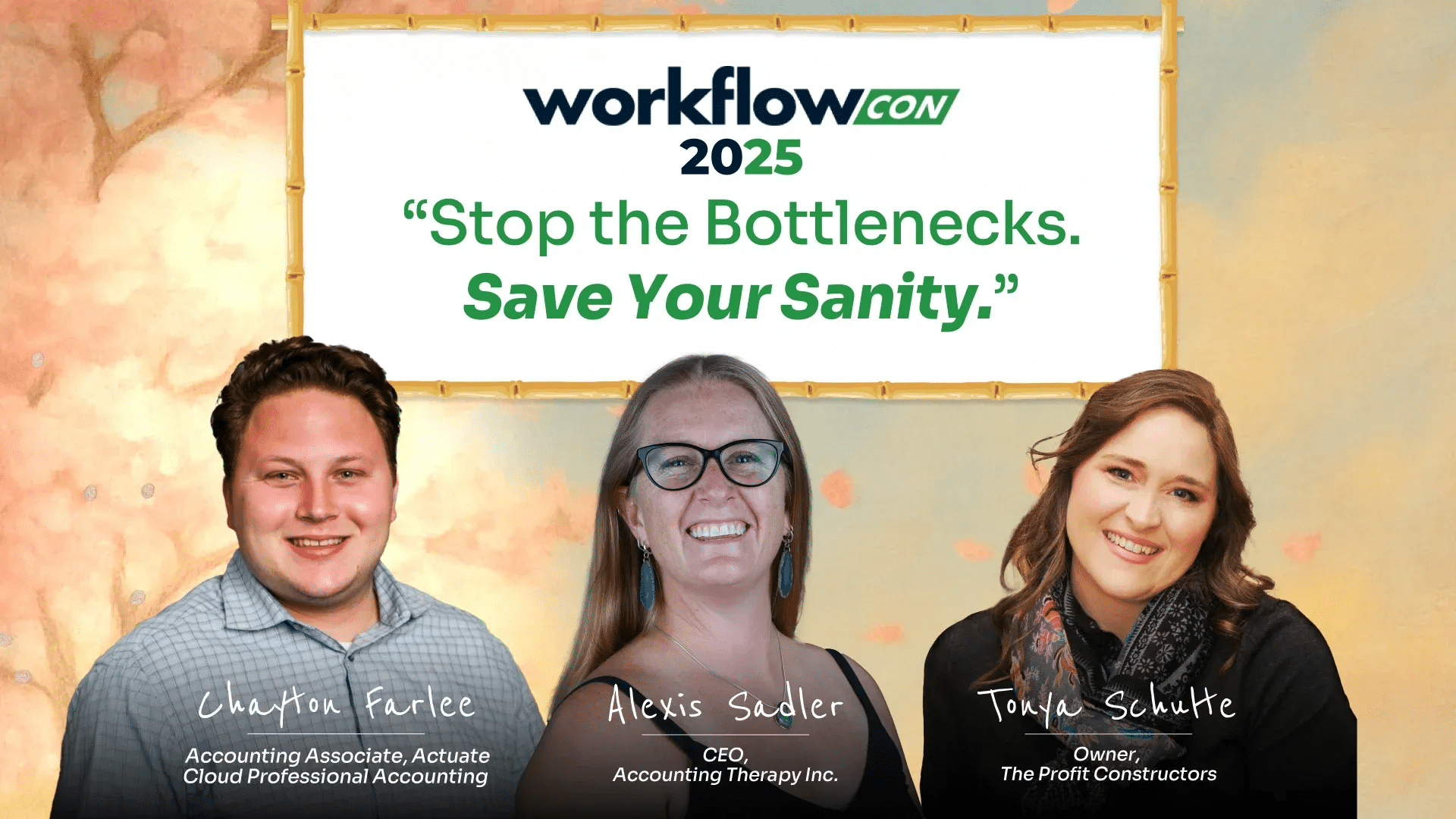
True capacity planning, as explored by panelists Tonya Schulte, Alexis Sadler, and Chayton Farlee at WorkflowCon 2025, involves ensuring that the right work is assigned to the right people at the right times and that the firm’s systems support both team and client needs.
Tonya, for example, has built her firm around flexibility rather than the traditional billable-hour model. She explained that for her, capacity planning is about “giving the team enough room to breathe so if a project takes longer, they’re not getting behind on 10,000 other things.” Alexis agreed, stressing that capacity isn’t just about counting hours, but about ensuring team members have enough time to do accurate, thoughtful work, care for clients, and keep learning.
Chayton’s perspective, as a newer team member, highlighted the risks of stretching teams too thin. Overloading staff leads to stress that trickles down the organization and harms morale. Planning must account for current and future workloads, especially as new business comes in. When capacity is not carefully managed, both errors and burnout become much more likely.
Communication, Transparency, and the Tools That Make Capacity Visible
Whether firms track time and budgets or use project management tools and weekly check-ins, all panelists agreed: regular, honest communication is the foundation of sustainable capacity planning. Alexis’s team relies on time tracking and measurable targets to spot problems early, while Tonya’s firm uses weekly progress reviews and open discussion of challenges. Technology tools like Financial Cents provide visibility into ongoing work, deadlines, and potential bottlenecks
“If someone is over budget, we talk about why. Did the client add extra work? Does the team member need more training?” – Alexis Sadler
Alexis and Tanya both emphasized the need for a culture where team members can speak up whether they’re overwhelmed, running late, or need more training. Weekly check-ins, stress-level scoring, and “contingency time” on the calendar all create space for issues to be addressed before they escalate. As Tonya put it, “We talk about it every single week, because if we don’t, people will lean back into their regular people-pleasing habits and that leads to overcommitment and burnout.”
Chayton, working in a smaller, growing firm, praised the value of both digital tools and regular human check-ins, especially for remote teams. He noted that involving staff in client meetings from the start not only helps set client expectations but also empowers junior team members to see the bigger picture and contribute more fully to client success.
Pricing, Planning, and Preventing Burnout
One of the most powerful connections made during the panel session was between pricing and capacity planning.
“If we don’t plan ahead and bring in enough revenue, we don’t have the ability to plan the team’s capacity properly.” -Tonya Schulte.
Firms that charge too little are forced to overload their teams just to break even, leaving no time for quality work, learning, or contingency. Both Tonya and Alexis stressed the importance of realistic pricing that reflects the time and expertise required to do the job well.
In Tonya’s model, building in contingency time, approximately 20% of the team’s schedule, serves as a buffer for unexpected challenges and new opportunities. This extra space means teams are less likely to panic when surprises arise, and more likely to deliver consistent quality.
Preventing burnout also involves intentionally monitoring workload and stress levels. Alexis’s firm uses a weekly stress score to check in with staff, prompting conversations and support when the score climbs too high. Chayton described how his firm aims for a steady 40-hour week year-round, including busy seasons, making it a sustainable workplace for employees with families and other commitments.
The panel also emphasized that staff who understand the full workflow, not just their own piece, do better work and feel more invested in client outcomes. Giving everyone visibility and ownership helps distribute workload fairly and creates a culture of trust and teamwork.
Metrics, SOPs, and Avoiding Workflow Bottlenecks
Start simple: Track what gets done on time and what doesn’t.
“If you’re not doing any capacity planning yet, start with one simple metric: what’s getting completed on time. Once you see what’s late, you can trace it back and pinpoint the actual problem.” – Alexis Sadler.
Chayton Farlee recommends tracking the amount of time your team spends working without a standard operating procedure (SOP). “We’re pushing through as a firm with time spent working without direction from an SOP. When staff are using SOPs, we’re more productive, and stuff is most likely on time.” If your staff are constantly improvising or asking for guidance, it’s a sign your systems need work.
Additionally, to avoid workflow bottlenecks, ensure you have a clear understanding of roles and delegation. “Bottlenecking always is at the top. If everything has to go up to a reviewer, but the reviewer doesn’t have enough time to review, that’s the bottleneck,” Tonya explained. She described how clarifying the responsibilities of her quality assurance manager and using real-world analogies helped the whole team move faster and avoid repeated slowdowns.
Finally, don’t let deadlines pile up. Instead of making every month-end a mad dash, spread work across the calendar. Alexis shared, “I divide up my customers by week. We have a customer who just gets week one, week two, week three, week four. So the work is really spread out, and our bookkeeping team rarely runs into bottlenecks”
Scheduling work in blocks maintains momentum and prevents overwhelm, so every client gets focused attention without burning out the team.
Wrapping Up
At its core, smarter capacity planning is about building a firm that works for your team, clients, and you.
The panelists made it clear that you don’t need complicated systems to get there. You need honest conversations, thoughtful structure, and the courage to slow down long enough to notice when things aren’t working. When firms price sustainably, spread workloads intentionally,the entire operation becomes calmer and more predictable. And in that calm, teams do their best work, clients feel taken care of, and growth stops feeling chaotic.
Summary:
Kenji Kuramoto, founder of Acuity, shares his journey of scaling an accounting firm from startup chaos to structured clarity. He recounts three critical phases: aggressive growth that led to unsustainable churn and layoffs, misguided scaling attempts that copied tech company processes without considering firm culture, and finally achieving clarity through systems that aligned with their values.
This dynamic WorkflowCon 2025 panel, featuring Tonya Schulte, Alexis Sadler, and Chayton Farlee, delivered powerful insights on capacity planning. They passionately argued that success comes from prioritizing team bandwidth, not just billable hours. The session provided actionable strategies: fostering honest communication, adopting realistic pricing, building a 20% contingency buffer, and using tools to prevent burnout and bottlenecks. A truly essential session for growing firms seeking calm and predictable growth.
WorkflowCon 2026 Waitlist is open!
Now we are already building the next chapter.
The Practice Management Hub

Get Started Today