Building and Maintaining SOPs for Accounting Firms: From Overwhelm to Operational Excellence
Many firm owners have good intentions when it comes to systematizing their business, but most SOP projects stall or collapse. Justine Lackey, leader of the Incubator program, invited attendees to reflect on their own experiences: Who has built an SOP and never looked at it again? The chat filled with responses, exposing a universal struggle. Common reasons include overcomplicating the process, letting client demands crowd out internal projects, or simply losing track of the SOPs you do create. Another obstacle is the classic planning-versus-doing trap, where owners spend hours thinking about what should be documented but never take the first step.
Lackey explained that these barriers are often rooted in the human tendency to avoid change, conserve energy, and procrastinate on non-urgent projects.
The result is a growing gap between the desire for structure and the reality of ongoing chaos. For many, the feeling of being “behind” never goes away, creating a cycle of guilt and frustration that keeps progress out of reach
The Four F Framework: A Holistic Approach to SOP Systems for Professional Firms
To break the cycle, Lackey introduced her Four F Framework: Sales, Systems, Skills, and Service.
This structure helps owners see their business as a network of interlocking processes, not a series of isolated checklists. Sales SOPs capture everything from the first consult to engagement letters and follow-up emails. Systems SOPs document how internal tools, HR processes, and software are managed. Skills SOPs guide the transfer of knowledge, both to new team members and from clients to your firm. Service SOPs encompass all the recurring client deliverables, from monthly reconciliations to year-end reviews.
This holistic framework provides clarity on what actually needs to be documented. Lackey advised starting by mapping out these categories, then documenting processes in the area causing the most pain or bottleneck in your firm. This could be onboarding, recurring client work, or even your own sales calls. “Start by documenting what you’re already doing, and don’t overcomplicate it,” Lackey urged. The goal is progress, not perfection, and the framework ensures you do not overlook critical but less visible workflows.
Turning SOPs Into Actionable Tools: Formats, Examples, and Best Practices
A major stumbling block for many firms is knowing what an SOP should look like in practice. Lackey gave practical examples and formats that firms can use right away. Checklists remain the backbone of most SOPs, used for everything from onboarding to payroll and offboarding. Email templates and scripts provide ready-made communication for common scenarios, reducing mistakes and saving time. Dashboards can be created to track sales performance, client churn, or project status, all with clear step-by-step workflows behind the scenes.
HR SOPs clarify how you recruit, train, and retain employees or contractors, reducing the risk of missed steps or inconsistent experiences. Service delivery SOPs break down each client promise into a series of repeatable actions, such as monthly financial close, quarterly reviews, or annual planning. Lackey encouraged owners to utilize resources like the Financial Cents SOP library to jumpstart their documentation process, noting that leveraging templates or pre-built workflows is smarter than reinventing the wheel from scratch.
She also addressed the need for adaptability. Client-specific SOPs may begin with a standardized template, then layer in custom steps for special tools or processes unique to each client. This balance ensures both consistency and flexibility across your book of business.
How to Build an SOP Library That Employees Will Actually Use
Centralizing your SOPs in a living library is key to their adoption and effectiveness.
Lackey cautioned that the number one reason SOPs gather dust is that no one can find them when needed. A functional SOP library might be a cloud drive folder, a tab in your project management system, or a knowledge base integrated with internal chat tools. What matters most is easy, immediate access for everyone on your team.
Ownership is also essential. Assign each SOP to a team member or leader who is responsible for maintaining and updating it. Make SOP ownership part of onboarding for every new hire, and provide training on how and when to use the documents. Encouraging employees to flag out-of-date steps and contribute improvements builds a culture of continuous learning and engagement. For solo practitioners, this can be as simple as maintaining a running document or checklist on your desktop and reviewing it before each critical client process.
Lackey recommended creating a suggestion box or Slack channel for SOP improvements and regularly celebrating team members who help keep documents up to date. Recognition, even as simple as a public thank you or a gift card, reinforces the value of maintaining high standards and collective accountability.
How to Get Started and Build Momentum With SOPs in Your Accounting Firm
For firm owners feeling behind, overwhelmed, or unsure where to start, Lackey’s advice was simple and direct. Begin with the area causing the most pain, whether that is client onboarding, monthly reporting, or communication handoffs. Document the process as it is today, not as you wish it would be, and improve it one step at a time. If you work solo, connect with a peer for accountability, or join a community to exchange templates and ideas.
Set a goal to complete one full SOP each month, and do not be afraid to assign tasks to team members for documentation and review. Use available resources, such as SOP templates from Financial Cents or community groups, to accelerate progress. As you gain momentum, build a rhythm of regular review, team involvement, and continual improvement.
Lackey reminded everyone that building great SOPs is a journey, not a destination. The goal is not to create the perfect document on the first try, but to establish a habit of refinement and a culture that values clarity and improvement.
Let SOPs Be Your Shortcut to What Matters Most
Embracing SOPs is about freeing yourself from decision fatigue and clutter, so you and your team can focus on creative problem-solving, high-touch client service, and the work you enjoy most. When your systems run in the background, you reclaim time for growth, mentorship, and even rest. In a profession that can easily feel overwhelming, standardized processes are your shortcut to clarity and confidence. Let your SOPs do the heavy lifting, and you will be amazed at what becomes possible.
Summary:
Kenji Kuramoto, founder of Acuity, shares his journey of scaling an accounting firm from startup chaos to structured clarity. He recounts three critical phases: aggressive growth that led to unsustainable churn and layoffs, misguided scaling attempts that copied tech company processes without considering firm culture, and finally achieving clarity through systems that aligned with their values.
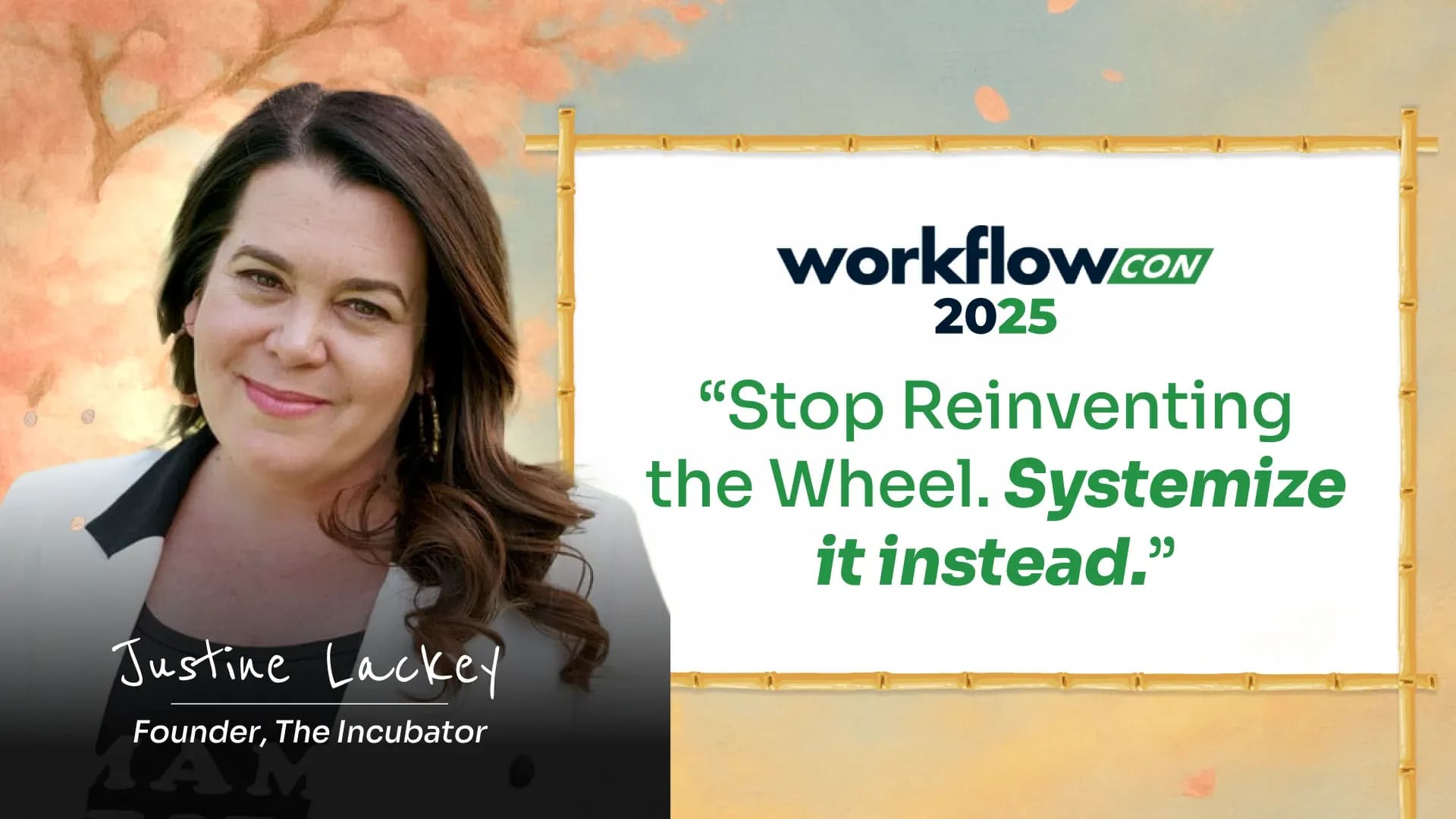
This session, led by Justine Lackey, tackles the universal struggle of building and maintaining SOPs in accounting firms. It introduces the holistic Four F Framework, practical formats like checklists and dashboards, and actionable advice on establishing a culture of continuous SOP refinement and team accountability to achieve operational excellence.
WorkflowCon 2026 Waitlist is open!
Now we are already building the next chapter.
The Practice Management Hub

Get Started Today