Numbers to Narrative: Josh Aharonoff’s Blueprint for Transforming Financial Reporting in the Age of AI
Accounting and bookkeeping have changed more in the last five years than in the previous fifty. For a long time, accountants stood out by being reliable, accurate, and affordable. However, technology is now catching up. Powerful software, such as QuickBooks, and new artificial intelligence tools can handle tasks like bank reconciliations, categorizing expenses, and even creating simple reports, sometimes faster and more cost-effectively than a human can.
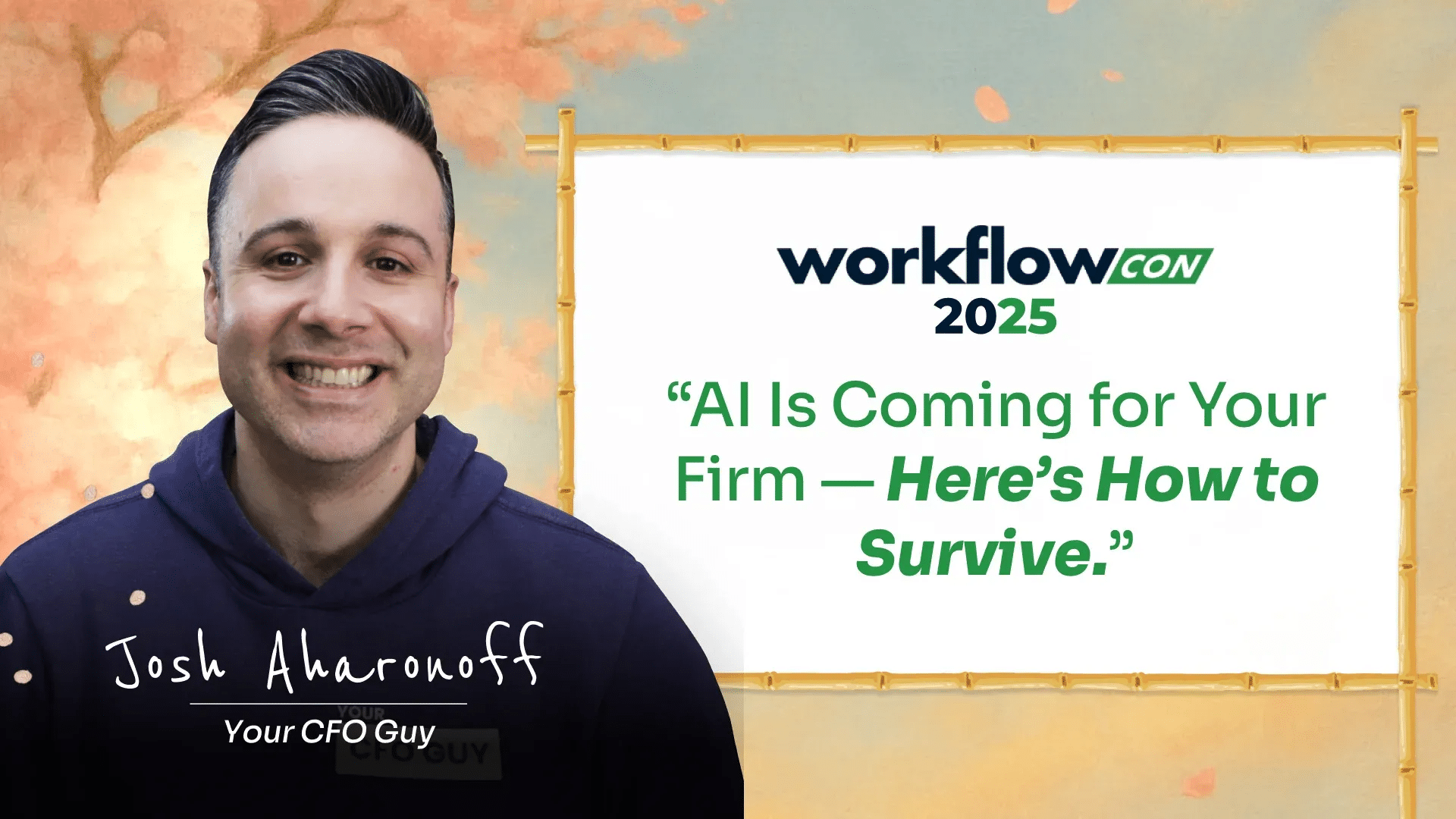
Josh Aharonoff, founder of Mighty Digits and the creator of ModelWiz, addressed this head-on in his WorkflowCon 2025 session. He shared, “What used to make you special is now standard and available for just $20 a month.”
If all an accountant does is send over a balance sheet and profit-and-loss statement, it’s hard to justify their fees. Clients want more; they want to know what the numbers actually mean, and what actions they should take next.
How to Stand Out: Become an Interpreter, Not Just a Calculator
So what should accountants do differently? Josh’s answer is simple but powerful: Become a translator. Your job is to turn complex numbers into simple, actionable stories that help business owners make decisions with confidence.
He recommends focusing on these three core skills:
1. Master the Basics
You need a strong foundation in accounting; how profit and loss, balance sheets, and cash flow statements all connect. This knowledge lets you spot problems and opportunities and explain them in simple terms. Even if you don’t offer advanced services like FP&A (financial planning & analysis), learning how the main statements work together will help you add more value for your clients.
2. Get Comfortable with Data
The next step is being able to handle data from various sources, including accounting software, payroll systems, CRM systems, and more. You should be able to clean, organize, and combine this data so it’s easy to analyze and present. Josh says this is where many firm owners struggle, especially with tools like Excel. However, this skill can be learned, and it’s essential for transforming raw information into actionable insights.
3. Tell the Story
This is where the magic happens. It’s not enough to send numbers; you need to highlight what matters most. Did revenue go up or down? Why? How does this month compare to last month, or to the budget? What should your client do next? When you present the numbers as a clear, simple story, your clients feel supported and informed, not overwhelmed.
You don’t have to be a natural storyteller; you just need to practice pointing out the most important changes and what they mean for the business. Over time, you’ll get better at making the numbers make sense.
Five Reports Every Client Actually Wants
Josh’s approach is to focus on a small set of clear, actionable reports. Instead of bombarding clients with dozens of pages, stick to these five:
1. KPI Dashboard
A simple dashboard with the six to eight most important metrics for the business. For a SaaS company, these metrics could include annual recurring revenue (ARR) or customer churn. For e-commerce, it may be the average order value or customer retention. The key is to choose the numbers that really drive the business.
2. Budget vs. Actuals
This report compares what the business planned to spend or earn versus what actually happened. The numbers will never match perfectly, and that’s okay. The value comes from explaining why there’s a difference, whether it’s a timing issue, unexpected expenses, or something else. This helps the business owner stay on top of their goals and spot issues early.
3. Summarized Financial Statements
Instead of sharing the full profit and loss statement with every single detail, group expenses and revenues into a few big buckets. Show actuals and projections side by side, so clients can see both where they are and where they’re going.
4. Comparison Financials
A simple side-by-side comparison of different periods (like this month vs. last month, or this quarter vs. last quarter). This helps spot trends, unusual spikes, or drops that need attention.
5. Executive Summary
A one-page summary with the main takeaways, visuals, and a short commentary. This is the report most business owners will actually read. It quickly answers the question: “How are we doing, and what should we focus on next?”
Josh says that with these five reports tailored to each client’s needs, you’ll answer 90–95% of the questions business owners care about. You can always customize further if needed, but simplicity and clarity should come first.
Save Time Through Automation
One of the biggest roadblocks to delivering these insights is time. Accountants can spend hours each month just updating reports, chasing down new accounts, and cleaning up data. Josh’s advice is to use automation as much as possible, so you can spend less time on busywork and more time on analysis.
He uses what he calls the SIP Framework:
- Source: Collect raw data (exports from QuickBooks, payroll, CRM, etc.).
- Inputs: Set up your formulas and logic separately from the data, so it’s easy to update each month.
- Presentation: Design your reports and dashboards so they update automatically when you refresh the data.
With the right setup, Josh says preparing client reports can be as simple as pressing “refresh” in Excel.
Make AI Your Assistant, Not Your Replacement
It’s normal to worry about AI taking over accounting. As Josh explained, AI should be seen as a tool to help you, not something to compete with. Use AI to help clean up data, generate basic commentary, or automate repetitive tasks.
Use ChatGPT to document your workflow faster, plus 100 prompts to get you started.
But remember: the real value you provide is in interpretation, judgment, and relationship.
Business owners will always need someone to answer the question, “What does this mean for my business?” That’s your role.
In an industry where software can handle the basics, your job as an accountant is to clear the chaos and make numbers meaningful. Focus on what matters. Use automation and AI to save time, but double down on building relationships and delivering insights.
When you turn numbers into stories, you become an irreplaceable partner.
Summary:
Kenji Kuramoto, founder of Acuity, shares his journey of scaling an accounting firm from startup chaos to structured clarity. He recounts three critical phases: aggressive growth that led to unsustainable churn and layoffs, misguided scaling attempts that copied tech company processes without considering firm culture, and finally achieving clarity through systems that aligned with their values.
At WorkflowCon 2025, Josh Aharonoff from Mighty Digits discusses transforming monthly reporting for accounting firms. He emphasizes the importance of providing strategic insights to adapt to AI disruption.
WorkflowCon 2026 Waitlist is open!
Now we are already building the next chapter.
The Practice Management Hub




Get Started Today