Building a Five-Star Culture for Remote and Hybrid Teams
A truly great culture starts with how people feel, not just with slogans or mission statements. The session’s opening poll invited attendees to reflect on what defines a “five-star” firm, and the answers were unmistakable: clear expectations, psychological safety, genuine recognition, opportunities for growth, and shared values.
Panelists and participants agreed that in a five-star culture, employees “feel valued, trusted, and connected.” These aren’t buzzwords; they are the daily reality that sets apart high-performing teams. For firm owners, this culture shows up as aligned goals, consistent execution, and loyalty that keeps turnover low. For clients, it means reliable, high-touch service from professionals who care. In a remote or hybrid environment, the stakes are higher; employees need to feel not only safe and seen but also connected to the mission, even when they work from different cities or time zones.
Exceptional Culture Is Built Intentionally, Not by Accident
Culture does not happen by chance. The panel made this clear through lived experience. “Culture is intentional. It’s not accidental. The most successful leaders actively shape their team’s environment, hiring for attitude, communicating openly, and designing rituals that reinforce the right values.”
Empowerment, not micromanagement, is the backbone. Helle said her team members, scattered across the globe, succeed because they are trusted to “get the job done, on their own schedule, as long as outcomes and standards are met.”
Greg Scholten and Melissa Miller Furgeson reinforced that trust is everything, especially when you cannot watch over someone’s shoulder.
“It’s all about trusting each other, communicating about what needs to be done and when, and letting people work in the way that fits their lives”. The most effective leaders don’t just grant trust; they work to earn it, making it safe for employees to raise questions and take ownership.
How Remote Onboarding Makes Culture Tangible from the First Day
Onboarding is more than a paperwork checklist; it’s where your firm’s values and norms become real for new team members. The panelists emphasized that onboarding is both the greatest challenge and the best opportunity to set the tone for remote culture. Polls confirmed that building relationships and setting expectations, without in-person shadowing, are particularly difficult.
Melissa Miller Furgeson shared that knowing her hire beforehand made onboarding easy, but for most firms, structure is essential. Jenny Rost described how her team uses Financial Cents to create a seamless onboarding experience: new hires first see the platform as an “external client,” then as an internal user, with every training step, workflow, and meeting embedded in the system.
Natalie Browne also added her firm’s approach: “regular Monday and Friday check-ins, “water cooler” chats, and a flexible schedule with four hours of required overlap each day. “We make it easy for people to connect, even when they’re far apart,” she said. In the absence of physical proximity, every process, meeting, and message must reinforce culture from the start.
The Right Tools and Rituals Keep Remote Teams Aligned
Effective communication is the backbone of every remote or hybrid firm. The panelists made it clear: you can’t rely on scattered emails or ad-hoc meetings. You need a deliberate system that makes information transparent, breaks down silos, and keeps everyone on track.
Katie Helle described her workflow: “Financial Cents is our command center, then we use Google Chat and Loom for asynchronous updates and training videos. With a global team, you have to build the process into your tools so nobody gets stuck waiting for a meeting.” Greg Scholten explained how every client and internal note is logged directly into Financial Cents, making it possible for new hires to “get up to speed quickly” without confusion.
For most firms, regular meetings aren’t enough. Rituals like biweekly team check-ins, shared chats about life outside work, and documented training help remote employees feel connected and ensure accountability for results. The key is consistency and visibility: the more work and communication happen “in the open,” the easier it is for everyone to perform at a high level.
Recognition, Morale, and Community Are Deliberately Crafted
Celebrating wins and supporting each other takes extra work when everyone is remote. The panelists shared how they create a real sense of community despite the distance.
Jenny Rost’s team starts every biweekly meeting by sharing wins, giving shout-outs, and collaborating on new hacks or tools. Dedicated channels for hobbies, recipes, and personal updates make “water cooler” moments possible online.
Katie Helle’s team runs a chat channel called “The Good, the Bad, and the Ugly,” where team members share personal news, from weddings to typhoons, building empathy and understanding across cultures and continents. Flexibility is also a motivator: Helle frequently approves last-minute time off so her team can live their lives. “It’s about the experiences, not just work,” she said.
McClelland’s firm brings fun with quarterly paid Zoom happy hours complete with cocktail kits sent to every employee and even gives the team power to “vote a client off the island” if someone is dragging down morale. These deliberate rituals create loyalty, motivation, and real connection, regardless of location.
Also, in the absence of daily face-to-face contact, leaders must work twice as hard to earn trust and communicate consistently. Greg Scholten summed it up:
“The behaviors that build trust are making sure expectations are clear, the resources are available, and transparency is the norm.”
A culture of trust lets people do their best work, take risks, and ask for help without fear.
Katie Helle noted that remote leaders must be especially intentional: “My team can’t feel my leadership presence day to day, so I have to put more effort and follow-through into it. Keeping my word and being consistent in how I respond builds trust.” Trust, she emphasized, is what holds remote teams together over the long term, allowing flexibility and innovation to thrive
Balancing Flexibility and Accountability Requires Structure and Honesty
Flexibility is a superpower of remote work, but it can easily become chaos if not anchored by clear expectations. Panelists acknowledged that measuring productivity and holding people accountable, without stifling autonomy, remains a major challenge.
Melissa Miller Furgeson admitted, “Measuring productivity, I know I’m terrible at using a timekeeper, and my employees don’t like it either.” Time tracking isn’t a silver bullet, but without any metrics, it’s hard to spot bottlenecks or plan capacity.
Jenny Rost’s team logs hours by project and reviews profitability reports, providing “fairness without micromanagement.” No panelist claimed to have all the answers, but all agreed that structure, shared tools, clear workflows, and regular check-ins create enough transparency to allow freedom without confusion.
Honest conversations are essential, especially when something isn’t working. The best leaders are willing to experiment, admit mistakes, and invite their team into the process of finding what works best for everyone.
Intentionally Built Culture Is the Remote Firm’s Greatest Asset
What sets high-performing remote and hybrid firms apart is a relentless commitment to an intentional, values-driven culture. As this WorkflowCon 2025 roundtable proved, exceptional teams are built by leaders who hire for shared values, onboard with care, codify communication and rituals, and foster real connection, even when everyone is miles apart.
Remote work can unlock loyalty, performance, and well-being, but only when culture is more than an afterthought. In the words of the panel: set expectations clearly, communicate openly, lead with trust, and never stop investing in the team’s sense of purpose and belonging. When leaders get this right, the result is a community that can thrive anywhere.
Summary:
Kenji Kuramoto, founder of Acuity, shares his journey of scaling an accounting firm from startup chaos to structured clarity. He recounts three critical phases: aggressive growth that led to unsustainable churn and layoffs, misguided scaling attempts that copied tech company processes without considering firm culture, and finally achieving clarity through systems that aligned with their values.
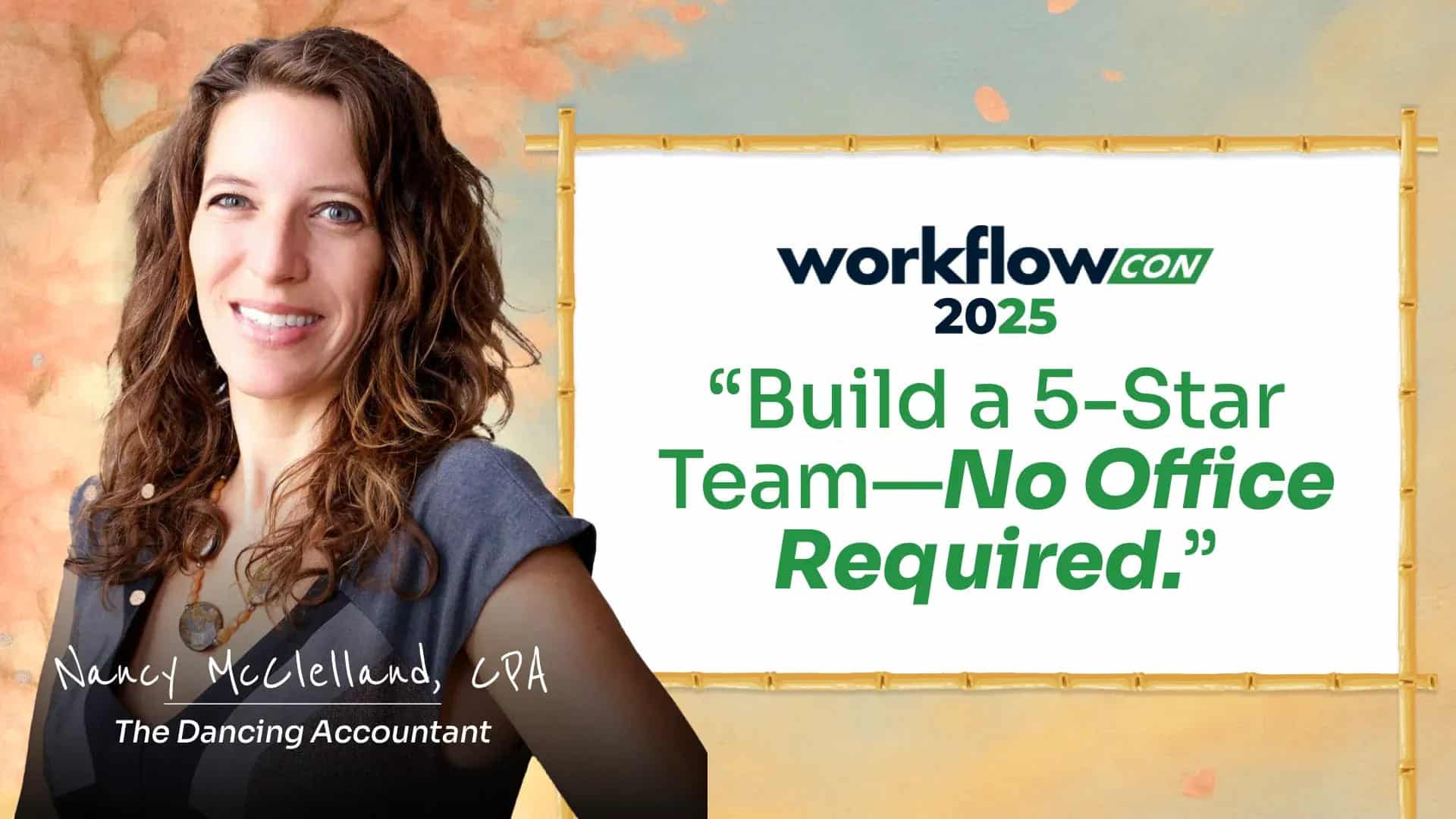
Nancy McClelland’s session, ‘Building a Five-Star Culture,’ offered a deep dive on intentionally crafting trust and connection in remote teams. She highlighted the role of clear expectations, accountability, and deliberate rituals—including their firm’s creative approach to boosting morale and community.
WorkflowCon 2026 Waitlist is open!
Now we are already building the next chapter.
The Practice Management Hub

Get Started Today