What’s Your Firm’s Operating Personality?

Complete the free 1-minute Patchwork Personas assessment to get an instant breakdown of your bookkeeping firm’s biggest tech challenges—and how to fix them.

Patchwork Personas

As small bookkeeping firms grow, something subtle happens.

You add clients. You add team members. You add tools.

And somewhere along the way, your firm’s workflow becomes…patchwork. A stitched-together tangle of disparate tech, processes, and manual workarounds.

Our 2026 Bookkeeping Firm Tech Stack Report—based on survey responses from 261 real firms—revealed a host of distinct patterns in how work gets done when systems are fragmented.

We call them Patchwork Personas.

If you’ve ever thought to yourself, “This works, but it feels harder than it should,” and you can’t quite put your finger on what’s wrong—we’re betting at least one of these will sound familiar.

Patchwork Personas

So… Which One Are You?

Most firms aren’t just one persona, but there’s usually a dominant pattern for the way work actually flows (or doesn’t).
Take the 1-minute assessment to discover your firm’s Patchwork Persona—and learn how other firms like yours have conquered the chaos and streamlined operations for good. 

Loading assessment…

The 7 Patchwork Personas

the spreadsheet stalwart vector

The Spreadsheet Stalwart

“If it’s not in the sheet, it doesn’t exist.”

You rely heavily on spreadsheets to track client status, due dates, handoffs, and notes.

What it feels like:

You can see everything…as long as the sheet is updated.
You trust your formulas—until something inevitably breaks.
You’ve got tabs for everything.
The hidden cost: When spreadsheets become the source of truth, your workflow becomes fragile. One missed update or error and everything unravels.
Why it gets riskier as you grow: More clients, team members, and file versions = more “which sheet is the right one?” moments. Spreadsheets are powerful tools, but they weren’t designed to run a firm.

The Tool Toggler

“New tool in, old tool…still here.”

Every new problem gets a new solution. Before you know it, you’ve got more tools than you can manage: proposal software, client portal, task manager, time tracker.

What it feels like:

You’ve got tools for everything (and they don’t all connect).
You’re not fully using any of them.
You’re paying for overlapping functionality.
The hidden cost: Every subscription you add increases your administrative overhead. And with no single source of truth, mistakes are bound to happen—putting client relationships at risk.
Why it gets riskier as you grow: Onboarding becomes a maze of logins for staff and clients alike, and standardization gets harder with every tool you add to your stack.
image 71
the human router

The Human Router

“Nothing moves unless someone moves it.”

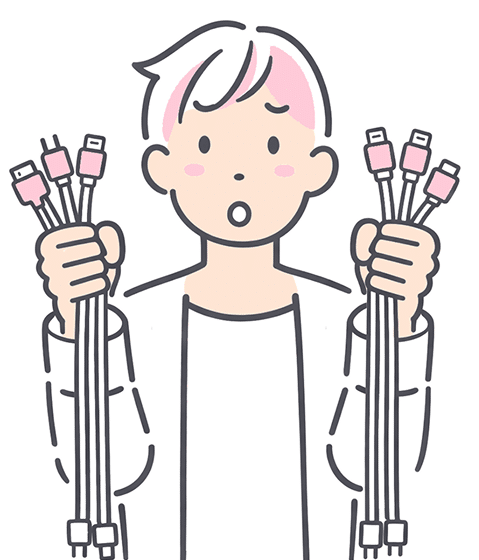
You (or someone on your team) are the connective tissue holding things together: reminding, forwarding, chasing, and double-checking.

What it feels like:

The system works, but only because you make it work.
Everything lives in someone’s head.
You are the layer between disparate tools and processes.
The hidden cost: When tools become too dependent on human oversight, bottlenecks and burnout become real issues. This is especially problematic when team members take vacation or leave the firm altogether.
Why it gets riskier as you grow: Handoffs multiply as you add more people to the mix, making coordination harder. Team members don’t know where to find the information they need, and having a unified view of work becomes nearly impossible. One person can’t scale forever.

The Constant Copy-Paster

“Ctrl+C, Ctrl+V is our integration strategy.”

You’re repeatedly entering the same client info—documents, due dates, notes—across multiple tools to keep everyone on the same page.

What it feels like:

You’re always updating something.
You’re constantly cross-checking systems to make sure they match.
It’s exhausting, and the work doesn’t feel productive.
The hidden cost: Manual data entry is a huge drain on time, and version confusion can slow down work. It’s also way too easy for info to be correct in one place and wrong everywhere else—leading to serious (and expensive!) downstream issues.
Why it gets riskier as you grow: The more clients you have, the more data points you’re manually moving—and the greater your surface area for error. It might work when you’re super small, but it doesn’t scale as you add volume.
the constant copy paster
the month end miracle worker

The Month-End Miracle Worker

“Month-end is chaos, but we always somehow pull through.”

Your month-end close workflow lives in spreadsheets, docs, and email threads. The final week of each month is a sprint. (But yes—you usually pull it off.)

What it feels like:

Month-end is a familiar and dreaded sort of chaos.
You rely heavily on your most experienced team members.
There is an unspoken hope nothing gets missed.
The hidden cost: Everyone’s stress levels spike at the end of the month, leading to mass burnout over time. And with inconsistent quality control, important work can easily fall through the cracks.
Why it gets riskier as you grow: With more clients and staff come more month-end steps, more hand-offs, and more chances for something to slip. Eventually, the monthly hustle won’t be enough to hold it together.

The Message Miner

“The status update is somewhere in a thread.”

If it happened, it’s probably in Slack. Or email. Or a text message. You just have to dig around and find it.

What it feels like:

You always have to stop and search before you act.
Key context and details are scattered across conversations.
There is no centralized system or source of truth.
The hidden cost: When work bleeds into multiple communication streams, it’s nearly impossible to keep a unified record—leading to repeated questions, more difficult onboarding for new hires, and redundant client requests.
Why it gets riskier as you grow: The more clients and team members you add, the more conversations there are to sift through—and the more information gets buried. This slows down work and makes your firm more vulnerable to costly mistakes.
the message miner
vector apology artist

The Apology Artist

“We’re sorry. We’ll fix it.”

You’re good at recovery. Missed request? Handled. Late follow-up? Fixed. Duplicate message? Smoothed over.

What it feels like:

You care about your clients, and you clean up messes fast.
You’re tired of having to constantly save the day.
You know clients won’t be this forgiving forever.
The hidden cost: Even if you do great work, repeated mistakes inevitably erode client trust as well as team morale. No one likes to let others down.
Why it gets riskier as you grow: “Smoothing it over” isn’t a scalable strategy as your client base grows. The more balls you drop, the higher your risk of losing your clients—and your reputation.

Ready to See Where You Land?

Take the 1-minute assessment to discover your dominant Patchwork Persona—and what it means for your firm’s next stage of growth. Or, dive deeper into the data that uncovered these patterns: