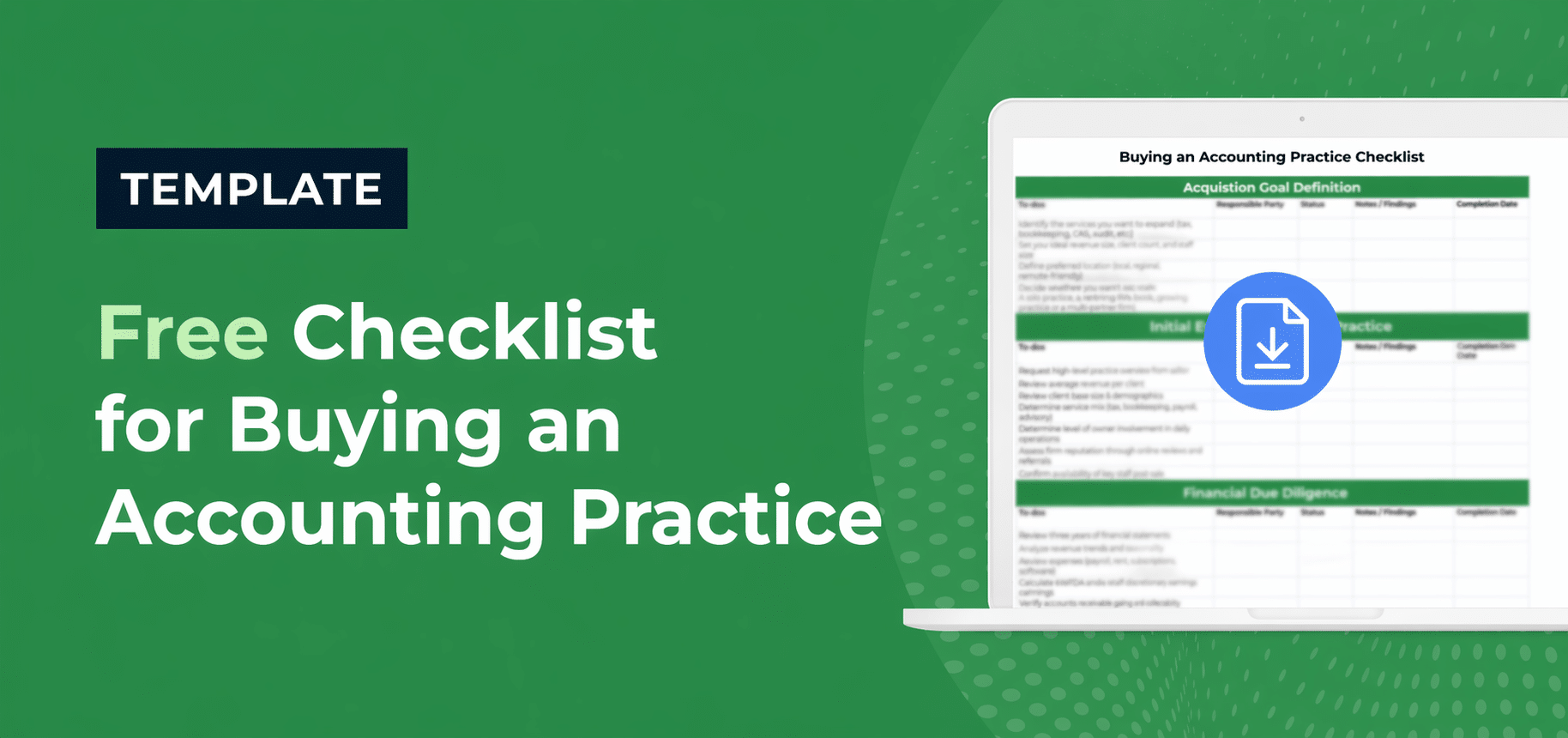
Acquiring an accounting practice is one of the most significant decisions an accounting or bookkeeping professional, or firm owner can make. Without a structured process, it’s easy to overlook red flags in due diligence, mishandle the client transition, or underestimate post-acquisition integration. Our free Buying an Accounting Practice Checklist gives you a step-by-step framework, covering everything from defining your acquisition goals to closing the deal.
What’s Included in This Buying an Accounting Practice Checklist
The checklist walks you through 12 critical phases of the acquisition process:
- Acquisition Goal Definition: Clarify your target revenue size, service mix, location, and ideal practice type before you start evaluating firms.
- Initial Practice Evaluation: Review the high-level overview, client base demographics, profitability margins, and owner involvement level.
- Financial Due Diligence: Analyze three years of financials, EBITDA, accounts receivable aging, client concentration risk, and billing rates.
- Operational Due Diligence: Assess accounting workflows, staff structure, technology stack, cybersecurity protocols, and office infrastructure.
- Client Review: Evaluate client retention rates, service agreements, revenue stability, and opportunities for upselling.
- Legal & Compliance Review: Verify licensing, check for liabilities or lawsuits, and review insurance policies and e-file standing.
- Valuation & Deal Structure: Compare valuation methods, deal structure options (asset vs. stock purchase), and payment models including earn-outs.
- Negotiation & Letter of Intent (LOI): Finalize price, define transition expectations, and agree on non-compete terms.
- Final Due Diligence: Audit client files, validate reported revenue, and confirm all liabilities are disclosed.
- Transition Planning: Build a client communication plan, develop staff retention strategies, and migrate data securely.
- Closing the Deal: Execute the purchase agreement, transfer funds, and complete legal registrations.
- Post-Acquisition Integration: Monitor revenue retention, address workflow inefficiencies, and track financial performance vs. projections.
Want a deeper walkthrough of the acquisition process? Buying an Accounting Practice: The Complete Checklist and Guide
Why You Need a Structured Acquisition Checklist
Most practice acquisitions fail not because of bad deals, but because of poor preparation. Buyers who skip formal due diligence often inherit hidden liabilities, lose key clients during the transition period, or overpay based on inflated revenue projections. A structured checklist keeps your evaluation objective and ensures you’re comparing practices on the same criteria every time.
Staff and client retention are among the biggest risks in any acquisition. Without a clear transition plan, top employees leave and long-standing clients follow. This checklist includes dedicated phases for both, so you can identify key personnel early and build a communication strategy before the deal closes.
Post-acquisition integration is where many buyers underestimate the effort required. Merging two sets of workflows, practice management systems, client expectations, and team cultures takes months of active management. The final section of this checklist gives you a concrete set of tasks to track during those critical first 90 days.
How to Use This Buying an Accounting Practice Checklist
- Download the template: Save it to Google Sheets or Excel so your whole team can collaborate in real time.
- Start at Goal Definition: Complete the first phase before approaching any practice for sale. Your criteria should be locked in before you start evaluating.
- Work through each phase in order: The checklist is sequenced to mirror the actual acquisition process. Don’t skip ahead to valuation before completing financial and operational due diligence.
- Assign owners for each task: Use the Responsible Party column to delegate items to your attorney, accountant, or acquisition advisor.
- Use the Notes column to document findings: Every red flag or open question should be captured here for later review before signing the LOI.
You may be interested in: