Company culture. It sounds like a buzzword, an abstract phrase consultants like to throw around. But the longer you run and manage an accounting firm, the more you realize the people part is the business. And culture decides whether your people stay or go.
Case in point, toxic culture was the single biggest predictor of employee turnover during the Great Resignation, MIT Sloan Management Review found, far outweighing pay. In their analysis, a toxic culture was 10.4 times more powerful than compensation at predicting whether employees leave.
Culture is also more than free snacks or just being nice to your team. It’s the real, day-to-day experience of working at your firm, and it shapes how your people feel about being there.
This guide covers what accounting firm culture is, why many firms’ cultures fail, and how to build one that attracts and retains good people.
TL;DR
- Accounting firm culture is the shared values and behaviors that dictate how your firm operates, serves clients, and treats employees. It starts from the founder and trickles down to the whole team.
- A positive accounting firm culture lowers turnover, attracts talent, keeps clients happy, and supports growth, while a toxic one can cause your best people and clients to leave.
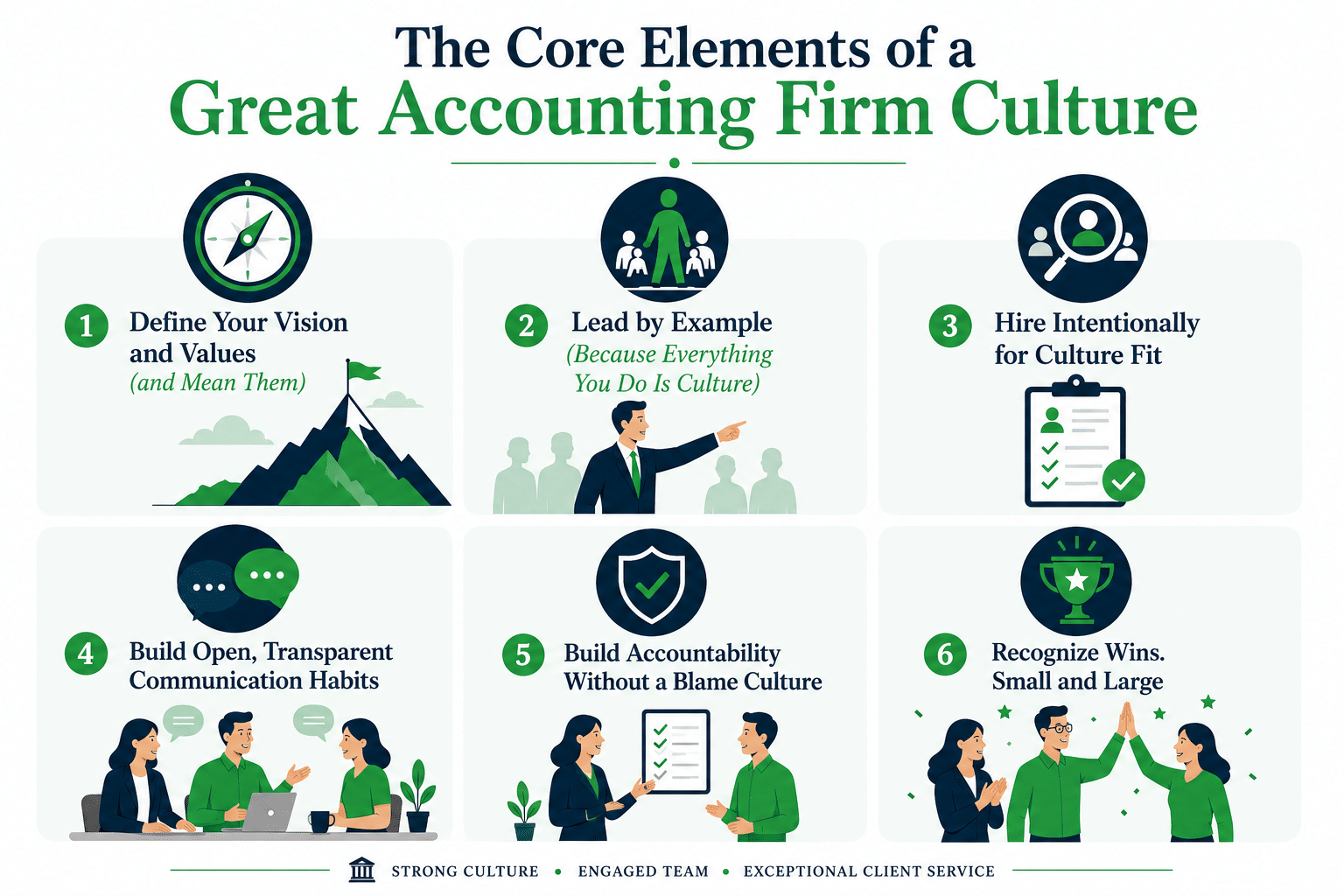
- The six core elements of a great culture are clear vision and values, leading by example, hiring for culture fit, open communication, accountability without blame, and recognizing wins.
- Remote and hybrid firms have to build culture on purpose, through structured onboarding, virtual rituals, and shared visibility into the work.
- Your workflows are part of your culture, since clear systems build trust and chaotic ones create stress, which affects the working experience.
What is Accounting Firm Culture?
In their 1982 book Corporate Cultures, Terrence Deal and Allan Kennedy defined company culture as “the way things get done around here.” In other words, it’s the shared values and habits that govern how your firm runs even in your absence. It’s in how your team handles mistakes, makes decisions, rewards good work, and treats one another under pressure.
Whether you designed it on purpose or not, your firm has a culture. The only question is whether it’s working for you or if you’d like to change it.
The Churn-and-Burn Problem: Why the Default Accounting Culture Fails Small Firms
Many firms model their culture on the Big 4 and the larger firms, either because the owner previously worked there and carried those habits into their own firm, or because it’s the only way they’ve ever seen an accounting firm run. But that default culture is often a toxic one. It runs on a churn-and-burn model: hire a large class of graduates, make them work long and grueling hours, and when many quit, hire the next set of graduates. The cycle repeats.
Large firms can afford to work this way because they recruit new graduates in volume each year and can absorb the cost of the losses. But a small or mid-sized firm can’t. Gallup estimates that replacing one employee costs one-half to twice their annual salary. And that is only the part you can measure. The bigger loss is everything they take with them when they go, like the client relationships and institutional knowledge. That can lower the quality of your work and, in some cases, cost you clients.
As a smaller firm, you can and should do things differently. Because of your size, you’re in a strong position to build a healthier culture, one where people feel respected and valued.
Why Firm Culture Matters More Than You Might Think
There are several benefits to having a strong firm culture, including:
Talent Attraction
Word spreads fast in the profession, and if your firm is known for treating people well, you’ll have a real advantage in hiring. You’re more likely to attract experienced candidates who would otherwise cost far more, and you can win someone choosing between two offers even when you’re not the highest bidder. For an accountant looking to escape a toxic culture elsewhere, a healthier environment can matter more than the salary.
Retention and Cost Savings
People stay where they feel respected and supported, and every person who stays is one you don’t have to replace. That saves the replacement cost we covered earlier and protects the client knowledge and firm experience that take years to rebuild.
Client Retention
A firm with a healthy culture runs on a defined, cohesive process, which lets it deliver consistent service every time. The quality doesn’t change depending on who’s handling the account. That continuity is something clients value, and it’s a big reason they’ll stay year after year.
Scaling Capacity
A firm can’t scale without trust and effective delegation. If every decision and every project has to go through you, growth is capped at how much you can handle. With clear expectations, accountability, and a solid accounting workflow, you can hand off work knowing it will be done well, which lets you take on more clients and grow.
Referrals
A strong culture creates two kinds of referrals. Satisfied employees refer talented former colleagues, so you get your pick of strong candidates who come already recommended. Satisfied clients refer other business owners, who tend to arrive already convinced and ready to work with you. The result is a steady source of both new talent and new business, all because you built a place where people are happy to work.
The Core Elements of a Great Accounting Firm Culture
A great accounting firm workplace culture comes down to these core elements:
- Define Your Vision and Values (and Mean Them)
- Lead by Example (Because Everything You Do Is Culture)
- Hire Intentionally for Culture Fit
- Build Open, Transparent Communication Habits Build
- Accountability Without a Blame Culture
- Recognize Wins. Small and Large
Define Your Vision and Values (and Mean Them)
Culture starts with your values. They’re the beliefs that drive the decisions your team makes. So state clearly what your firm’s values are (3-5 is okay) and what your vision is. But don’t let your values become generic lines you write into a PDF and forget a week later. Make each value actionable, something people can live by, framed as a habit or expectation.
For instance, if work-life balance is one of your firm’s values, don’t stop at the phrase. Spell out the habits behind it, like no emails after 6 pm, mandatory use of PTO each year, or comp time after a busy season.
Also, involve your team in creating the values and the habits behind them, because people are far more likely to buy into changes and practices they helped shape.
Lead by Example (Because Everything You Do Is Culture)
As the founder, you’re the first example of your firm’s culture. Everything you do and say shows the true culture of the firm, no matter what you’ve written down. For instance, if you say you value work-life balance but email your team at 11 pm, you’ve communicated that you don’t believe it, and that working late is the real expectation.
So watch your own behavior closely and lead by example, but not in a performative way. Model the behaviors you want to see and stay consistent, and your team will do the same. In other words, show, not just tell.
Hire Intentionally for Culture Fit
Any new hire will either strengthen or weaken your culture, so don’t recruit and hire top accounting talent only for technical skills, that’s just the baseline. Hire for culture fit too, which includes the candidate’s values, communication style, and approach to feedback. As Jim Collins explains in Good to Great, the key to building a great organization is to first get the right people on the bus, and the wrong people off, before you figure out where to drive it. Not the other way around.
You can gauge this in the interview with behavioral questions, like how they handled a mistake or responded to feedback they disagreed with, and by asking for examples of your values in action, such as a time they helped a struggling teammate. Nancy McClelland, The Dancing Accountant, suggests a short freelance trial first, so both sides can confirm it’s a match before committing.
And if you’re unsure about someone, don’t hire them. It’s better to keep a role open than fill it with the wrong person, because a bad hire harms your culture and takes far longer to undo than the search would have.
Build Open, Transparent Communication Habits
Culture can’t thrive without open communication. That means having real, sometimes uncomfortable conversations about workload, mistakes, and progress.
Start with regular check-ins that ask how people are doing, not just where their projects stand. These conversations can reveal that someone is overworked or frustrated, so you can help before it turns into a resignation. Back them up with safe feedback channels, like an anonymous survey where people can share how they really feel.
Be transparent about the firm’s performance, too. Sharing the real numbers on revenue, client growth, and capacity tells your team you see them as partners, not just employees. Angela Main Roberts, owner of Main Accounting Services, does this with her whole team:
“Every November, we do a state-of-the-business address where I share the financials on net income, gross income, how many clients we have, and so on. This helps your team to understand the direction of the firm and where they fit in,” Angela says.
You may be interested in:
Accounting Communication: Best Practices to Improve Client and Team Collaboration
Build Accountability Without a Blame Culture
Accountability is not micromanagement. In Brandoll Hall, CPA words,
In a strong culture, everyone owns their work and its outcomes, and when something goes wrong, people fix their part instead of looking for someone to blame. You build that by making ownership clear. Tools like Financial Cents, an accounting firm management software, lets you assign every task an owner and a due date, so people can see what they’re responsible for without constant check-ins from you.
For more, see our article on accounting team management best practices.
Recognize Wins. Small and Large
It’s common for firms to under-celebrate wins while highlighting and addressing mistakes right away. But that asymmetry creates a culture where people feel underappreciated, noticed only when they do something wrong.
So recognize and celebrate every win, big or small. This doesn’t mean popping champagne or buying everyone dinner every time. It can be as small as shouting out team members in meetings, creating a dedicated Slack channel where you praise people and highlight wins, and sending personal notes to those who deserve them. And do this publicly, not just privately. It signals to the whole team that the person is valued, and it makes them feel special.
Building Culture in a Remote or Hybrid Accounting Firm
Building culture in an office is different from that in a remote or hybrid firm. In the former, some of it happens organically. People chat in the hallway, grab lunch together, and pick up how the firm works just by being around each other. In the latter, you don’t have that built-in advantage, so you have to design culture deliberately through what you do over Slack, email, and video calls.
Start with intentional onboarding for new hires to build a collaborative remote work culture. The first 90 days are when a new hire absorbs the most about how your firm works, so give them structured onboarding that spells out your values, habits, and vision, and lets them settle into the culture. You can use Financial Cents to support this by keeping resources and standard operating procedures in one central place that new hires can access. Lori Hawkins, CEO of L&L Bookkeeping, found this useful for onboarding her team.
“Financial Cents has training videos that we can choose for new hires to watch, so that’s been very helpful. I had my first new person go through all of that, and I could see their progress. So that was really great. ” Lori says.
Then build in virtual rituals that create connection, like weekly team video calls to catch up, one-on-one virtual coffees, a shared wins channel, casual channels for things like pets or movies, and the occasional virtual team game.
Finally, use tools that support a remote culture, like Zoom, Slack, and Financial Cents for shared workflow dashboards so everyone can see each other’s work, which builds trust. When Fiscally Professional Corporation started scaling, they struggled to track responsibilities and projects until they adopted Financial Cents:
How Your Workflow Systems Reinforce (or Undermine) Your Culture
Your culture is more than team happy hours or get-togethers. It’s also about the daily experience of doing the work, which your accounting workflow systems shape.
If you have a chaotic workflow, where people can’t see what they own, who’s responsible, or what’s due, you create a chaotic, anxious culture. Workflow inefficiency is the top challenge 55.5% of firms face, according to the 2025 State of Accounting Workflow & Automation by Financial Cents. And it impacts firm owners’ work-life balance, with many taking work home, constantly thinking about work during social outings, and experiencing increased stress and anxiety. All of that feeds straight into your culture.
But if you have clear systems, with documented processes and a centralized accounting workflow management, you create a culture that values trust and respects your team’s time. As Kellie Parks says:
The Tools That Support a Healthy Accounting Firm Culture
Some tools make a healthy accounting firm workplace culture easier to attain and maintain.
Video communication tools like Zoom keep your team connected across distance and time zones.
Collaboration platforms like Slack and Microsoft Teams give you an easy way to recognize wins in front of everyone.
Tools like Notion or Loom allow you to document your processes so team members can easily access them whenever they want. M Katie Helle, CPA, does this. After realizing she was the bottleneck for many tasks, she started recording short Loom process videos to unblock her team.
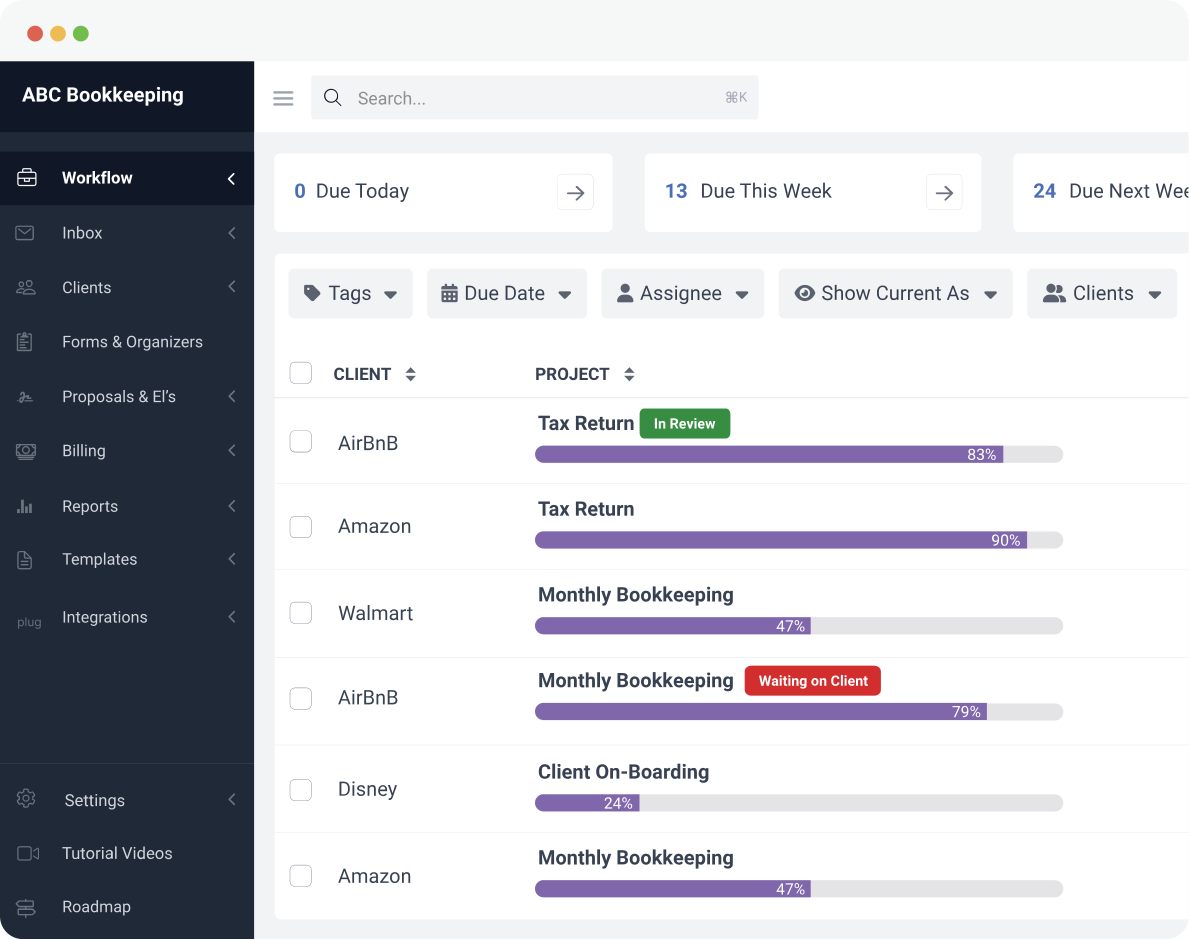
And accounting workflow software like Financial Cents automates the manual work that takes up so much of the day, freeing your team to focus on real client work. It supports accountability without micromanaging: every task has an owner and a due date, and the dashboard shows what’s in progress, so nothing’s hidden.
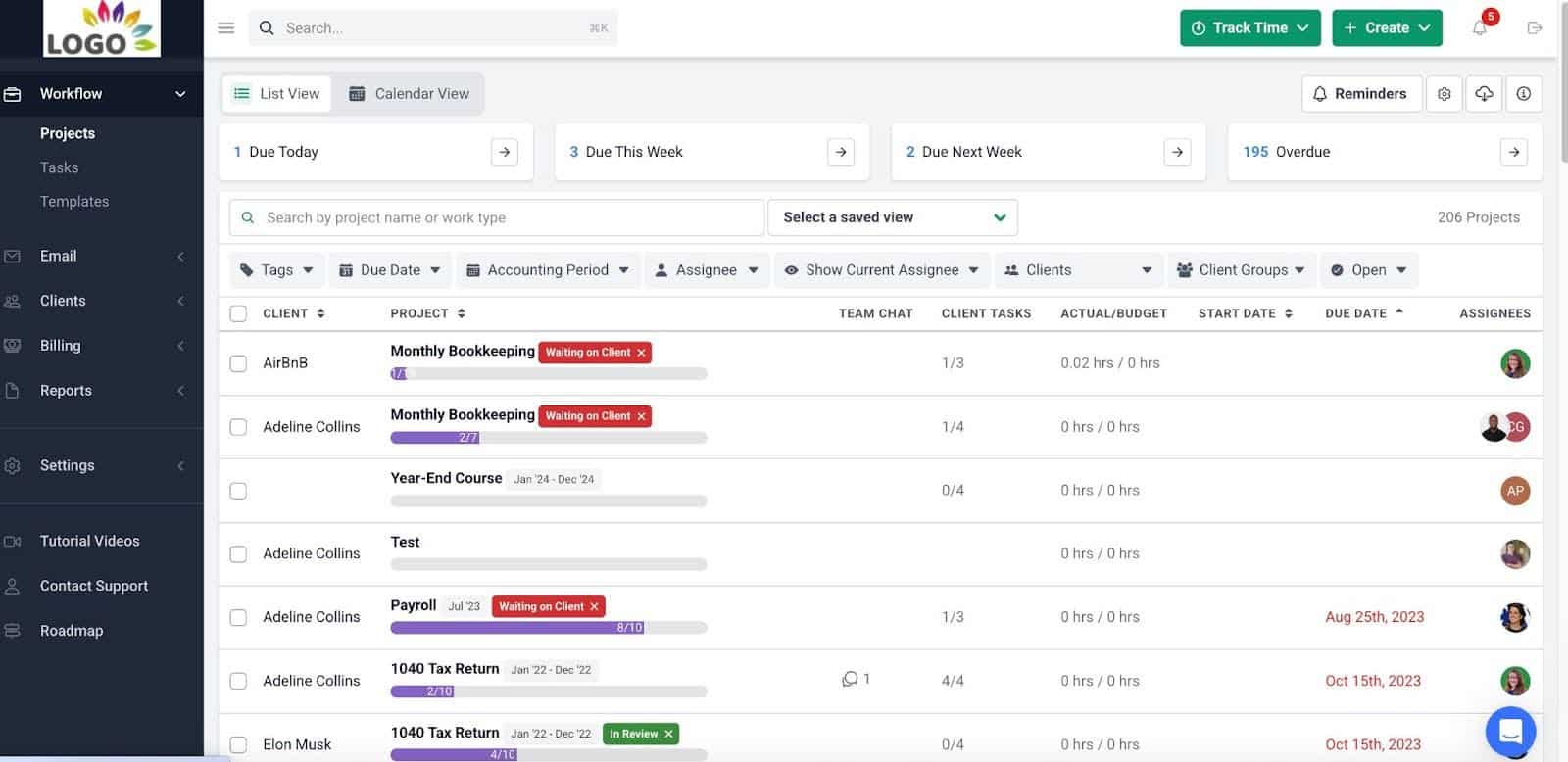
Its capacity management for accounting firms feature shows how much work each person is carrying, so you can spot who’s overworked and redistribute tasks before anyone burns out. And its built-in team collaboration ability lets your team chat, share files, and post updates right where the work happens, which reduces miscommunication.
As Kellie Parks says,
Book a Free Demo of Financial Cents
Shape Your Culture Day by Day
Building a great firm culture is the sum of what you do every day: who you hire, how you communicate, how you respond when someone makes a mistake, and the tools you use. It requires consistency in those habits, especially from you as the owner, so they spread by example and stick. Your workflows and operations matter too. The smoother your operations run, the better the experience of working at your firm, and the happier your people are.
And as a smaller firm, you have an advantage. You can move quickly and offer the autonomy and flexibility that larger firms can’t match. For accountants tired of the toxic culture and micromanaging elsewhere, that’s a real draw, so use it.
FAQs
Share this article: