The accounting profession has never felt more competitive, and it’s not simply because there are more firms in the mix. Competition is tightening, pricing pressure keeps edging in, and staffing shortages continue to stretch teams thin. Clients now expect clarity, speed, and meaningful insight, not just tidy reports. Add the steady stream of new technology changing how work gets done, and it’s clear the ground is shifting for firms of every size.
Private equity adds another layer of complexity. Investor interest in accounting firms continues to rise, with reports showing sustained growth in PE-backed acquisitions across the profession, a sign the market sees long-term opportunity in firms that operate efficiently and scale well.
Growth in 2027 takes more than new clients. It takes smarter operations, modern practice management software, and systems that can keep up. This guide outlines 15 practical accounting firm growth strategies to help you grow with confidence and profitability.
TL;DR
- Why growth needs a new approach: rising demand for advisory, automation and AI reshaping workflows, more remote teams, and clients who expect faster turnaround and digital communication.
- Client and market strategies: niche down, expand into advisory, improve onboarding with technology, build a referral system, optimize pricing, and strengthen your online presence and website.
- Operations strategies: standardize processes, automate recurring and admin work, and use AI tools intentionally.
- Reach strategies: content marketing, strategic partnerships, webinars and events, and mergers or acquisitions.
- People strategy: invest in talent development and retention.
- How to start: pick a few strategies that fit your priorities, implement them, and build from there, with practice management software to keep growth organized.
Why Does Accounting Firm Growth Require a New Approach?
Growth used to mean adding more clients and hiring a few extra hands. Today, rising demand for advisory, automation and AI, remote teams, and higher client expectations mean growth depends on systems as much as sales.
- Increasing demand for advisory services: Clients no longer want you only for year-end cleanups. They want guidance, clarity, and someone who can translate financial data into decisions. Expanding advisory capabilities meets a growing expectation; it isn’t a luxury add-on.
- Automation and AI are reshaping workflows: Repetitive tasks are disappearing into the background thanks to cloud-native software such as Financial Cents. That frees capacity, but it also forces firms to rethink how people, processes, and technology fit together: growth now depends on workflows that run even when no one is pushing buttons.
- Remote teams are more common: Talent shortages have made geography optional in hiring. Remote and hybrid teams widen your talent pool, but they need better systems for collaboration, oversight, and accountability.
- Clients expect faster turnaround, transparency, and digital communication: Patience isn’t part of the standard engagement letter anymore. Clients want status updates, clear communication, and quick delivery, which takes streamlined processes and tools that cut back-and-forth.
- Firms must adapt or risk falling behind: The firms thriving today aren’t simply working harder. They’re working smarter, modernizing operations, investing in systems that scale, and managing their firms better. Standing still in 2027 isn’t neutral; it’s falling behind.
15 Growth Strategies for Accounting Firms
The best accounting firm growth strategies combine specialization, advisory services, a better client experience, smarter pricing and marketing, standardized and automated operations, and investment in people and partnerships. Here are 15 to choose from.
1. Niche down to stand out
The fastest way to cut through the competition is to stop serving everyone. Specializing in an industry or service area helps you price confidently, market more effectively, and become the obvious choice for clients who want someone who already understands their world. As Jamie Finfrock advises in How to Identify and Dominate Your Niche, find what you love and lean into it, then build your tech stack and expertise around the problems you want to solve.
2. Expand into advisory services
Compliance may keep the lights on, but accounting advisory strengthens your client relationships and your margins. Businesses want insights, not just reports. Brandon Hall shared his playbook for building a 7-figure firm through advisory services by leaning into strategic guidance. Offering cash flow forecasting, budgeting support, and long-term planning positions your firm as a true partner in your clients’ success, not a once-a-year necessity.
3. Enhance client onboarding and experience with technology
First impressions set the tone for the entire engagement. A smooth onboarding process supported by automation and clear communication reduces friction and increases client confidence. From client onboarding checklists and onboarding questionnaires to an accounting proposal tool and client portal, modernizing the experience makes your firm feel organized, responsive, and easy to work with.
4. Develop a strong referral system
Referrals are often your highest-converting leads, yet many firms rely on hope rather than a plan. Build a structured system that includes partner networks, satisfied clients, and complementary service providers. Consistency turns referrals from a pleasant surprise into a predictable acquisition channel.
5. Optimize your pricing model
Growth often stalls not because firms lack clients, but because their pricing no longer reflects the value they deliver. Whether you’re exploring value-based pricing, building tiered packages, or tightening your scope, a modern pricing model protects your margins and gives clients a clearer sense of what they’re paying for.
6. Improve your online presence
Clients Google before they call, so your digital footprint matters. A clear message, relevant content, and active social profiles help prospects understand who you serve and why you’re a good fit before you ever speak. Add SEO strategies for accountants, and your online presence becomes more than a digital storefront: a steady source of qualified clients who can actually find you.
7. Standardize processes across the firm
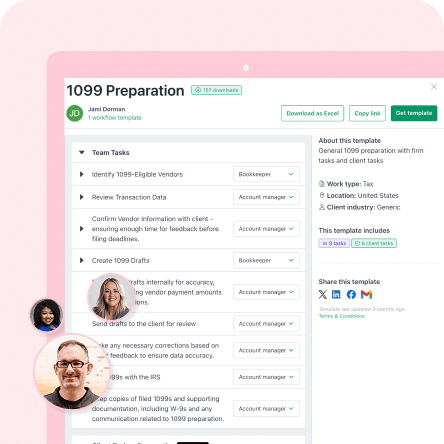
Inconsistent workflows create bottlenecks, confusion, and eventually burnout. Standardizing tasks, workflow templates, and review steps gives your team a predictable way to work, which reduces errors and keeps projects moving. It also makes onboarding new hires far easier, because they step into clear processes instead of piecing things together. As your firm grows or experiences turnover, that consistency becomes one of your biggest operational advantages.
8. Invest in a high-converting website
Your website shouldn’t be a digital brochure. It should lead visitors toward taking action, whether that’s booking a consultation or downloading a resource. From the first interaction, it needs to show prospects that you understand their challenges and are ready to help. Clear messaging, simple navigation, strong social proof, and a visible call to action turn your website into a reliable source of new business instead of something clients skim and forget.
9. Automate recurring work and administrative tasks
Many firms still lose hours each week to tasks software could handle. Automating reminders, client tasks, data collection, and recurring workflows frees your team for higher-value work. The more your systems handle, the more capacity your firm has to grow.
10. Launch a targeted content marketing strategy
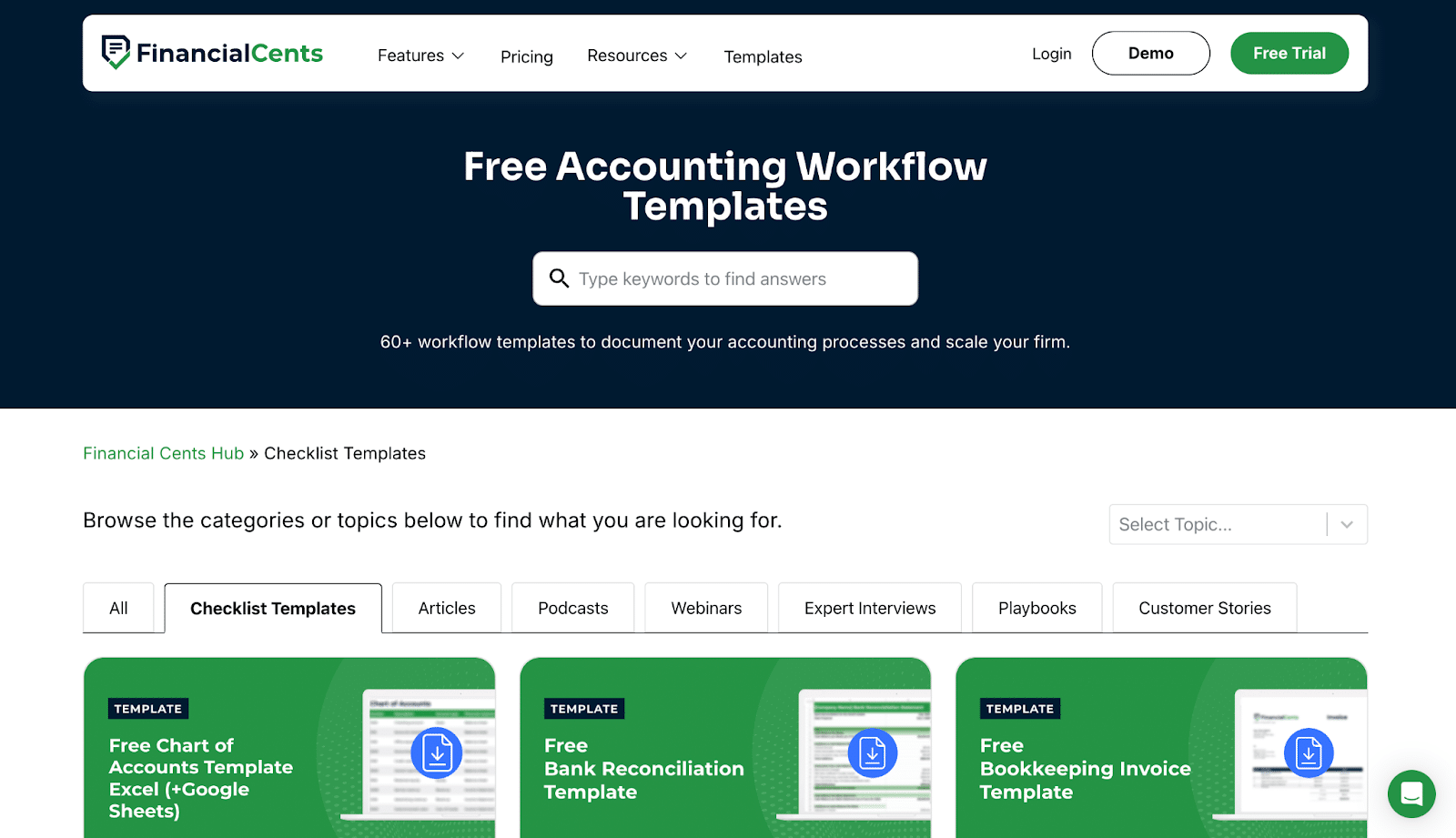
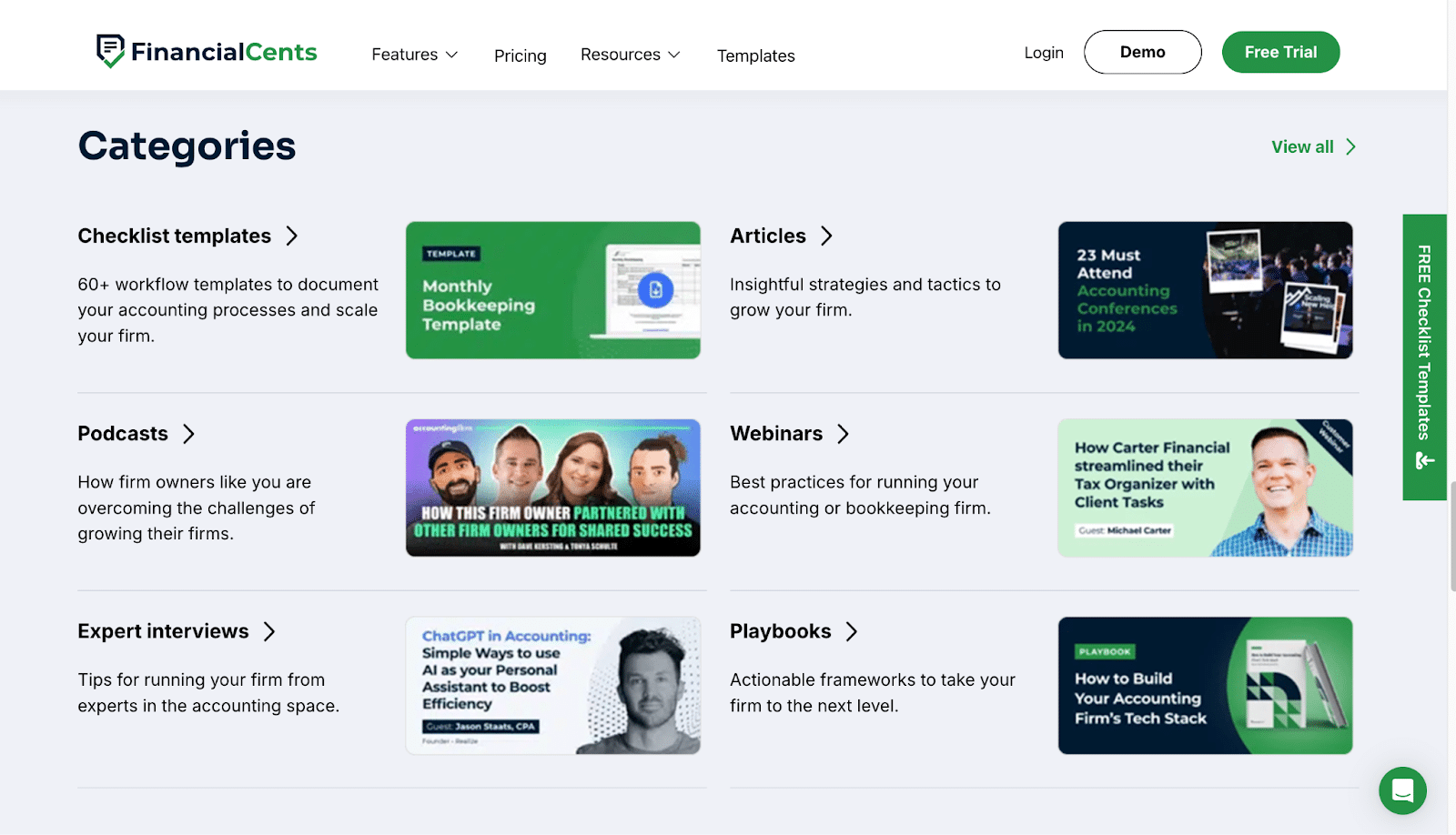
Prospective clients want proof that you understand their challenges, and helpful, niche-specific content builds trust long before a sales call: practical guides, industry insights, or short educational videos. Our own website is an example, with a library of free accounting tools, accounting articles, playbooks, community-driven workflow templates, webinars, videos, and industry reports, each designed to offer actionable insight for the challenges accountants face today.
11. Invest in talent development and retention
Your people are your firm’s growth engine. Ongoing training, clear career paths, and supportive leadership keep your team engaged and performing at a higher level. Firms that invest in development don’t just keep their best people; they attract talent that wants to grow with them.
12. Leverage automation and AI tools
Automation and AI aren’t replacing firms; they’re empowering them. From document collection to forecasting, smart tools reduce manual work and give your team back the time it needs for advisory. Used intentionally, AI in accounting becomes a capacity multiplier that supports smarter, faster decisions.
13. Build strategic partnerships
Partnerships with law firms, financial advisors, SaaS providers, or industry associations expand your reach and strengthen your referral pipeline. The right partner introduces you to new clients and opportunities while positioning your firm as part of a broader ecosystem of trusted experts.
14. Acquire or merge with smaller firms
Mergers and acquisitions aren’t just for the biggest players anymore. Firms of all sizes use M&A to expand capacity, enter new markets, and strengthen their bench. After acquiring another firm, Amanda Birch found the long-term client relationships spoke for themselves.
Executed thoughtfully, M&A can accelerate growth far faster than organic efforts alone and give your firm a foundation of loyal clients from day one. Our complete guide to buying an accounting practice includes a helpful checklist.
15. Host webinars, workshops, and community events
Online or in-person events let you showcase expertise, answer real client questions, and build trust at scale. They often become a steady source of leads, because attendees already see your firm as helpful and knowledgeable before the first consultation.
As your firm grows through niching, advisory, stronger marketing, or acquisitions, the next challenge is managing that growth without overwhelming your team. That’s where the right systems make all the difference.
How Does Practice Management Software Support Firm Growth?
Practice management software for accounting firms supports growth by bringing order, clarity, and consistency to the work that keeps everything running: automated workflows, shared collaboration, capacity visibility, and profitability reporting.
Workflow automation keeps you ahead of deadlines and recurring tasks, so your team isn’t relying on memory or scattered notes. Collaboration tools give everyone a shared place to communicate and move work forward, which matters more as remote and hybrid teams become the norm. Capacity management shows who has room for more and who’s stretched thin, so you can make smarter staffing and scheduling decisions.
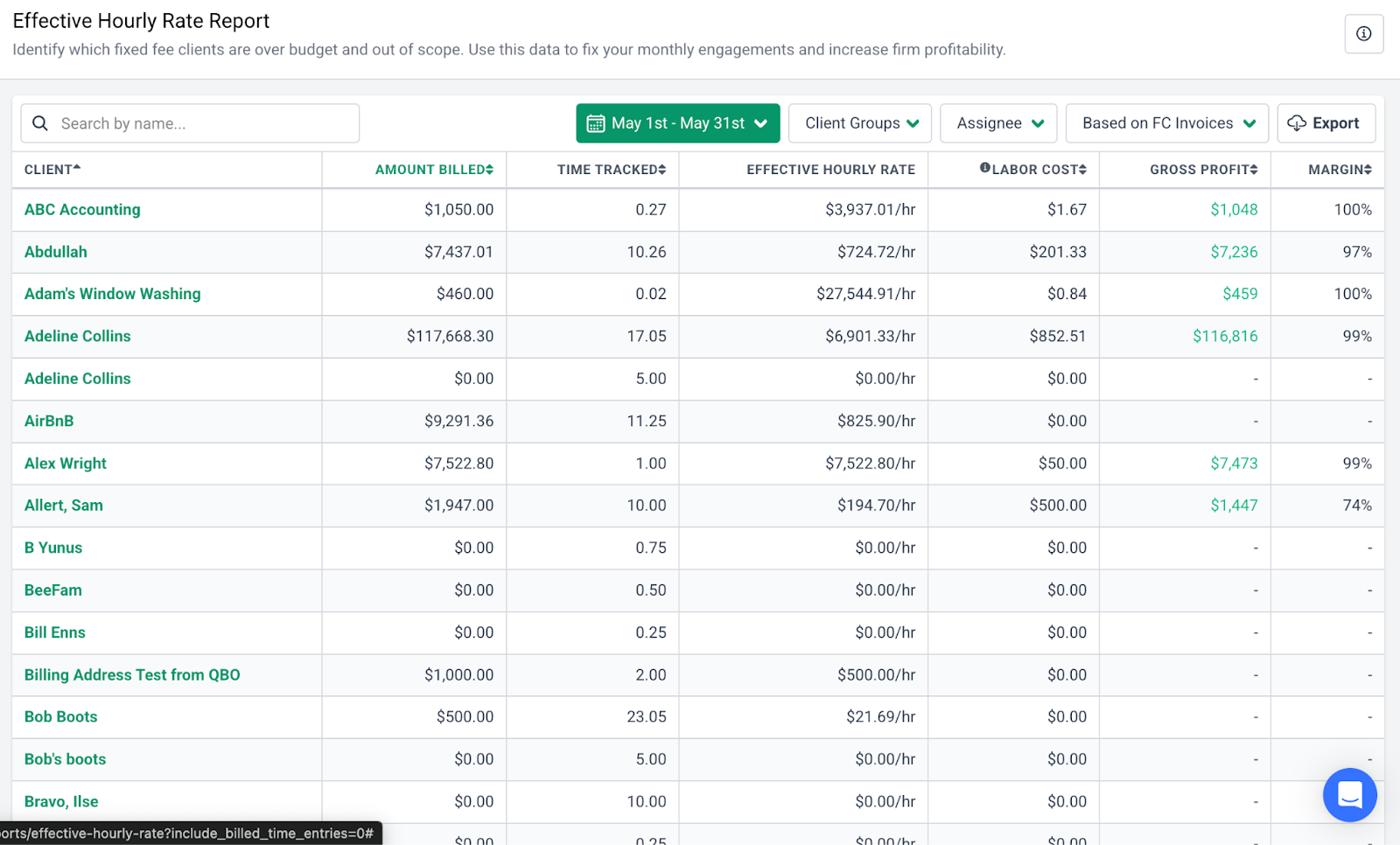
Reporting adds another layer of insight, showing how your team performs, which clients are most profitable, and where bottlenecks appear.
These benefits helped Full Send Finance scale with confidence as it added team members and moved from generic project management tools to workflows built for accounting. For Butler & Sanchez LLC, an all-in-one platform made it possible to run a more organized firm, collaborate remotely, and stay in control of client work, reminders, tasks, and team capacity.
With smoother client communication layered in, your firm delivers a more transparent, reliable experience, which supports healthier revenue because you operate consistently, manage growth intelligently, and deliver work without unnecessary friction.
Bookkeeping firms need the same operating discipline as they add clients and staff. Here’s how to scale a bookkeeping firm without adding chaos to day-to-day delivery.
How Financial Cents fits into your firm’s growth plan
- Streamline workflow management: Financial Cents keeps all your client work in one place, so tasks, deadlines, and recurring projects run smoothly without manual effort.
- Scale service delivery efficiently: Whether you’re adding new clients or expanding services, automated workflows and capacity insights help you grow without overwhelming your team.
- Enhance the client experience: Client tasks, reminders, and a shared communication history in the accounting CRM create a smoother, more transparent client journey that builds trust and cuts back-and-forth.
- Improve profitability tracking: Time tracking and reporting show which clients and services drive profit, so you can make smarter pricing and resource decisions.
- Boost team productivity and collaboration: With everyone working from the same platform, your team stays aligned, informed, and accountable wherever they work.
- Standardize processes for growth: Templates and documented workflows keep work consistent and high quality as your firm expands.
- Support hiring and onboarding: Clear systems, defined roles, and visibility into work make onboarding new staff faster and more reliable.
Start Growing Your Firm With Intention
Growth in 2027 won’t happen by accident. It takes clear decisions, intentional strategy, and systems that support you as client expectations, technology, and competition evolve. You don’t have to implement all 15 strategies at once: choose a few that fit your priorities, put them into practice, and build from there. Small, consistent improvements often create the biggest momentum.
If you’re ready to strengthen your operations and scale with confidence, Financial Cents can support every step of your growth journey.
Grow your firm with the right systems. Book a demo or start a free trial.
Frequently Asked Questions (FAQs)

Tosin Thomas is Head of Marketing at Financial Cents, where she leads the team driving growth through content, community, and virtual events. She writes about marketing strategies that help accounting firms attract and win clients.
Share this article