Running a client accounting services (CAS) practice looks very different from managing your own firm’s books. You’re coordinating work across multiple clients simultaneously, chasing documents, delivering recurring services on tight deadlines, and trying to build relationships that stick, all at the same time.
A generic tech stack can get you started, but as your client base grows and your services expand beyond basic bookkeeping into advisory, tax preparation, and financial reporting, the cracks start to show. Spreadsheets break down, email threads get buried, and the time your team spends on administrative work starts to eat into the time they should be spending on clients.
The right CAS software changes that. It gives your team a structured system for managing client work, automating the repetitive stuff, and delivering a consistent experience, regardless of how many clients you’re serving or how fast you’re growing.
In this article, we reviewed the best client accounting services software across five categories that CAS firms rely on most: CRM, proposals, tax research, email marketing, and project management. Each tool is evaluated on features, pricing, and fit for accounting firms.
TL;DR
- Client Accounting Services (CAS) require more than a generic tech stack. Firms offering bookkeeping, advisory, tax prep, and financial reporting to multiple clients need software across five categories: CRM, proposals, tax research, email marketing, and project management.
- The 11 best CAS tools by category are: CRM – HubSpot, Financial Cents; Proposals – Anchor, Proposify, Financial Cents; Tax research -Checkpoint Catalyst, CCH AnswerConnect; Email marketing – MailChimp, HubSpot; Project management – Financial Cents, Asana.
- Financial Cents ($19–$69/user/mo) is the only tool on this list built specifically for accounting firms and covers both CRM and project management in one accounting practice management platform, reducing the number of tools in your stack.
- General-purpose tools (HubSpot, Asana, MailChimp, Proposify) are powerful but lack accounting-specific features, they’re best paired with an accounting-native platform rather than used standalone.
- Tax research tools (Checkpoint Catalyst, CCH AnswerConnect) are specialized and pricey ($755–$3,999+ per user), so they’re typically reserved for firms with significant tax advisory work.
- To select a tool: match each tool to your firm size, budget, ease of use, integrations, and scalability and prioritize platforms that consolidate categories so you’re not stitching together 5+ separate subscriptions.
What is Client Accounting Services Software?
Client accounting services (CAS) software is a category of tools designed to help accounting firms deliver ongoing, outsourced financial services to their clients, services like advisory, bookkeeping, payroll, financial reporting, and tax preparation.
Unlike general accounting software built for businesses managing their own finances, CAS software is built for the firm side of the relationship. It helps accounting teams manage work across multiple clients simultaneously, keep client data organized, automate recurring processes, and collaborate with clients without relying on email and accounting spreadsheets.
The term “CAS software” is somewhat broad because no single tool covers every function a CAS firm needs. Most firms build a stack of specialized tools, one for practice management, one for ledger-level accounting, one for tax, and so on. The tools in this article reflect that reality: each covers a distinct function, and together they form the foundation of a well-run CAS practice.
Key Software Features for Client Accounting Services
Brandon Hall, Managing Partner at Hall CPA PLLC, a 7-figure firm (with 35% of that figure coming from advisory services), recommends the following features to look out for if you offer client accounting advisory services (CAAS):
1. Client Relationship Management (CRM) System
Not everyone who interacts with your accounting firm is ready to buy. Some may be researching various options, comparing prices, or gathering information.
An efficient CAS software should have a built-in CRM system to track prospects’ progress through your sales funnel. It should also store important data, like the prospect’s contact information and communication history with your firm.
2. Project Management Software
The bustling nature of accounting firms makes it difficult to track and manage daily accounting tasks to ensure nothing falls through the cracks.
That’s where accounting project management comes in.
An efficient CAS software should include project management functionality. This enables you to plan, track, and manage all aspects of client projects. You can assign tasks, set deadlines, and monitor progress. It also provides a centralized platform for collaboration and ensures everyone in your firm is on the same page.
3. Proposal Tracking System
An accounting proposal tracking system within your software allows you to keep tabs on the status of each proposal, from initial creation to final acceptance or rejection.
Being able to oversee the progress of the proposals you’ve sent out allows you to follow up with clients, adjust your strategies, and improve your overall sales process.
4. Tax Research Tool
One of the best ways to serve your clients is to give them tips on how to maximize tax savings, reduce their tax bills, and avoid IRS penalties.
Your CAS software should have a tax research solution to support this process. These tools make it easier to research and analyze tax-related information, enabling you to provide them with valuable insights that comply with tax regulations.
5. An Email Marketing System
According to our 2025 State of Accounting Workflow Automation report, 55.3% of accountants prioritize email integration when considering workflow automation software. This is no surprise, considering the fierce competition for client attention in today’s market.
An email marketing system provides an effective way to maintain regular communication with clients and prospects. By sending them newsletters, important updates, and announcements of new services, you can stay top of mind and monitor prospects.
The 10 Best Client Accounting Services Software
Below are five sets of features found in CAS software, each with two tools listed, totaling ten. Review the list and choose the tool from each category that aligns most closely with your requirements.
The Best Client Relationship Management System
1. Hubspot
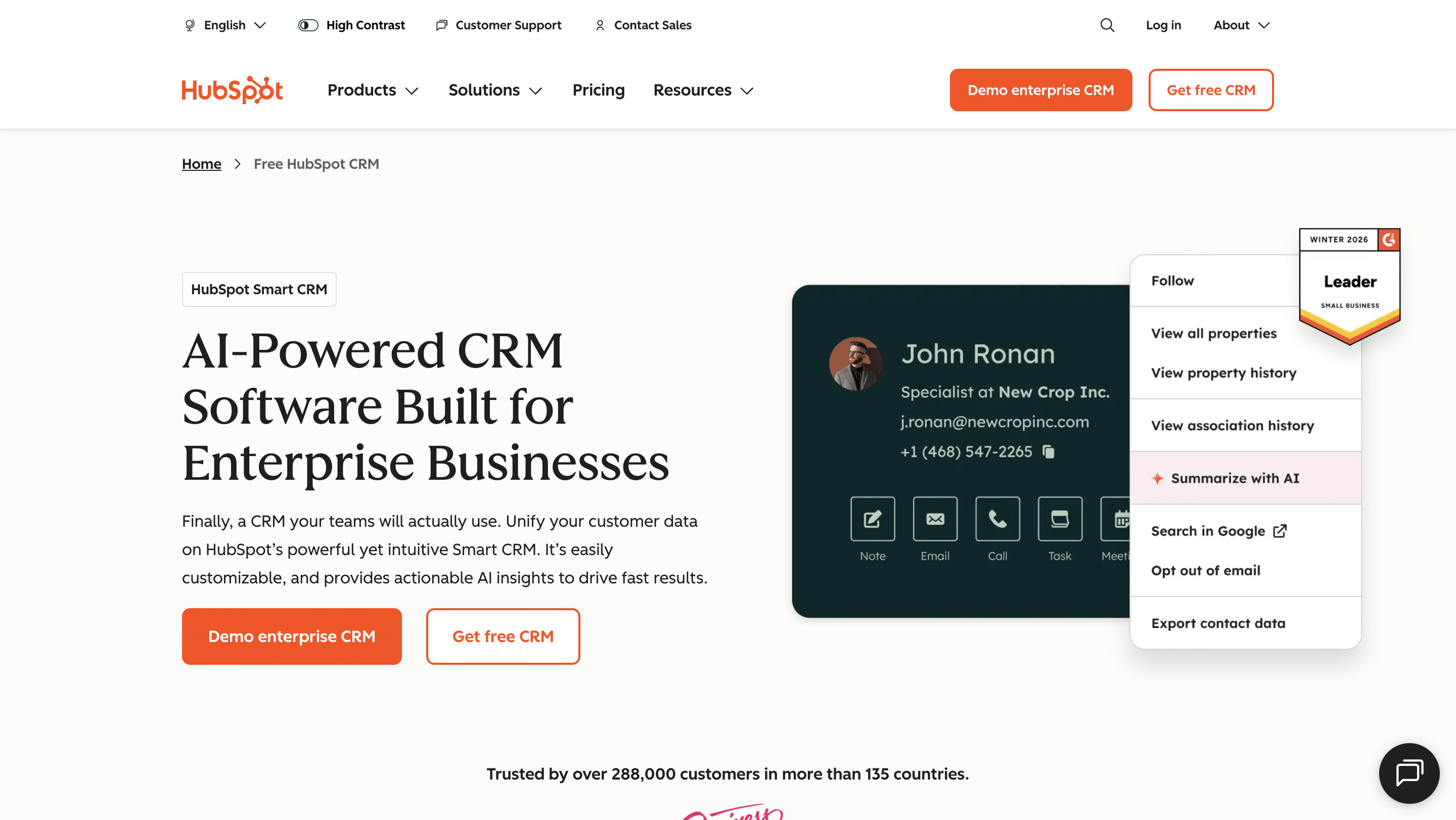
HubSpot is a popular CRM among businesses of all sizes. It offers robust features that allow you to track prospects, manage important data, and nurture leads over time. Like most software, it has its own set of strengths and weaknesses:
Pros
- Integrates seamlessly with its marketing automation, sales, and customer service tools
- Intuitive interface and user-friendly design
- Extensive documentation and training resources for support
Cons
- The free plan only offers basic features; more advanced functionalities require paid subscriptions
- It’s not ideal for accounting firms with specialized needs as it lacks industry-specific features
Free trial
- HubSpot offers a free plan with basic features like contact management, deal pipelines, and email tracking. It’s a good option for smaller firms.
Pricing
- Starter plan starts at $20/month (billed annually)
- Professional plan starts at $50/mo/seat (billed annually)
- Enterprise plan starts at $75/mo/seat (billed annually)
2. Financial Cents
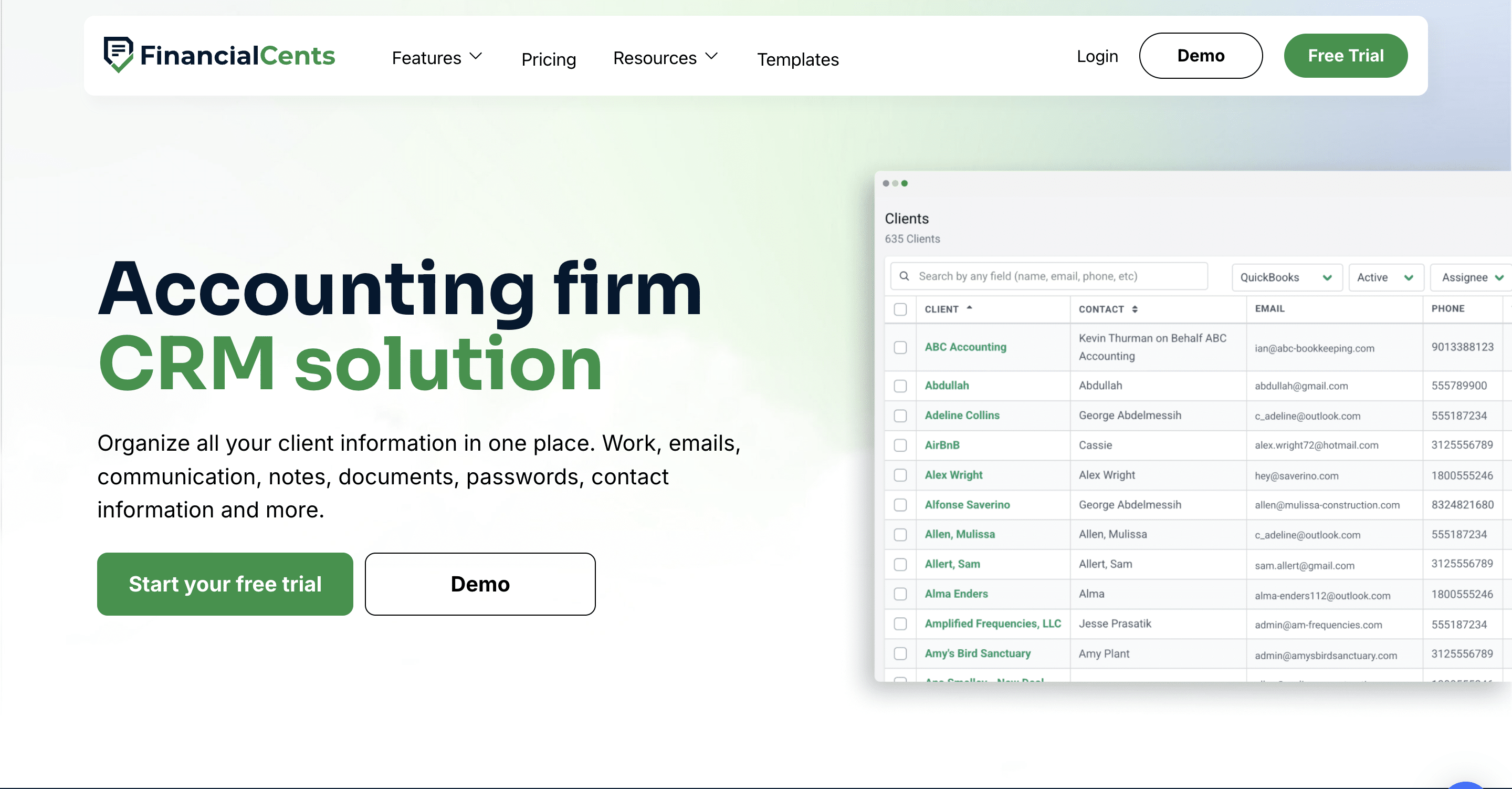
Financial Cents is a cloud-based accounting CRM software designed for small and mid-sized accounting firms. It makes it easy for firm owners to organize client information, stay on top of interactions, collaborate with clients, and automate data collection.
Pros
- Built specifically for accounting, bookkeepers, and tax firms
- Connects workflow, CRM, client portal, billing, and reporting in one platform
- AI integration to generate workflow and email templates instantly
- Strong automation including recurring work, client reminders, and task dependencies
Cons
- No mobile app
Free trial
- Financial Cents offers a 14-day free trial.
Pricing
- Solo plan: $19/month (billed annually)
- Team plan: $49/month per user (billed annually) or $69/month per user (monthly billing)
- Scale plan: $69/month per user Billed annually or $89/month per user (monthly billing)
Learn more about Financial Cents Accounting Practice Management Software
The Best Proposal Tracking System
3. Anchor
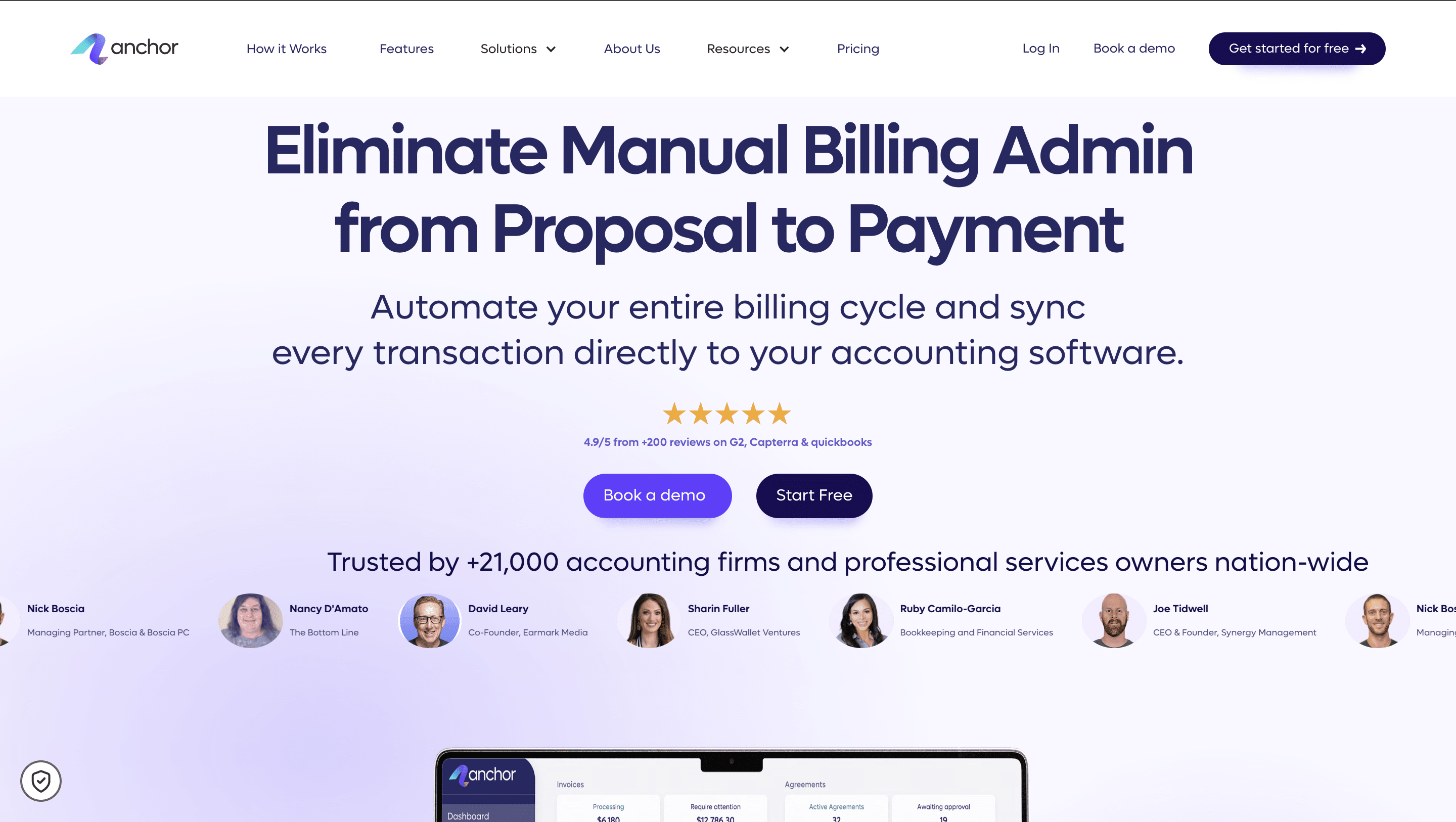
Anchor is an impressive all-in-one tool that helps firms get paid on time. It makes creating and sending proposals and invoices to clients a breeze.
Pros
- Easy to set up agreements and proposals.
- Zapier, QuickBooks online and Financial Cents integration.
- Includes a dedicated client portal.
Cons
- Takes longer to receive payments.
Free trial
- The tool is free to use.
Pricing
- Anchor charges $5 per payment received.
4. Proposify
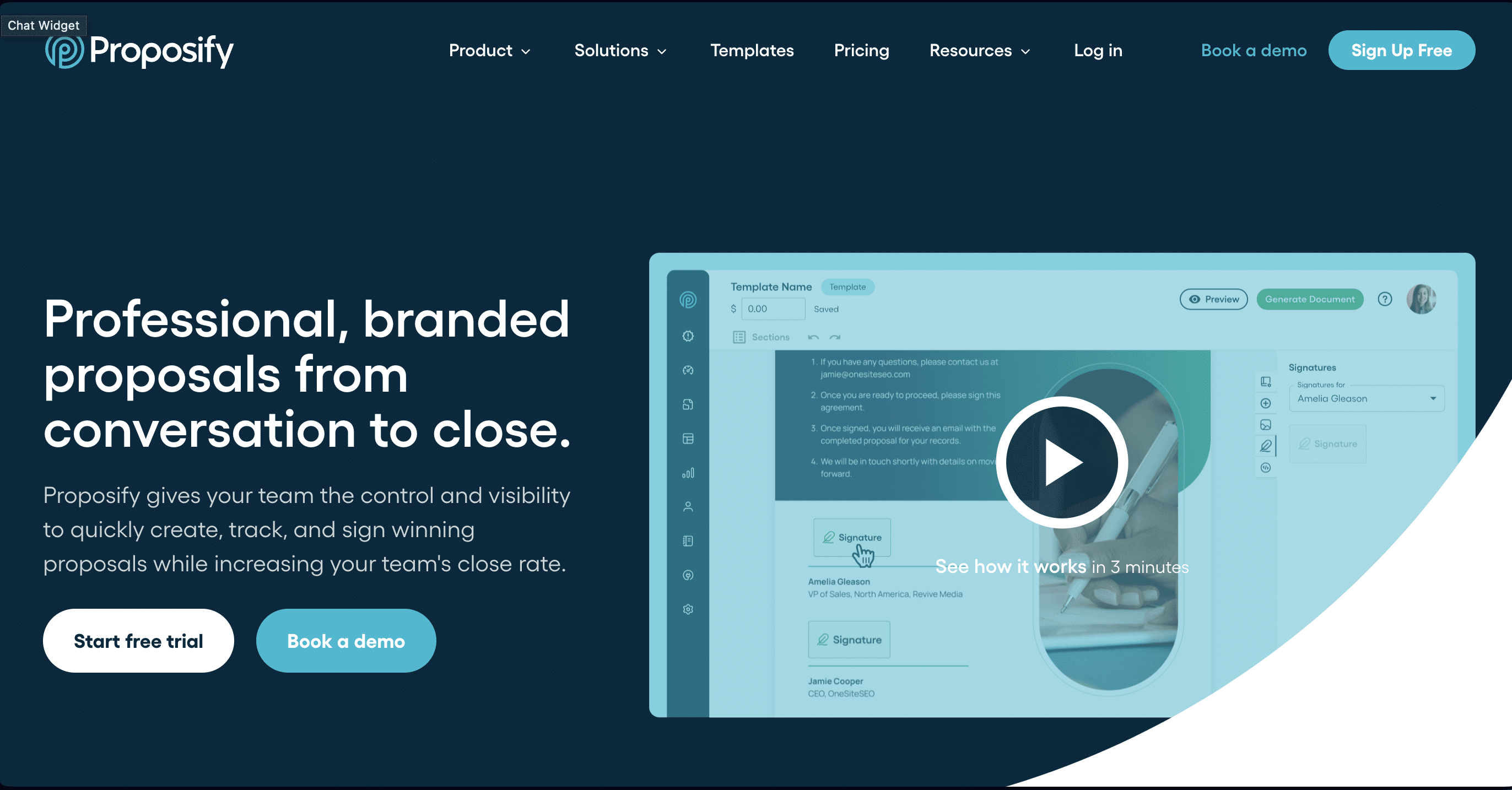
Proposify is an online proposal system that streamlines the proposal creation process for businesses. It provides tools for creating, sending, and tracking visually appealing professional proposals.
Pros
- Contains a variety of pre-designed templates to speed up the proposal creation process
- Proposals are easily customizable with unique brand designs
- Ability to track client interactions with proposals
- Integrates with e-signature tools, making it easier for clients to sign and accept proposals online
Cons
- Basic plan’s 5-send limit per month is restrictive for firms with regular proposal volume
- Difficulty learning how to use
- Pricing may be on the high side for small businesses or freelancers
- Not intuitive for most users
Free trial
- Proposify offers a 14-day free trial
Pricing
- Basic: $19/user/month (billed annually). Limited to 5 document sends/month.
- Team: $49/user/month (billed annually). Unlimited documents, CRM integrations.
- Business: $65/user/month (billed annually) for teams of 10+, approval workflows, advanced permissions.
5. Financial Cents
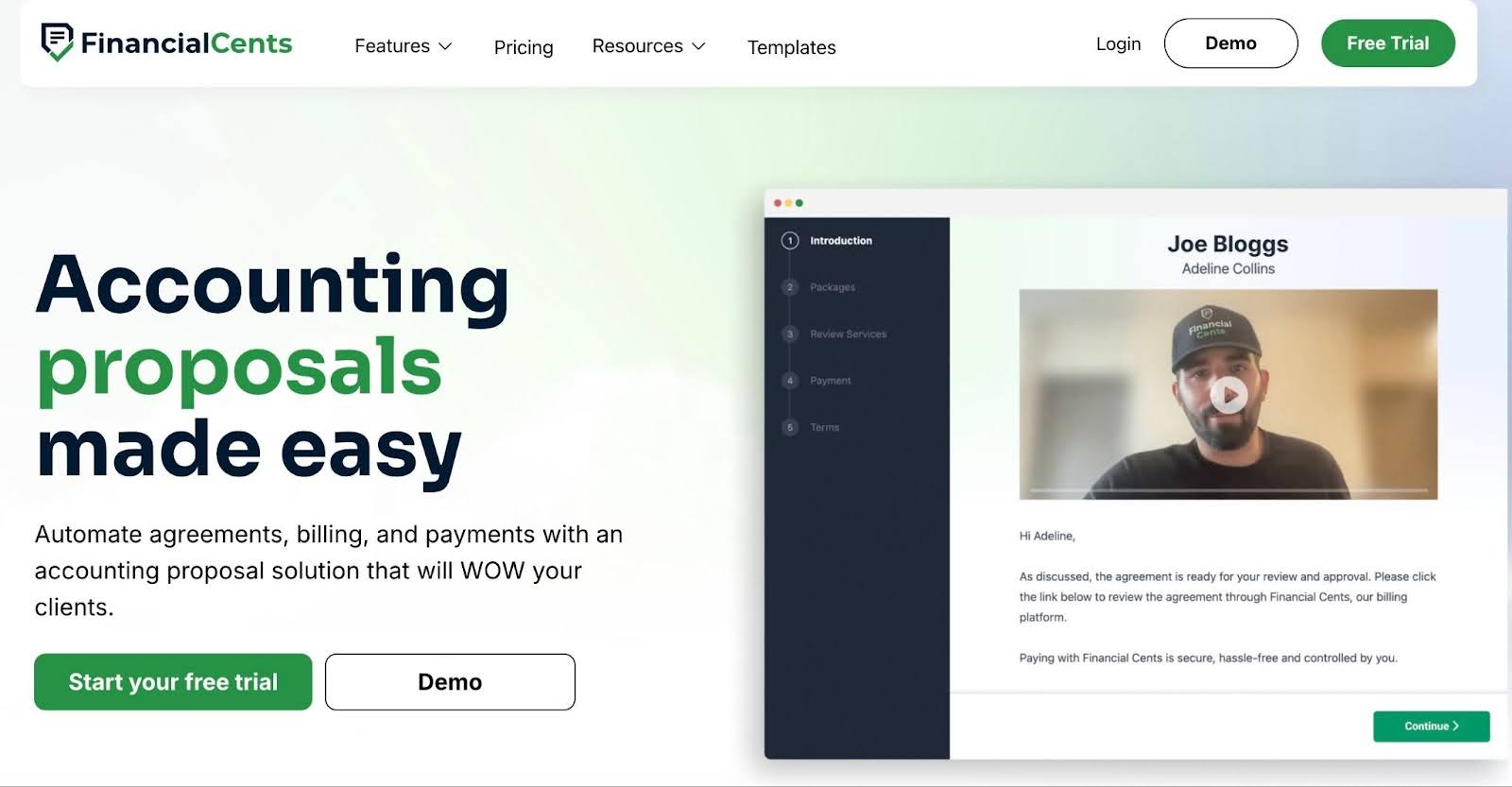
Financial Cents includes built-in proposals and engagement letters as part of its all-in-one practice management platform, so firms can create, send, and track proposals without switching to a separate accounting proposal tool. You can bundle services into packages, add optional upsells, collect e-signatures, and automatically trigger invoices once a proposal is accepted, all from the same system where your client work lives.
Pros
- Proposals, engagement letters, billing, and workflows are connected in one platform
- Clients can review, sign, and pay directly through the passwordless client portal
- Auto-reminders nudge clients to sign without manual follow-up
- Optional upsells and service packages help increase deal size
Cons
- Not a standalone proposal tool, requires a Financial Cents subscription.
Free trial
- Financial Cents offers a 14-day free trial, no credit card required
Pricing
- Solo plan: $19/month (billed annually)
- Team plan: $49/month per user (billed annually) or $69/month per user (monthly billing)
- Scale plan: $69/month per user Billed annually or $89/month per user (monthly billing)
The Best Tax Research Tools
6. Checkpoint Catalyst
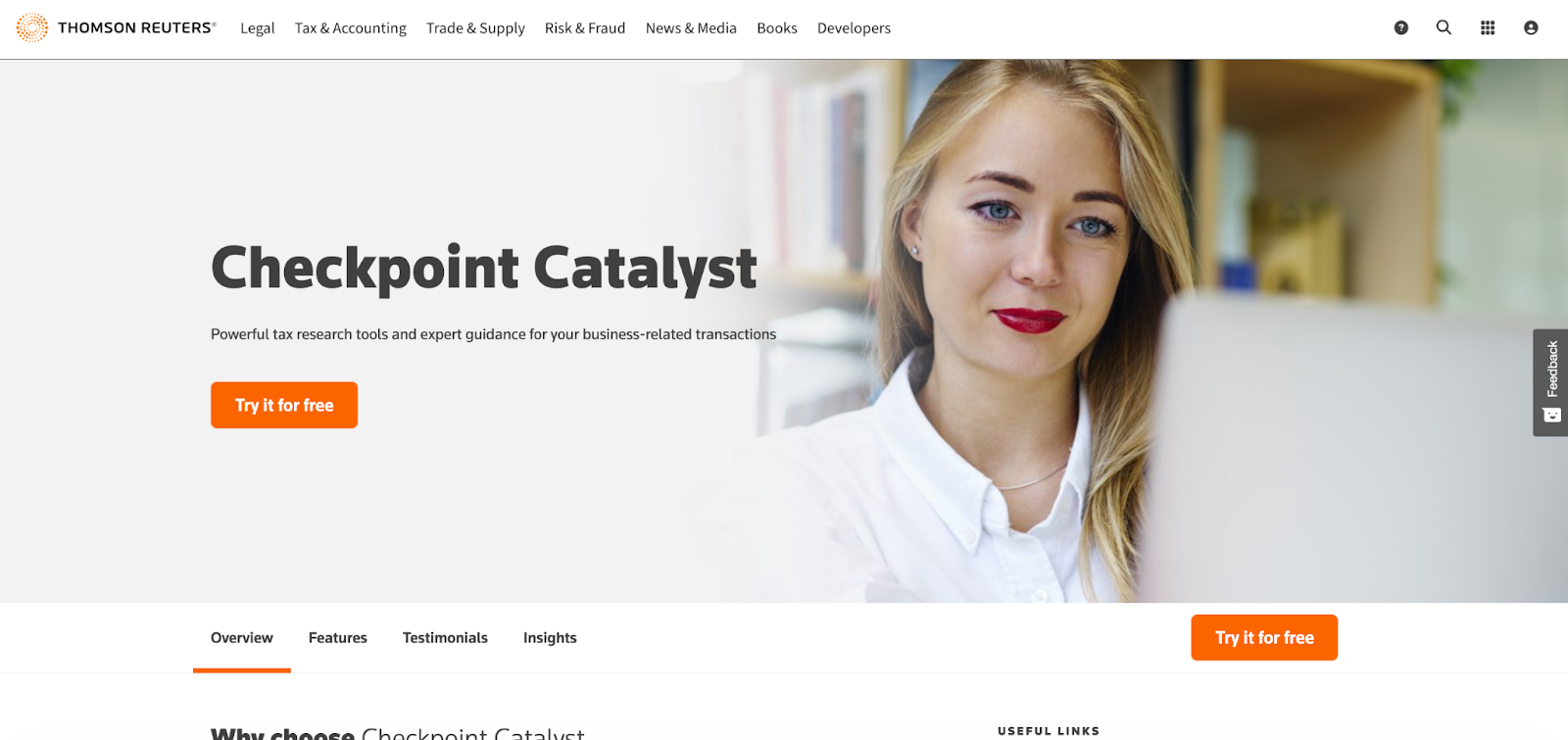
Checkpoint Catalyst, a cloud-based tax practice management software from Thomson Reuters, aims to simplify and streamline tax workflows for accounting firms. It provides interactive tools, practical insights, research information, and analysis to help firms effectively understand and apply tax rules. Integrates with Thomson Reuters’ broader ecosystem including UltraTax CS and GoSystem Tax RS
Pros
- User friendly platform
- Has an intuitive search and filter function
- Offers a wide range of content, including federal, state, and international tax information for tax research
Cons
- It is expensive, especially for small businesses and solopreneurs
- Some users report difficulty in navigating the software
- Website tends to load slowly
Free trial
- Checkpoint Catalyst offers a 14-day free trial
Pricing
- Contact the sales team for pricing details
7. CCH® AnswerConnect

Wolters Kluwer’s CCH® AnswerConnect is a comprehensive client accounting services (CAS) platform that offers diverse services beyond basic bookkeeping. It assists tax professionals in accessing comprehensive tax information, staying updated on tax laws, and making informed decisions. It has an AI-powered search tool that generates answers with links to verified sources, citations, and supporting documents.
Pros
- Provide tax professionals access to various federal, state, and international tax information
- AI assistant generates instant answers backed by expert-verified editorial content
- Easy to operate and conduct research
- Seamless integration with other Wolters Kluwer tax and accounting software tools
Cons
- Software packages are pricey; not affordable for small businesses
- Difficult to learn, particularly for new users unfamiliar with tax research and planning tools
Free trial
- CCH AnswerConnect offers a 14-day free trial and doesn’t require a credit card
Pricing:
- CCH AnswerConnect Essentials starts at $755 for 1 User
- CCH AnswerConnect Federal starts at $1149 for 1 User
- CCH AnswerConnect Federal Pro starts at $3999 for 1 User
- Contact the sales team for package options with state & international content
The Best Email Marketing System
8. MailChimp
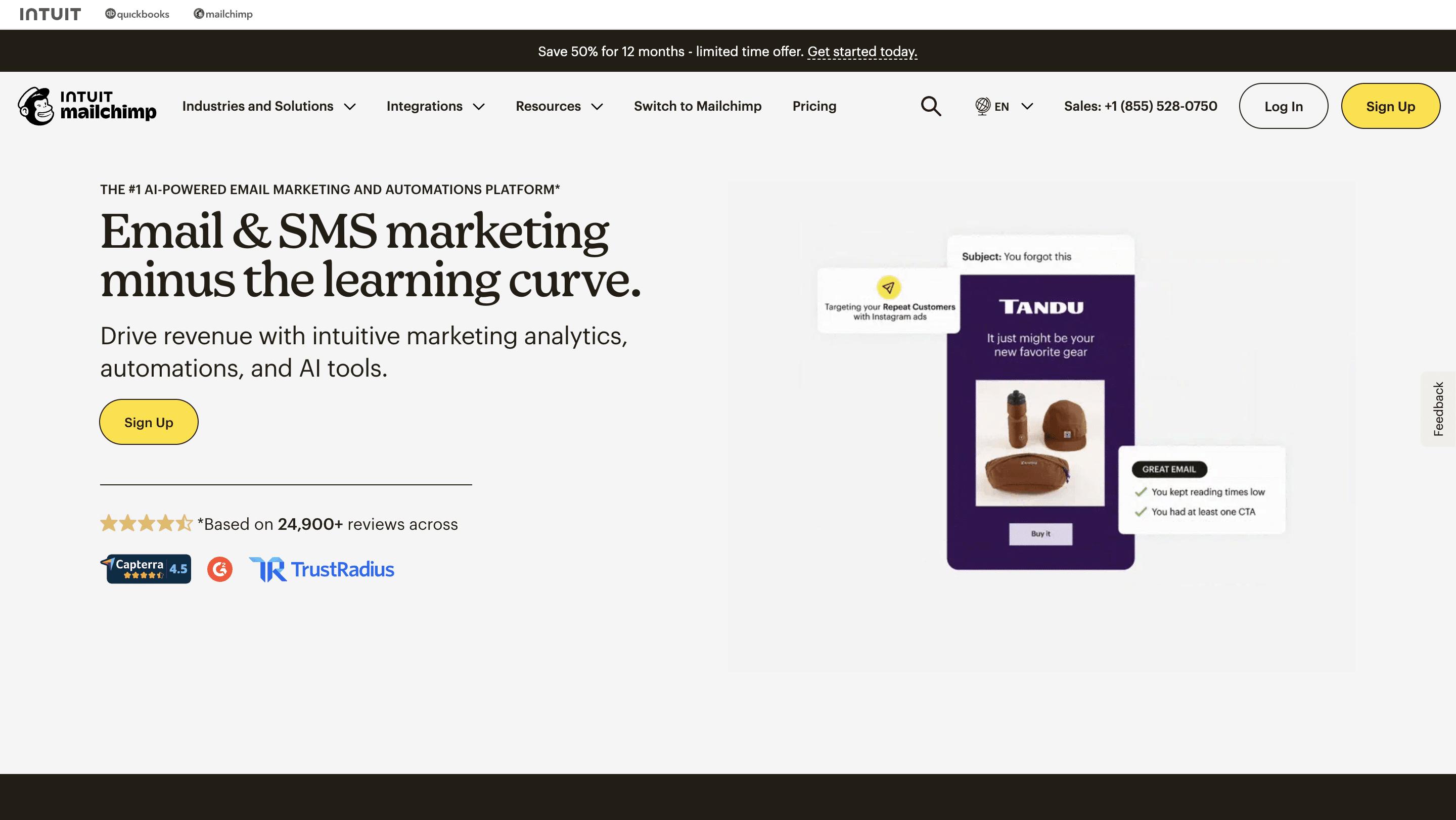
Mailchimp is an email marketing platform where you can create and send email campaigns. The software has evolved beyond email marketing, offering additional features such as audience management, marketing automation, and website building.
Pros
- Renowned for its user-centric nature
- Offers a wide range of customizable templates for email campaigns
- Automation feature based on user actions or triggers
- Scalable based on your firm’s needs and subscriber list
Cons
- Gets more expensive as your firm’s needs and subscriber list size grow
- Some users have reported customer support limitations, especially those on lower-tier plans
- Automation limitation on the free plan
- Challenges with list management for some users
- Free plan significantly reduced in 2026; automation removed from free tier entirely
Free trial
- Offers a free package, but it’s limited to 500 monthly email sends and 250 contacts.
Pricing for 500 contacts
- Essentials: $13/month
- Standard: $20/month
- Premium: $350/month (starts at 10,000 contacts)
Note: Mailchimp pricing scales with contact count. All contacts, including unsubscribed count toward your plan limit, so actual costs often run higher than the base price suggests.
9. Hubspot
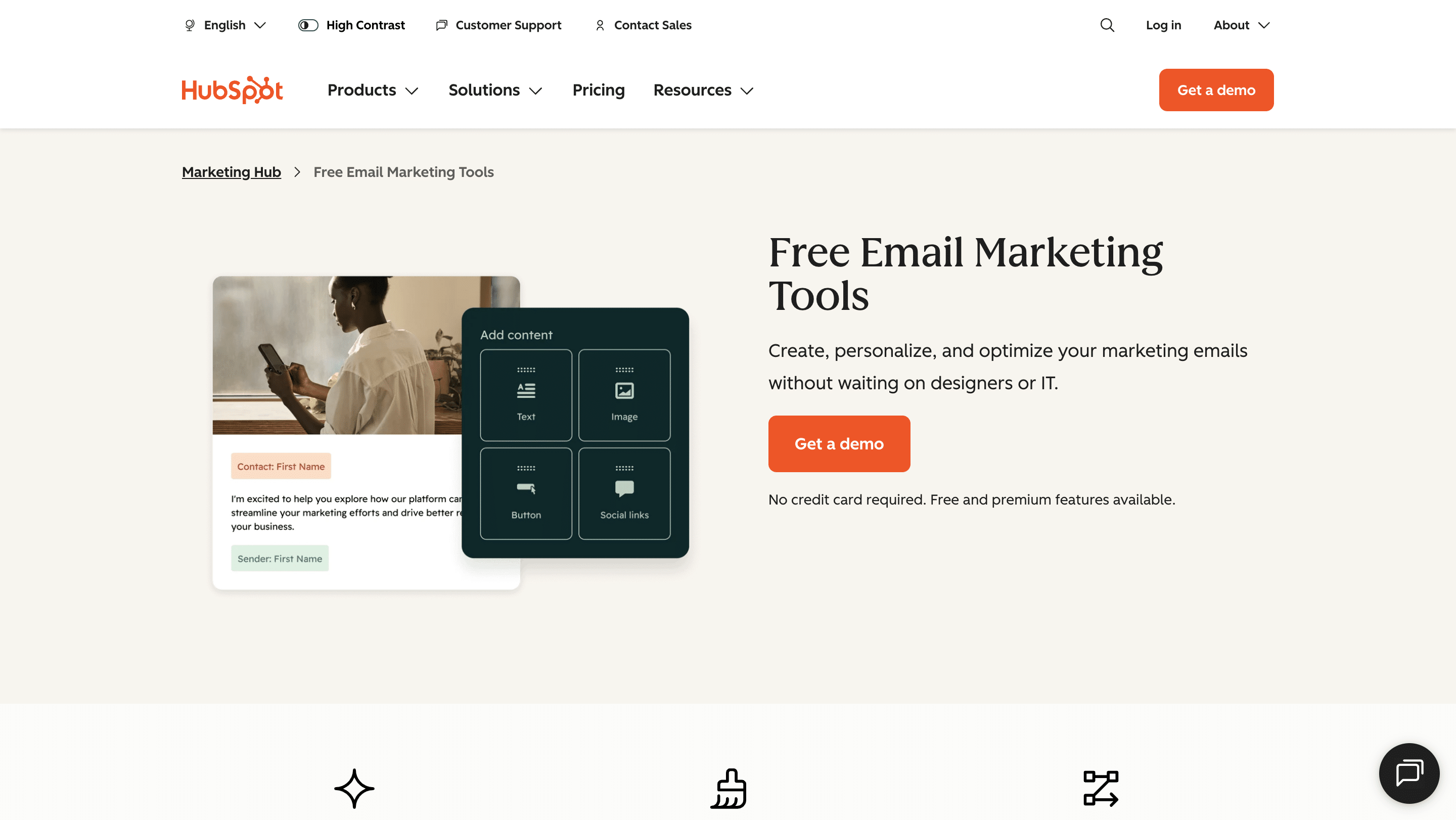
HubSpot’s email marketing tool makes it easy to create, customize, and send emails to your subscribers.
Pros:
- Features a simple drag-and-drop editor that makes it easy to design professional emails
- Extensive template library to help with email creation and drive customer engagement
- Integration with HubSpot’s sales CRM software to personalize emails and build lists
Cons:
- The free plan only offers basic features and restricts some important functionalities you might need
- Higher-tier plans with advanced features are expensive
- Not ideal for accounting firms. Lacks industry-specific features and customization options
Free trial:
- HubSpot’s free email marketing plan offers basic features like email creation, contact management, and analytics, making it a good option for beginners or small firms.
Pricing:
- Starter plan starts at $18/month (billed annually)
- Professional plan starts at $800/month (billed annually)
- Enterprise plan starts at $3600/month (billed annually)
The Best Project Management Software
10. Financial Cents
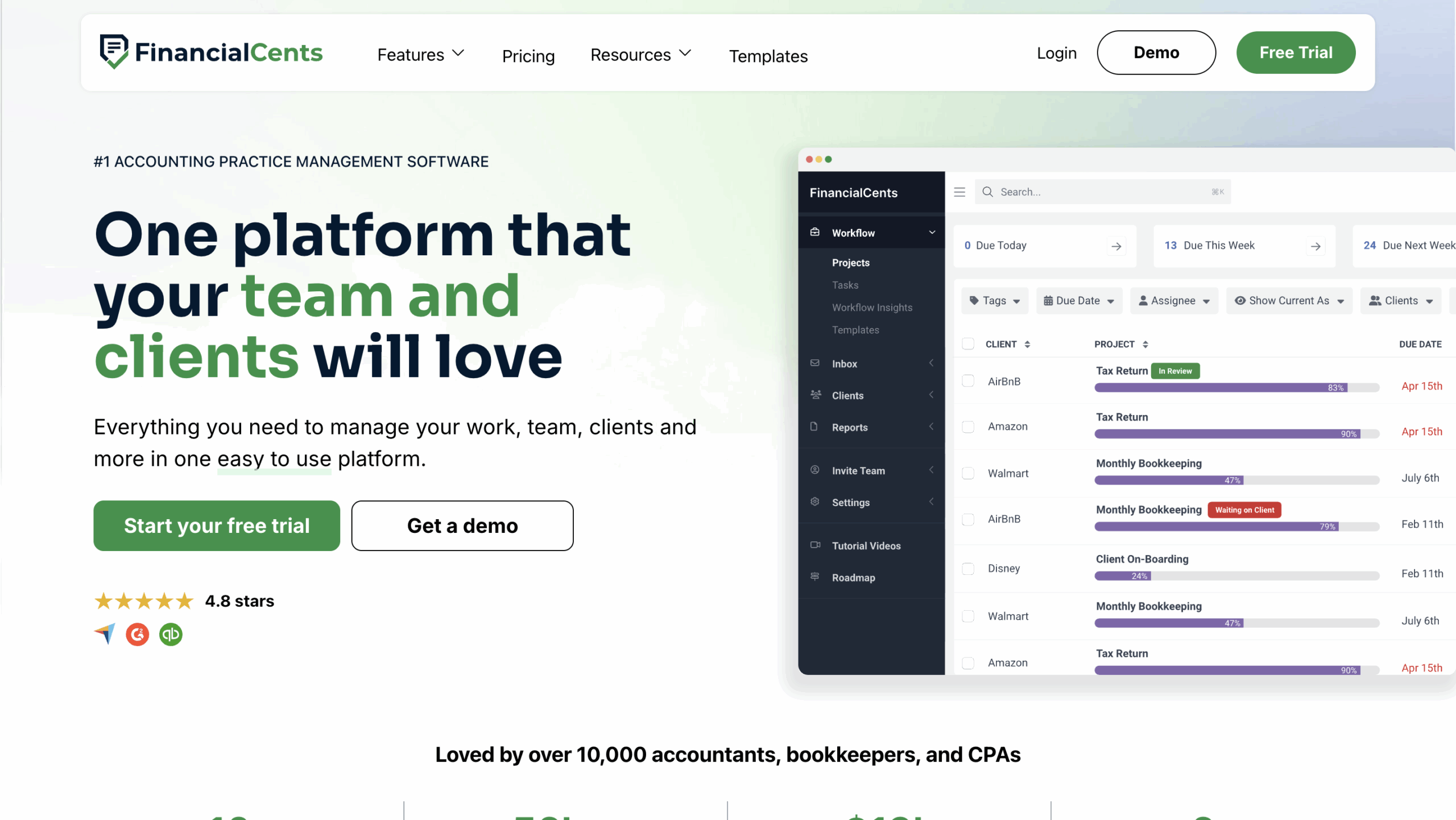
Financial Cents also helps with project management. Thanks to its workflow dashboard, you can track the status of client work, create recurring checklists, and collaborate with your team members.
Pros
- It’s designed for accounting, bookkeeping and tax firms
- Covers workflow, client management, billing, time tracking, document management, and month-end close in one platform
- Deep two-way QuickBooks Online sync; integrations with Google Drive, SmartVault, Adobe Sign, and Zapier
- Cost-effective compared to other competitors, making it a great option for small/medium-sized accounting firms
- Capterra Best Ease of Use 2026 winner for accounting practice management.
Cons
- Lacks integration with other popular business tools
Free trial
- Financial Cents offers a 14-day free trial
Pricing
- Solo plan: $19/month (billed annually)
- Team plan: $49/month per user (billed annually) or $69/month per user (monthly billing)
- Scale plan: $69/month per user Billed annually or $89/month per user (monthly billing)
11. Asana
Asana is a project management tool many businesses use to assign tasks, track progress, set deadlines, and collaborate effectively. Its intuitive interface and customizable features make it easy to automate workflows and improve team communication.
Pros
- Clean and intuitive design makes it simple to use for less technical teams
- The mobile app makes it easy to view tasks on the go
- Offers flexible project views (list, board, calendar) to visualize and manage projects
Cons
- It’s a generic project management app, making it unsuitable for accountants with specific needs
- It can be overwhelming, especially for new users
Free trial
- Asana has a free forever plan with limited features available for individuals and small teams, making it an accessible option for getting started.
Pricing
- The starter plan is $10.99 per user per month, billed annually
- The advanced plan is $24.99 per user per month, billed annually
- Enterprise/Enterprise+: Custom pricing
Factors to Consider When Choosing Client Accounting Services Software
Choosing the right CAS software for your firm is a critical decision that you must make. Here are some factors to help guide your selection process:
Firm size and needs
Every firm has its unique size and needs. A solution that suits a small boutique firm might not fit a larger accounting practice.
Therefore, understanding your firm’s structure will help you choose software tailored to your requirements. But keep in mind that the software should align with the scale of your operations and cater to your client’s specific requirements.
Budget
For new firms with limited resources, finding a cost-effective solution is paramount to avoid overspending; however, it’s equally important to strike a balance between affordability and functionality.
While some software options may offer advanced features, they often come with a higher price tag. Therefore, before deciding, carefully assess your budget for CAS software that offers essential features while staying within your financial constraints.
Ease of Use
Consider the frustration and inefficiency that would arise from using a tool with a poor user interface or one prone to crashing. Ensuring that the CAS software you choose is user-friendly and intuitive is essential.
Opting for an easy-to-use CAS software not only saves time but also preserves your team’s sanity.
Integrations
Integrations act as bridges between different tools, facilitating the connection and synchronization of data with existing or desired tools. This results in optimized workflows, enhanced collaboration, improved efficiency, and savings in both time and costs.
When selecting CAS software, prioritize options that seamlessly integrate with your preferred tools to maximize the benefits of interconnected workflows and streamlined processes.
Scalability
As your firm delivers swift and exceptional services to clients, expansion becomes inevitable. Therefore, seek tools that can adapt to the growing demands of your expanding practice without sacrificing performance. This ensures that the software remains capable of supporting your firm’s growth trajectory and evolving needs effectively.
Build Your CAS Tech Stack the Right Way
The firms that deliver the best client accounting services aren’t necessarily the ones with the most sophisticated tools, they’re the ones with the right tools, connected well, and actually used consistently by their teams.
The five categories in this article: CRM, proposals, tax research, email marketing, and project management, represent the operational backbone of a well-run CAS practice. You don’t need a separate subscription for every function. The goal is to find tools that cover as many of these categories as possible without creating a patchwork of disconnected systems your team has to manually stitch together.
For most small to mid-sized accounting and bookkeeping firms, Financial Cents covers the most ground in one platform. It handles CRM, workflow management, client portal, proposals, billing, time tracking, document management, and month-end close, which means fewer tools to manage, fewer integrations to maintain, and less time spent on administrative overhead.
That said, the right stack depends on your firm’s specific service mix, team size, and growth stage. Use the category breakdowns in this article to identify where your current setup has gaps, then evaluate tools that fill those gaps without adding unnecessary complexity.
Ready to see how it works? Use Financial Cents to manage your firm.
Frequently Asked Questions
CAS software is the stack of tools an accounting firm uses to deliver client accounting services, bookkeeping, advisory, tax preparation, and financial reporting to multiple clients at scale. Unlike basic accounting tools, CAS software covers the firm’s full operations: CRM for managing prospects, project management for client engagements, proposals for closing new work, tax research for advisory, and email marketing for nurturing leads.
QuickBooks and Xero are general ledger tools, they record financial transactions for one business. CAS software is the platform the firm itself uses to manage multiple clients’ work, communications, deadlines, and proposals. Most firms use both: QuickBooks for the client’s books, and CAS software (like Financial Cents) to run the firm.
At minimum: a CRM to track prospects and clients, project management to coordinate work across team members, proposals to close engagements, tax research to support advisory services, and email marketing to nurture leads. Firms with bookkeeping or advisory clients should also prioritize built-in workflow automation, time tracking, billing, and a client portal, features that combine across multiple tool categories.
Mostly, but not entirely. All-in-one practice management platforms like Financial Cents consolidate CRM, project management, client portal, billing, time tracking, e-signatures, and proposals into one tool, replacing 4 or 5 separate subscriptions. You’ll still typically need a separate tax research tool (Checkpoint Catalyst, CCH AnswerConnect) for serious tax advisory work, and a dedicated email marketing platform (MailChimp, HubSpot) if you’re running large email campaigns.
It varies widely by firm size and service mix. A small firm might spend $50–$150/user/month on an all-in-one tool like Financial Cents ($19–$69/user/mo) plus MailChimp ($6.50–$10/mo) for email. A mid-sized firm offering tax advisory might add Checkpoint Catalyst or CCH AnswerConnect ($755–$3,999+/year per user) and a dedicated proposals tool like Proposify ($49/user/mo). The most expensive stack mistake is paying for overlapping features across HubSpot, Asana, and a practice management tool when one platform could cover most of them.
Share this article: