
Many accounting firms grow by doing what feels natural at the time: hiring another person when work piles up. A bookkeeper here, a tax preparer there, maybe an admin to keep things moving. What often gets skipped is defining who owns what. Over time, that gap shows up as confusion, duplicated work, and bottlenecks, until the firm owner becomes the default answer for every question, no matter how big the team gets.
Accounting firm organizational charts tend to get dismissed at this point. They sound corporate, like overkill meant for large firms, not growing ones. But a good organizational chart isn’t about hierarchy or control. It’s about clarity: it makes responsibility visible and shows how work should flow and who is accountable at each step.
In this guide, you’ll learn how to structure an accounting firm at every stage of growth, with practical organizational charts and role structures for solo, small, growing, mid-sized, and large firms, so you can build a team that scales without burning you out.
TL;DR
- An accounting firm organizational chart shows who owns what and how work flows, which improves accountability, prevents overlap and burnout, eases delegation, and supports scalable growth.
- Solo (1 person): the owner does everything, which is simple but fragile; document responsibilities early.
- Small (2–5): owner, staff accountants or bookkeepers, and an accounting admin; the owner is usually the bottleneck.
- Growing (6–15): add an accounting operations manager and senior accountants to own workflows, capacity, and review.
- Mid-sized (16–40): a director of operations plus department managers for tax, accounting, and advisory.
- Large or enterprise: an executive team, COO, department directors, operations managers, admin teams, and support functions like HR and IT.
- Design tips: start with services, define roles before hiring, design for where you’re going, review yearly, and align structure with workflows and capacity.
Why Does Organizational Structure Matter in Accounting Firms?
Organizational structure matters because it makes ownership clear, which improves accountability, prevents role overlap and burnout, eases onboarding and delegation, keeps service consistent, and lets the firm scale.
- Improves accountability and ownership: When roles are clearly defined, everyone knows what they’re responsible for and where their work begins and ends. That reduces finger-pointing and makes it easier to spot issues early.
- Prevents role overlap and burnout: Without structure, the same work gets done twice or falls on the same few people. Clear roles spread responsibility more evenly and protect high performers from carrying too much of the load.
- Makes onboarding and delegation easier: New hires ramp up faster when responsibilities are documented and visible, and delegation gets simpler because tasks are tied to roles, not individuals. Here’s how to build an accounting staff onboarding process around those roles.
- Supports consistent service delivery: Clients get a more predictable experience when work follows a defined structure instead of depending on who happens to be available.
- Enables scalable growth: As the firm grows, roles can expand or be duplicated without reinventing how work gets done each time.
What Does an Accounting Firm Organizational Chart Look Like by Firm Size?
There’s no single correct organizational chart for accounting firms. Structure should reflect your firm’s size, service mix, and growth strategies, and what matters most is clarity. Below are practical organizational chart examples by firm size, with common responsibilities for each role. Use them as starting points, not rigid rules.
Solo Practitioner (1 Person)
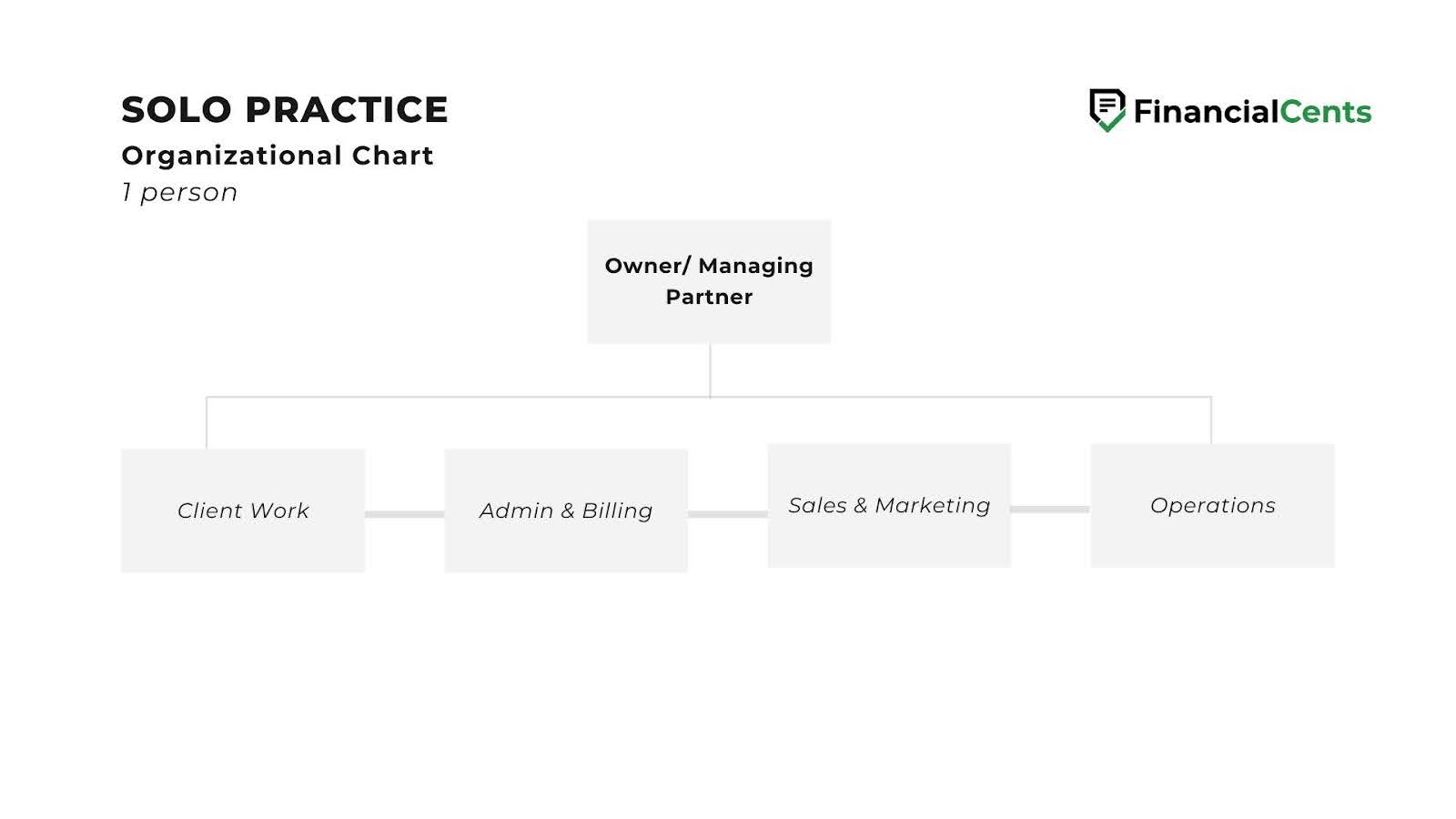
At the solo stage, the firm and the owner are effectively the same thing. The solo practitioner handles client delivery, admin, billing, sales, follow-ups, and decision-making. There’s no separation between roles because there’s no one else to separate them from. Everything flows through the owner, which keeps things simple, but also fragile.
Typical roles and responsibilities
- Owner / Accountant: Delivers all client work, manages deadlines, handles billing and collections, responds to client communication, and drives sales and growth. Every role in the firm sits with one person.
Common challenges
- Burnout from wearing every hat: Switching constantly between delivery, admin, and sales drains focus and energy, with no real separation between work types.
- No role separation: Time spent invoicing, scheduling, or chasing documents directly reduces billable capacity.
- Limited scalability: The firm can only grow as fast as the owner can work, so more clients usually mean longer hours, not leverage.
This stage works because it has to, but it’s also where light structure starts to matter. Documenting responsibilities early makes the first hire far easier and prevents chaos later.
Small Accounting Firm Organizational Chart (2–5 People)
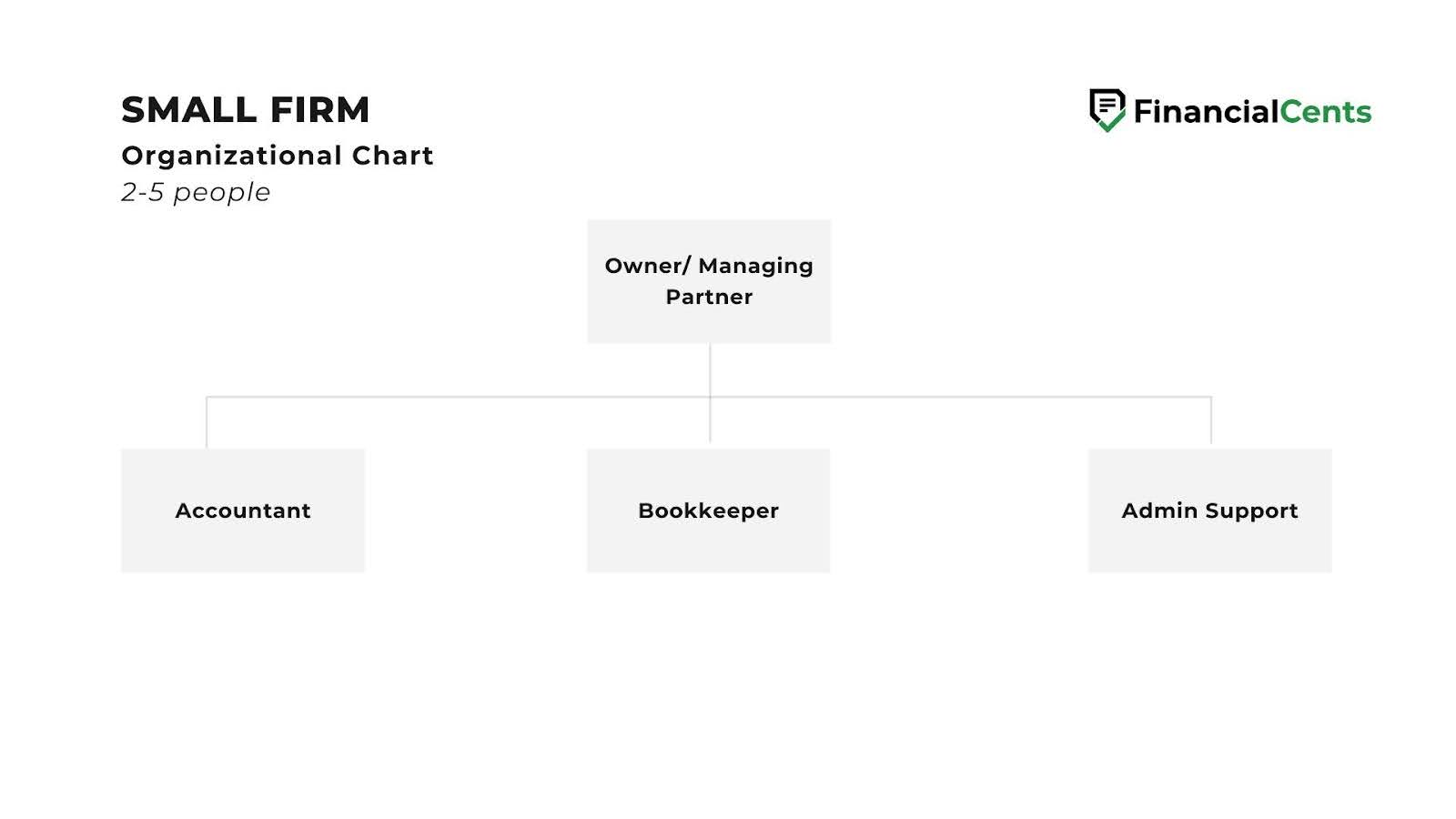
This is the stage where the firm starts to feel like a team, but the structure is still informal. The owner no longer does everything alone, yet most decisions, reviews, and priorities still funnel through one person. Roles exist, but boundaries are often loose.
Typical roles and responsibilities
- Owner / Managing Partner: Owns client relationships, reviews work, sets priorities, and drives growth, while staying heavily involved in delivery and decision-making.
- Staff Accountants / Bookkeepers: Handle day-to-day client work such as bookkeeping, tax prep, reconciliations, and reporting, often juggling multiple clients with varying expectations.
- Accounting Admin: Supports the firm behind the scenes by handling scheduling, document collection, billing coordination, and basic client communication. This role reduces friction and protects billable time.
At this size, roles may overlap, but defining responsibilities early helps keep work from drifting back to the owner.
Common challenges
- The owner becomes the bottleneck: Even with help, work still stacks up at the top, as reviews, approvals, and decisions wait on the owner’s availability.
- Blurred roles and overlapping responsibilities: Staff help “where needed,” which sounds flexible but often leads to duplicated effort or missed handoffs.
- Admin work still competes with billable work: Without clear admin ownership, non-billable tasks keep interrupting client delivery.
- Delegation feels risky: Because processes aren’t fully documented, delegation depends on constant checking instead of confidence.
Growing Accounting Firm Organizational Chart (6–15 People)
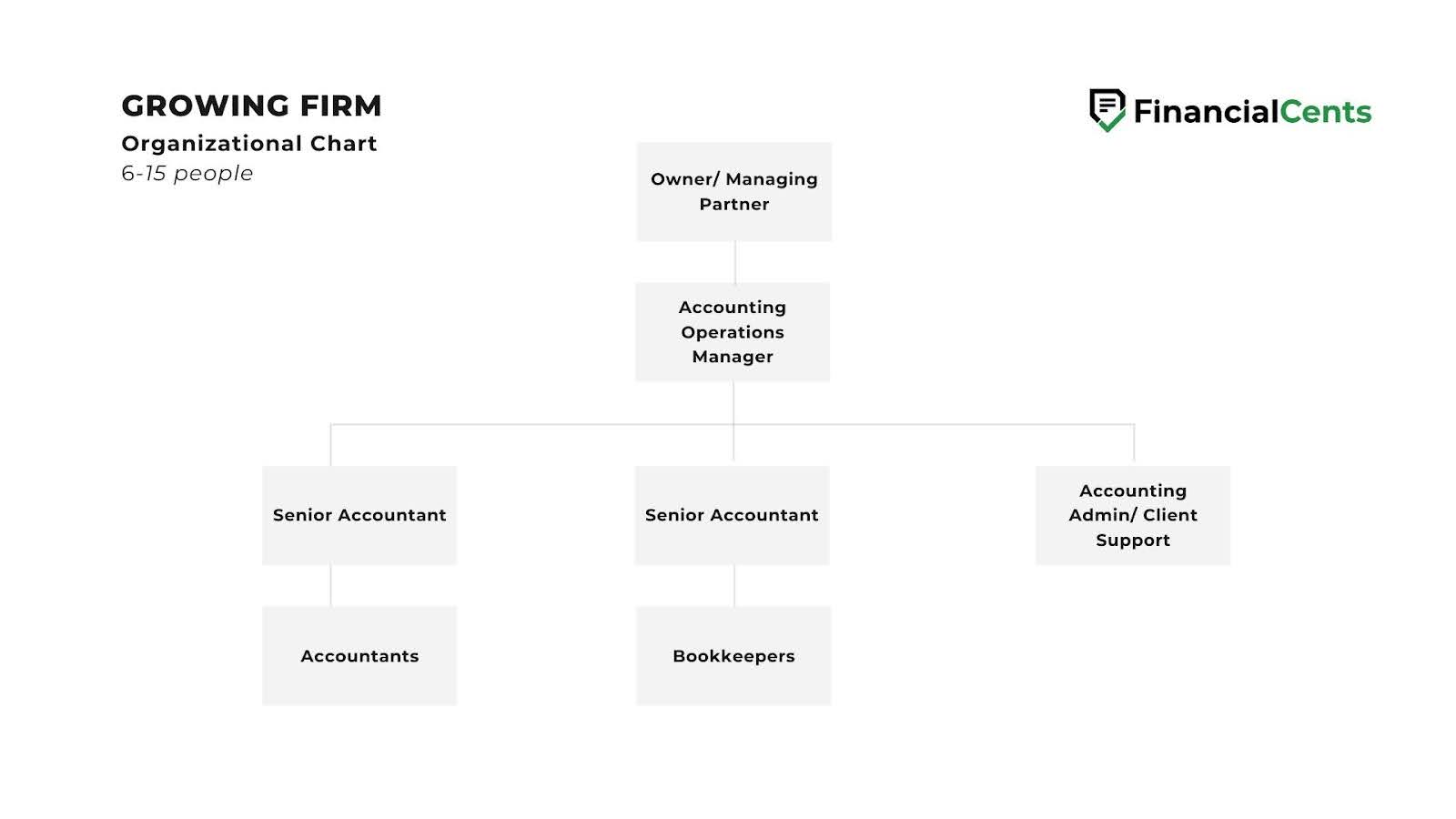
This is the stage where informal structure starts to break. The firm has enough people, clients, and moving parts that “everyone just knows” no longer works, and without clearer roles and ownership, too much work and decision-making pile up with the owner and senior staff.
Typical roles and responsibilities
- Owner / Managing Partner: Focuses more on strategy, key client relationships, and firm direction. Still reviews work, but should no longer be the default fixer for daily issues.
- Accounting Operations Manager: Owns workflows, deadlines, capacity, and internal coordination, so work moves smoothly across the firm and leadership is protected from constant interruptions. See the best practice management software for operations managers.
- Senior Accountants: Review staff work, handle more complex client issues, and provide guidance and training, acting as the bridge between leadership and delivery.
- Staff Accountants / Bookkeepers: Manage day-to-day client work across bookkeeping, tax, payroll, or reporting, following defined workflows instead of ad-hoc processes.
- Accounting Admin / Client Support: Coordinates client communication, document requests, onboarding, and billing support, keeping work flowing and reducing friction for clients and staff.
Common challenges
- Leadership still gets pulled into the weeds: Without strong operational ownership, the owner and seniors are still fixing broken workflows instead of leading.
- Workflow ownership is unclear: Tasks move, but no one is clearly responsible for keeping work on track from end to end.
- Inconsistent client experience: Without standardized accounting processes, service quality varies depending on who handles the work.
- Capacity issues surface: Some team members are overloaded while others have room, but there’s no clear visibility to rebalance work. Our guide to capacity management for accounting firms shows how to fix that.
This is often the stage where firms feel busy but not efficient. Adding structure here is less about control and more about creating leverage.
Mid-Sized Accounting Firm Organizational Structure (16–40 People)
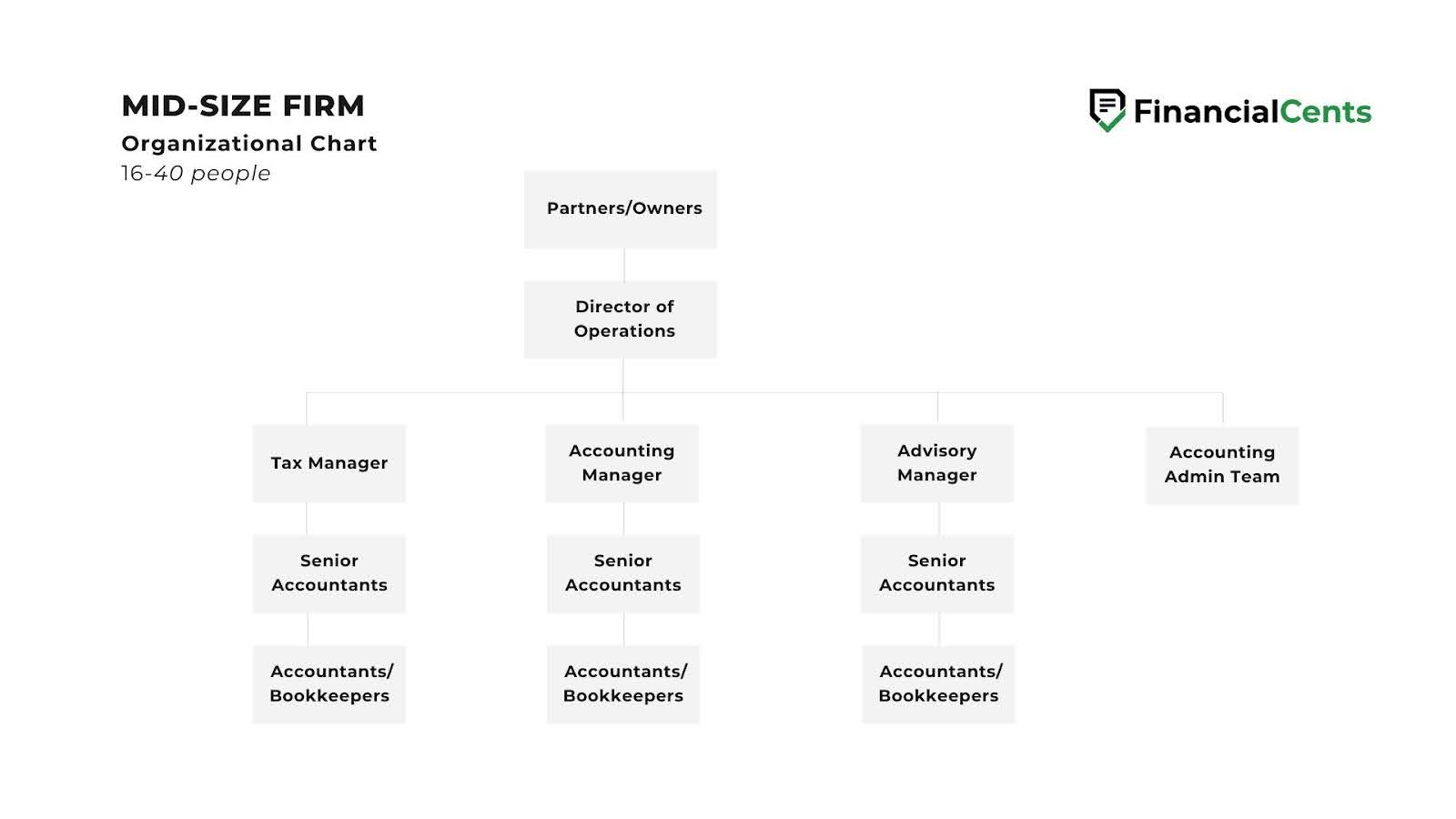
At this stage, the firm is no longer a single team; it’s a collection of teams. Structure is no longer about keeping things organized. It’s about making sure the firm can operate consistently without leadership involved in every decision.
Typical roles and responsibilities
- Owner / Partners: Set firm strategy, oversee major client relationships, and make high-level decisions. Day-to-day operations should no longer run through them.
- Director of Operations: Owns firm-wide execution, including workflows, capacity planning, systems, and keeping departments aligned. It’s one of the most critical roles at this size.
- Department Managers (Tax, Accounting, Advisory): Lead service lines, manage team performance, and keep delivery consistent within their department.
- Senior Accountants: Handle complex work, review staff output, and support department managers with training and quality control.
- Staff Accountants / Bookkeepers: Focus on delivery within a defined service line, following standardized workflows.
- Accounting Admin Team: Manages onboarding, document requests, billing coordination, scheduling, and client support across departments.
Common challenges
- Silos begin to form: Departments operate well individually but lose visibility into what other teams are doing.
- Inconsistent processes across departments: Each team develops its own way of working, which makes firm-wide reporting and planning harder.
- Leadership overload shifts, but doesn’t disappear: As partners step back, department heads often absorb the pressure, carrying more responsibility than the role was designed for.
- Coordination becomes harder: Without strong operations oversight, handoffs between teams slow work down.
At this size, structure protects consistency, so the firm delivers the same quality of service regardless of which team handles the work.
Large or Enterprise Accounting Firm Organizational Chart
At this stage, the firm operates more like an organization than a single practice. Leadership focuses on strategy, growth, and governance, while execution runs through clearly defined teams and systems. Structure is no longer just helpful; it’s essential.
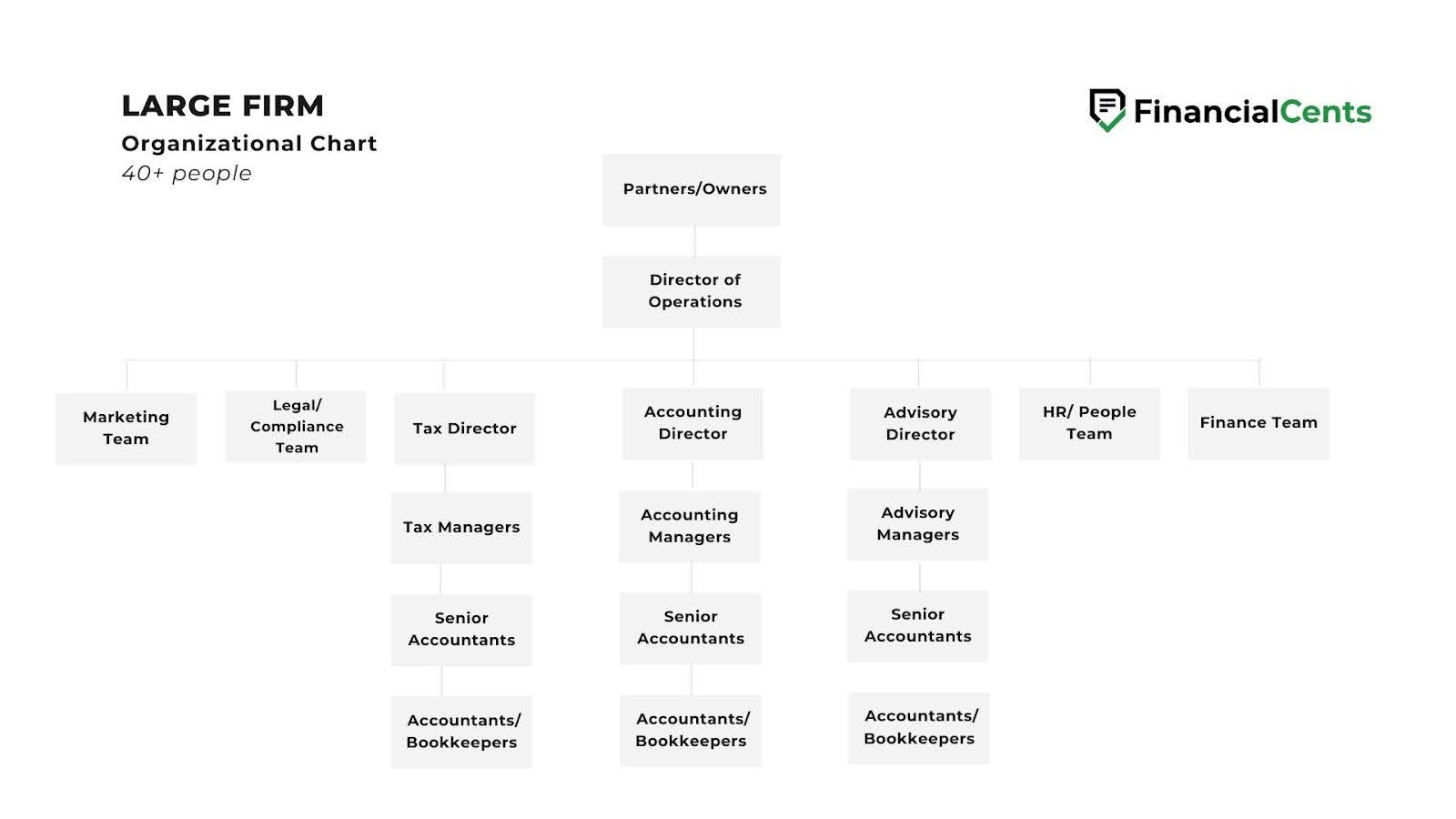
Typical roles and responsibilities
- Managing Partners / Executive Team: Set the firm’s vision, long-term strategy, and performance goals, focusing on major client relationships, mergers, and firm-wide decisions rather than day-to-day operations.
- COO / Operations Director: Oversees firm operations end to end, owning execution, capacity planning, systems, and cross-department coordination so the firm runs smoothly at scale.
- Department Directors (Tax, Accounting, Advisory, CAS): Lead service lines, manage department performance, and ensure consistent delivery across large teams.
- Accounting Operations Managers: Support department directors by owning workflows, deadlines, quality control, and capacity within their teams.
- Accounting Admin Teams: Handle onboarding, document collection, billing coordination, scheduling, and client support at scale. These teams are critical to maintaining efficiency and client experience.
- HR, IT, Finance, Marketing: Specialized teams support hiring, training, systems, internal finance, and firm growth.
Common challenges
- Maintaining consistency at scale: As teams grow, it gets harder to give every client the same level of service without strong systems.
- Cross-department coordination: Work often spans multiple teams, which increases the need for clear ownership and communication.
- Decision-making drag: Without clear authority and reporting lines, decisions slow down as more stakeholders get involved.
At this level, structure is what keeps the firm agile instead of bureaucratic. The best enterprise firms use structure to move faster, not slower.
What Are Common Accounting Firm Organizational Structure Mistakes?
Most structural problems don’t come from bad decisions. They happen when you grow quickly without stopping to define how your firm should actually operate. The most common mistakes:
- Too many direct reports to partners: If too many people report directly to you or your partners, everything slows down. Decisions take longer, feedback gets delayed, and leadership time disappears into day-to-day management instead of moving the firm forward.
- No clear workflow ownership: When everyone touches a process, no one truly owns it. Issues linger, accountability blurs, and small problems turn into recurring headaches.
- Promoting without leadership training: Being a strong accountant doesn’t automatically make someone a strong manager. Promoting on tenure or technical skill alone often frustrates both you and the person stepping into the role.
- Growing headcount without structure: Hiring more people without adjusting roles or reporting lines adds complexity, not leverage: your firm gets bigger, but the work doesn’t get easier. It’s a poor way to manage an accounting firm.
- Not documenting roles and responsibilities: If responsibilities aren’t written down, expectations stay unclear, your team fills the gaps with assumptions, and work quietly drifts back to the same few people.
How Do You Design the Right Structure for Your Firm?
Design your structure around the work: start with your services, define responsibilities before hiring, plan for where the firm is going, review it yearly, and align it with your workflows and capacity. The goal isn’t to look impressive on paper; it’s to make work flow smoothly, speed up decisions, and keep growth manageable.
- Start with services, not titles: Before you think about job titles, get clear on what your firm actually delivers, such as tax, bookkeeping, payroll, advisory, and client accounting services. Structure should follow the work, not the other way around.
- Define responsibilities before hiring: Hiring without clarity creates overlap and confusion. Define what the role owns, what it supports, and how success is measured before you bring someone in.
- Design for where the firm is going: Your structure should support the next stage of growth. Even if roles are combined today, your organizational chart should show how responsibilities will split as volume increases.
- Review and adjust structure annually: Firm structure isn’t set-and-forget. As services, team size, and clients change, revisit roles and reporting lines regularly.
- Align structure with workflows and capacity: Roles should match how work actually moves through the firm. When structure supports workflows and capacity planning, growth becomes far easier to manage.
How Does Practice Management Software Support Firm Structure?
An organizational chart only works if your systems reinforce it. The best accounting practice management software turns structure from a diagram into something your team uses every day:
- Assign workflows to the right people: When recurring work is assigned through workflow templates instead of individual memory, it moves more predictably. In practice management software like Financial Cents, template tasks are assigned to team members, so each recurring project lands with the right person as the team grows.
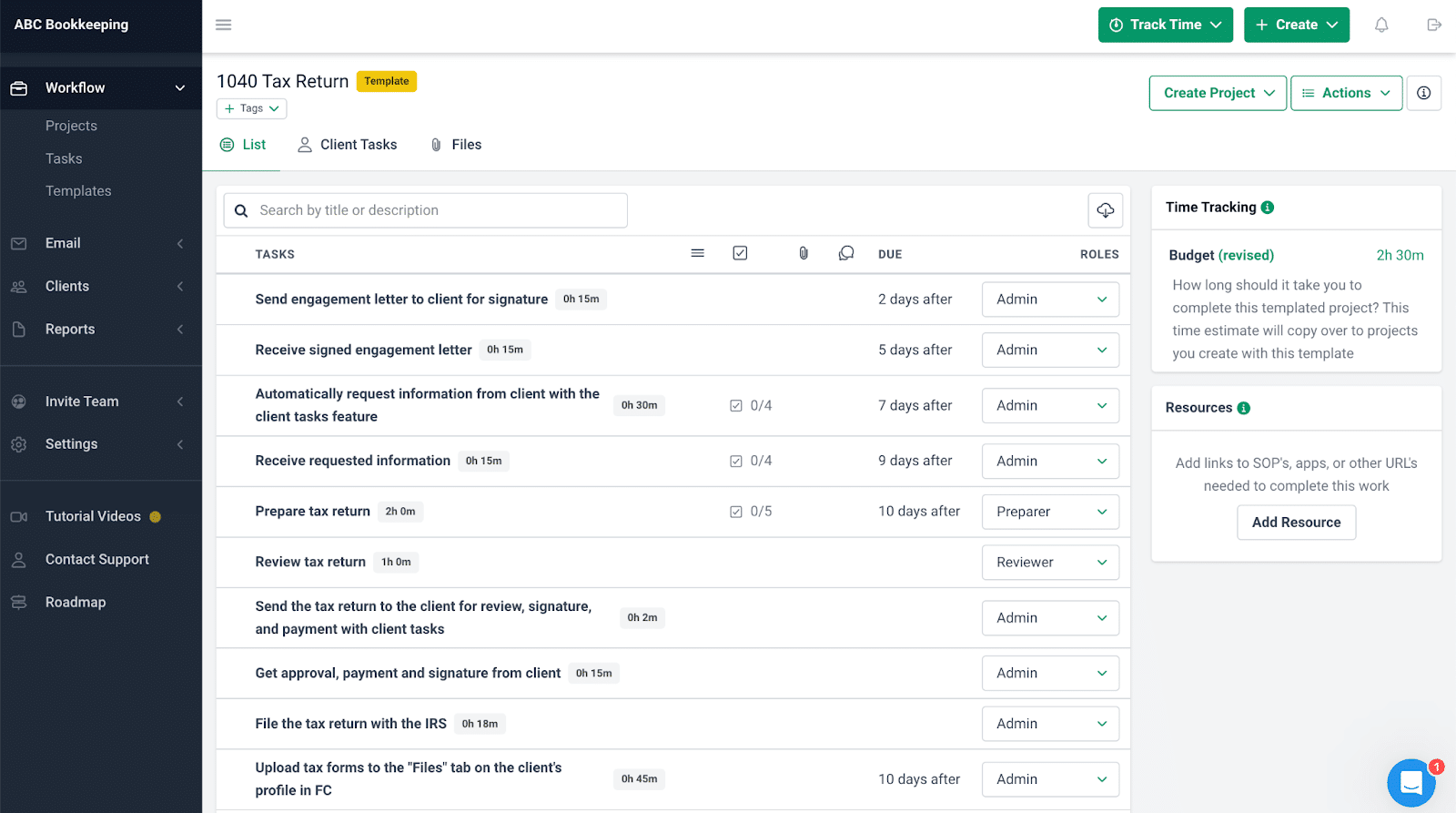
- Visibility into who owns what: Everyone can see who’s responsible for each task, which reduces handoffs, confusion, and duplicated work.
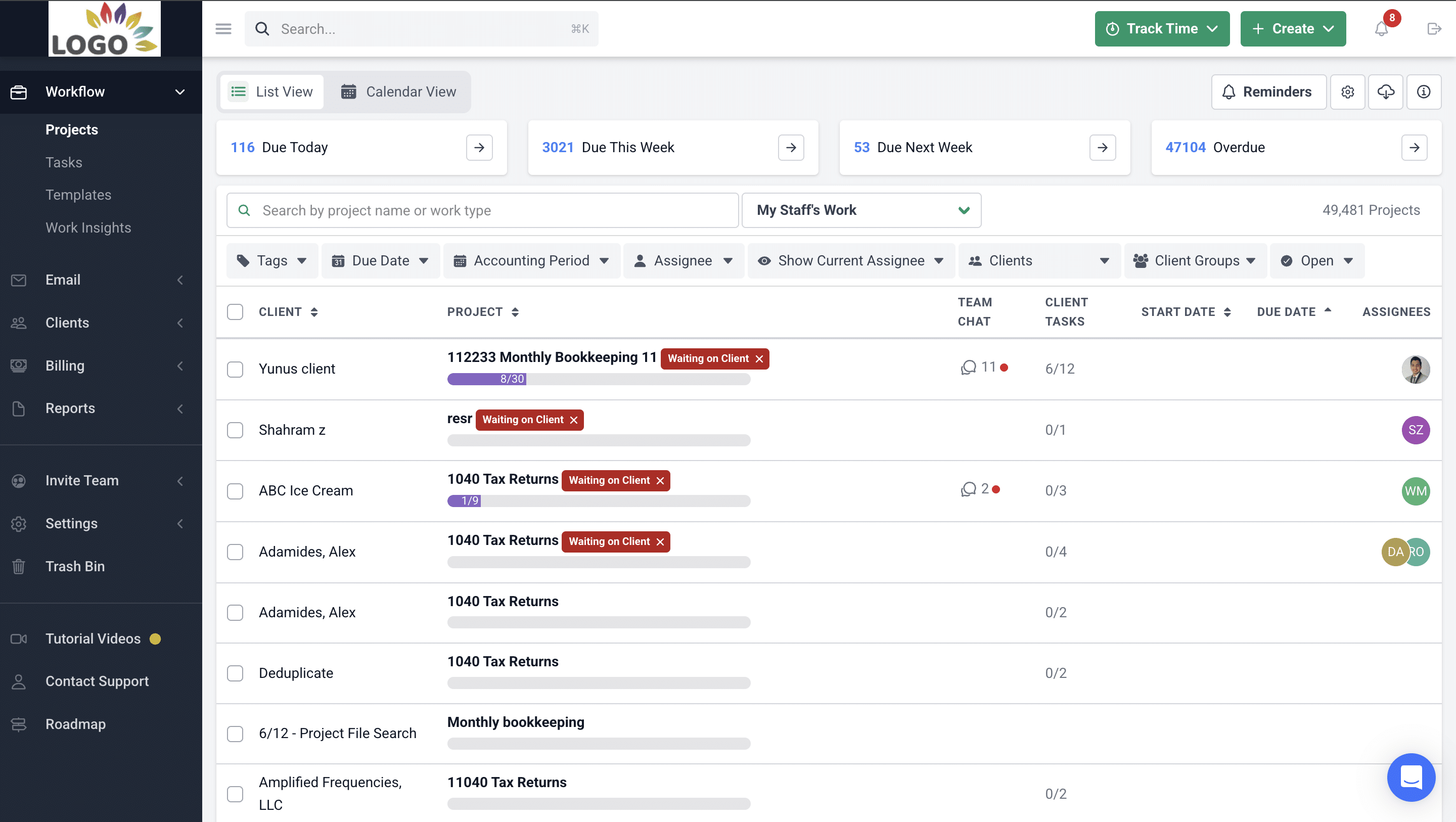
- Capacity and workload tracking: As firms grow, intuition stops working. You need to see who’s overloaded and who has room for more, and Financial Cents gives managers real-time workload visibility to rebalance work before bottlenecks form.
- Centralized communication tied to tasks and clients: Client messages, requests, and updates stay connected to tasks and projects, reinforcing accountability and role clarity.
Build a Structure That Grows With Your Firm
There’s no single organizational chart that works for every accounting firm. Structure should evolve as your firm grows, your services change, and your team expands. What matters isn’t getting it perfect on day one, but starting simple and refining as you go; even a basic structure beats none if it creates clarity and reduces friction.
Structure alone isn’t enough, though. Organizational charts need documented roles, standardized workflows, and clear visibility into who owns what. When your structure, processes, and systems are aligned, work flows more smoothly, accountability improves, and growth becomes far easier to manage.
See how the right systems support your firm’s structure. Book a demo or start a free trial.
Frequently Asked Questions (FAQs)

The Financial Cents Editorial Team creates practical guides, templates, and resources for accounting, bookkeeping, and tax firms, drawing on our in-house experts and the firm owners we work with.
Share this article