The ultimate goal of accounting engagement letter software should be turning signatures into the start of the client’s work. But a manual, disconnected system makes that much harder.
If every time you win a new client, someone on your team has to:
- Copy their details into a Microsoft Word engagement letter, save it as a PDF before emailing it over.
- Assign a team member to track acceptance and move the signed document between the inbox, downloads folder, and signature tool.
- Set up recurring billing, create the client’s projects, assign tasks, and make sure the delivery team knows exactly what the client agreed to.
…then your engagement-letter process might be too fragmented to be efficient. This manual approach can leave your teams working from stale scopes, make it harder to confirm what a client accepted, and create gaps between the service sold and the service delivered.
Modern accounting engagement letter software solutions handle the process end-to-end. They connect the agreement to the steps that follow it (payment authorization, onboarding, recurring work, and client records) instead of treating the engagement letter management as an isolated task. But we also understand that some firms may not need that level of integration.
So, whether you prefer a dedicated e-signature tool or want something that eliminates the handoffs between systems, you’ll find a good fit in this comparison of the 7 best engagement letter software options for accounting firms in 2026.
This guide discusses what each tool does well, what it costs, where it falls short, and which type of firm it’s best suited for. In the end, you should be clearer about not only the type of tool you need, but also the specific one to help your firm grow.
TL;DR
- The best engagement letter software for accountants should turn a signed agreement into the start of an organized client workflow. A dedicated e-signature tool can solve the basic problem of getting an agreement signed.
- But proposal and top practice management platforms connect engagement terms to pricing, payments, onboarding, client communication, and ongoing work.
- The seven best options for accounting firms in 2026:
- Key Takeaway: Choose based on the workflow, not just the document
- A good engagement letter workflow goes beyond creating a document and collecting a signature. Look for templates, clear scope and pricing, e-signatures, reminders, payment and billing capabilities, renewal workflows, secure storage, and integrations with the systems your firm already uses.
- The rule of thumb: If your primary need is advanced proposals, pricing, and payment workflows, consider a dedicated proposal platform. If your priority is keeping signed scope connected to client delivery, consider an integrated practice management platform.
The 7 Best Engagement Letter Software for Accounting Firms Compared
← Scroll to see more →
| Tool | Best For | Built-in E-Signatures | Proposals & Pricing | Billing / Payments | Workflow Connection | Client Portal | Starting Price |
|---|---|---|---|---|---|---|---|
| Financial Cents | Small-to-mid firms wanting engagement letters, proposals, workflow, and billing under one roof | ✓ Legally binding with audit trail | ✓ Multi-tier service packages with flat, variable, or hourly pricing | ✓ Automated payment capture and recurring billing | ✓ Signing triggers client tasks and recurring work automatically | ✓ Branded portal with signed contracts, document uploads, and tasks | $19/mo per user |
| Ignition | Firms with established task management that prioritize advanced proposals, billing, and payment automation | ✓ Bank-grade legal audit trail | ✓ Extensive service library with dynamic pricing (fixed, hourly, deposits) | ✓ Recurring invoices auto-created in QBO/Xero on acceptance | Via third-party integrations (e.g., Zapier) | No native client portal | $39/mo |
| DocuSign | Firms requiring universal brand recognition and strict legal compliance for e-signatures | ✓ Bank-grade encryption with tamper-evident seals | Cannot calculate service packages or variable pricing | No native recurring billing | No native workflow connection | No native client portal | $11/mo |
| Canopy | Tax-heavy practices needing document management, client portals, and tax resolution workflows | ✓ Native e-signing built into the platform | ✓ Itemized service lists with price quotes alongside engagement terms | ✓ Billing tools integrated into the platform | ✓ Alongside tax resolution modules, time tracking, and tasks | ✓ Secure portal with signed letters pinned inside | $74/mo per user |
| Karbon | Mid-to-large collaborative teams needing contracts tied to workflow templates and team communication | ✓ Built-in signature tracking in team workspace | ✓ Standardized deliverables with firm-wide pricing consistency | No native billing or payment processing | ✓ Structured project templates and collaborative dashboards | ✓ Automated Client Tasks for secure file exchange | $59/mo per user |
| TaxDome | Growth-oriented tax and accounting firms seeking end-to-end pipeline automation | ✓ Built-in e-signature connected to client portal | ✓ Service selection dashboard with engagement text | ✓ Payment processing locked in upon contract signing | ✓ Pipeline automation advances jobs on signature | ✓ Central portal with folders, document uploads, and chats | $800/yr per seat |
| Knuula | Solo and small practices needing affordable, straightforward engagement letter generation | ✓ Native e-signatures with centralized tracking | ✓ Menu-driven proposals with packaged pricing | No billing or payment features mentioned | No native workflow connection | No native client portal | On request |
What Is Engagement Letter Software for Accountants?
Accounting engagement letter software is software that enables accounting firms to create, personalize, send, sign, track, renew, and securely retain client engagement letters. It replaces the fragmented process of building accounting services engagement letters in Microsoft Word, converting them to PDFs, sending them by email, chasing signatures, and filing the completed agreement.
Accounting-specific engagement letter software enables firms to standardize templates while customizing services, scope, fees, service periods, client responsibilities, and terms for each client. More complete platforms connect the engagement letter to the steps surrounding it, allowing a firm to move from a proposal and service package to pricing, engagement terms, signature, payment authorization, and client onboarding and recurring work.
That is perhaps the biggest difference between engagement letter software and a generic e-signature tool. Here’s how engagement letter software compares with similar tools, like:
- A document template: Provides the engagement letter’s language.
- An e-signature tool: Collects and records the client’s signature.
- A proposal platform: Presents services, pricing, and terms and helps the client accept the engagement.
- Engagement letter software: Manages the agreement itself, including its creation, signing, tracking, storage, and renewal.
- An accounting practice management platform: Takes that process further by connecting the agreement to client records, onboarding, billing, workflow, recurring work, and reporting.
Why Use Engagement Letter Software Built Specifically for Accountants?
Generic e-signature tools do the main job they were built for: get documents signed. For some firms, that’s enough. If your engagement letters are already approved and standardized, and your team has separate systems for proposals, billing, client communication, and workflow, adding accounting-specific software may not justify the extra cost.
But when the engagement letter is part of a larger client onboarding process, accounting-specific software that is designed around recurring services, service periods, pricing packages, annual re-engagements, and the work that begins after a client signs is just as important as getting a document signed.
Best Engagement Letter Software for Accountants [2026]
Financial Cents
[IMAGE: Financial Cents]
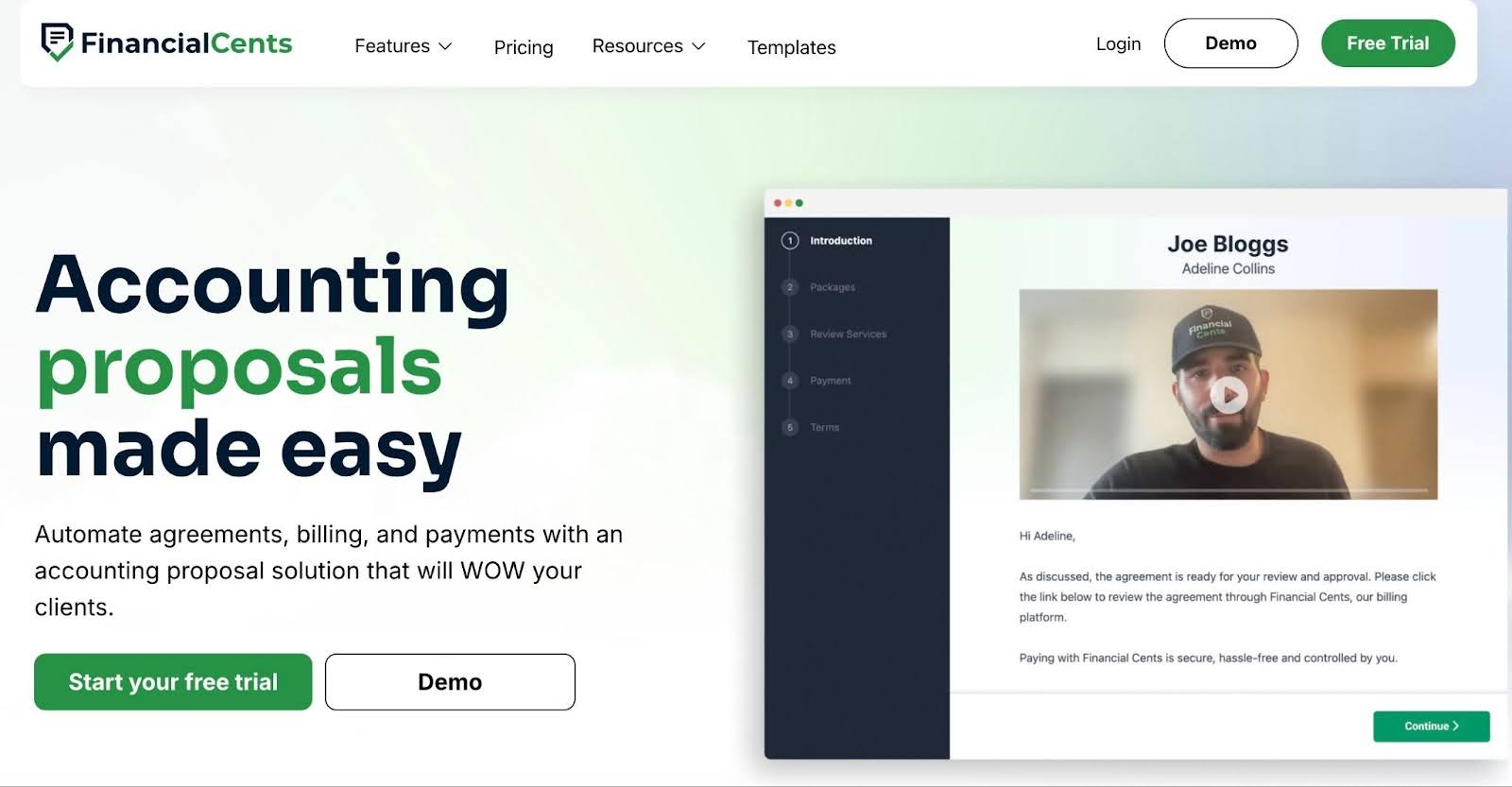
Financial Cents is an all-in-one accounting practice management system designed to connect the work of winning a client with the process of delivering the service by keeping the agreement within the same workspace as the CRM, billing, workflow, and documents.
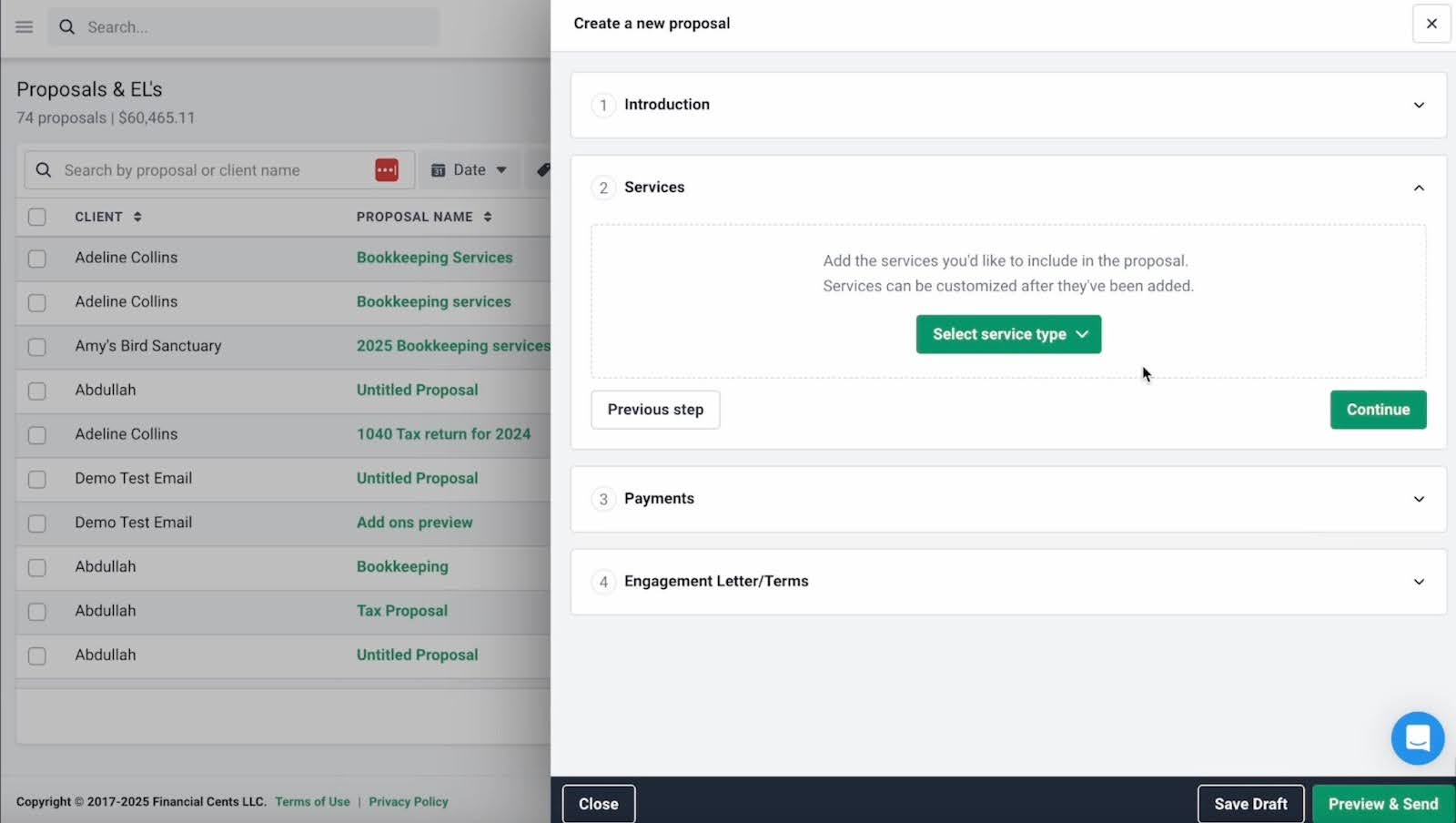
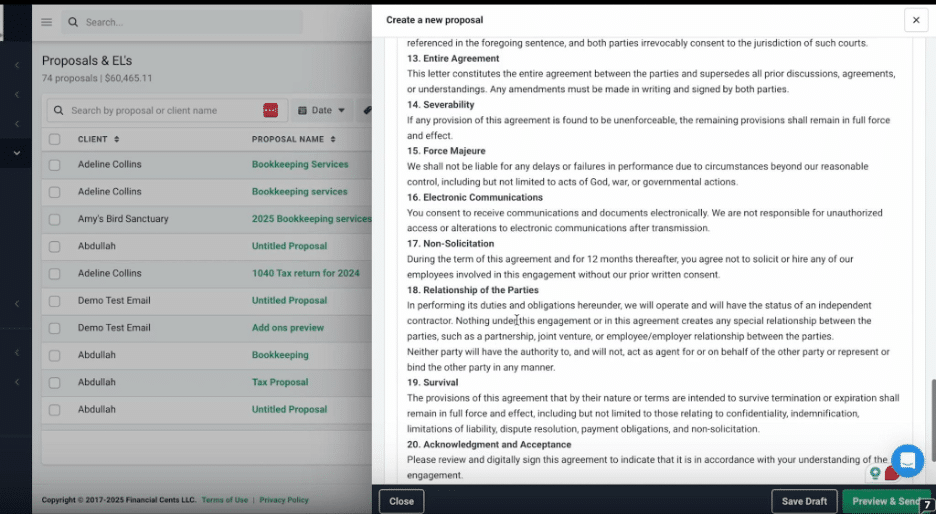
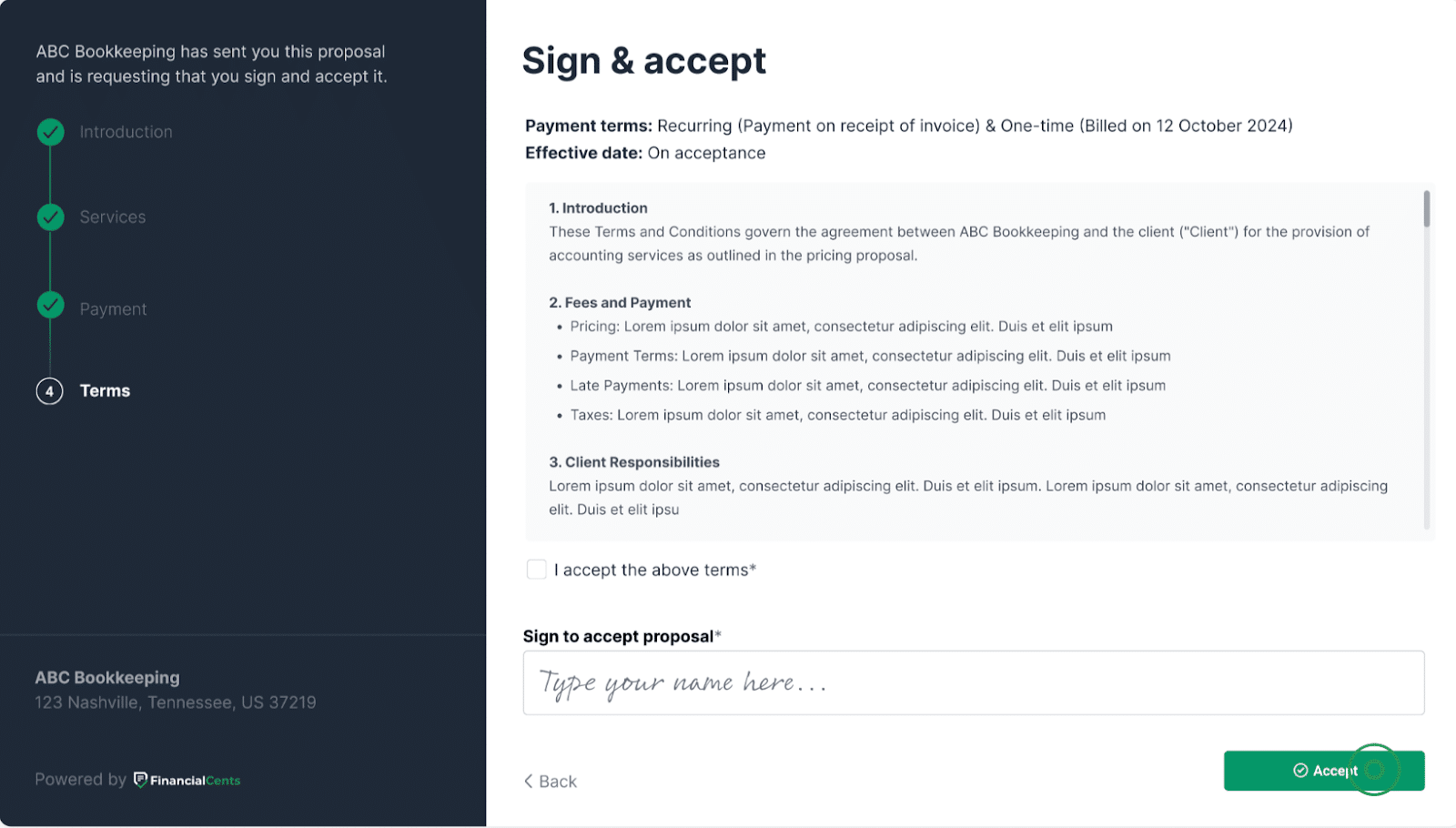
Its proposal software for accountants and e-signature features let firms create branded proposals, present service packages and pricing, include engagement terms, and collect electronic signatures without moving the client into a separate platform.
Key Engagement Letter Features
- Creation & Customization: Generate professional proposals and engagement letters using text editors that accommodate complex contract terminology.
- Templates: Create and save standard engagement letters you can reuse or customize for subsequent accounting, advisory, bookkeeping, and tax work.
- Proposals & Service Packages: Design multi-tier service options that prospective clients can choose for their preferred engagement level.
- Pricing and recurring billing: Calculate flat, variable, or hourly pricing on the go, with automated payment credential capture embedded.
- Tracking & Audit Trail: Monitor contract status in real-time with audit tracking that logs timestamps, email verifications, and signer IP addresses.
- Legally Binding E-Signatures: Built-in digital signature capability eliminates any requirement for a costly, standalone signing app.
- Automated Reminders: Set up hands-free email nudge sequences to politely prompt clients to sign engagement before critical project deadlines.
Engagement-to-Delivery Features
- Direct Workflow Activation: Signing an agreement in Financial Cents can automatically trigger client tasks and schedule recurring monthly work.
- Unified Client Portal: Signed contracts are permanently pinned inside a branded client portal where the client can also securely upload documents and complete tasks.
- Automated Onboarding: Financial Cents seamlessly initiates onboarding checklists and triggers automated client document collection rules.
- Document Retention: Automatically locks and archives the final signed PDF directly to the client’s profile for permanent compliance storage.
| Pros | Cons |
|---|---|
| Financial Cents’ all-in-one practice management system eliminates context-switching. | Lacks native inline document editing; attachments must be downloaded, updated, and re-uploaded. |
| Passwordless login encourages clients to adopt the client portal. | Limited advanced pricing calculations |
| Highly transparent, affordable pricing model built for firm scalability. | Basic design customization |
Pricing
Financial Cents uses a tiered per-user pricing model:
- Solo: $19/month per user
- Team: $49/month per user
- Scale: $69/month per user
- Enterprise: custom pricing
Ratings
Financial Cents is rated:
Best For
Small to mid-sized accounting and bookkeeping firms looking for an easy-to-adopt platform that unifies engagement letters, proposals, workflow automation, time tracking, billing, and passwordless client portals under one roof to eliminate “tool sprawl.”
Ignition
Ignition is a dedicated proposal and billing platform that streamlines client onboarding, sales proposals, and engagement letters for professional service firms.
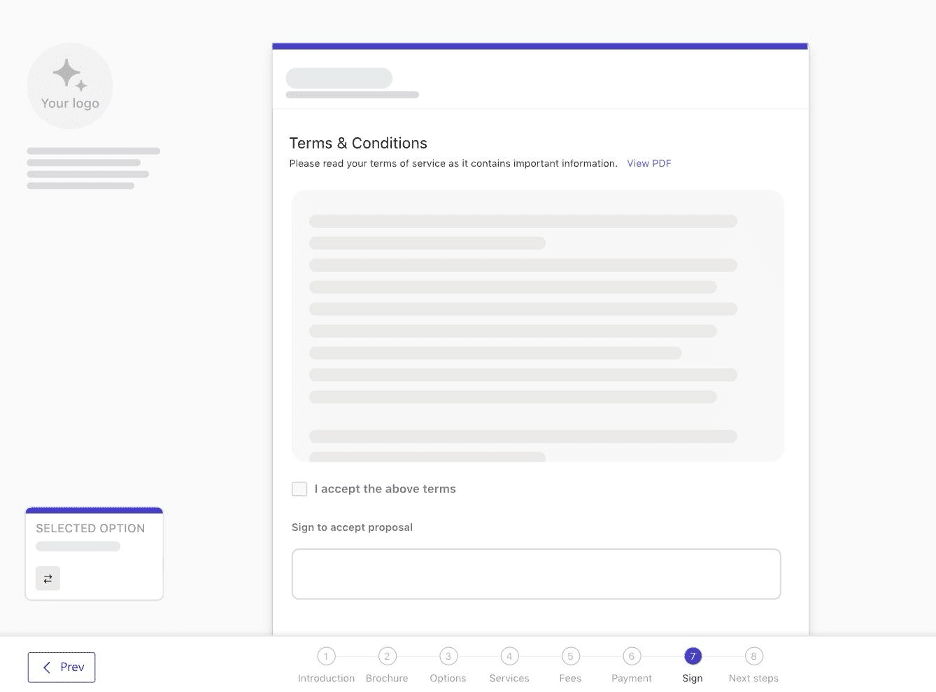
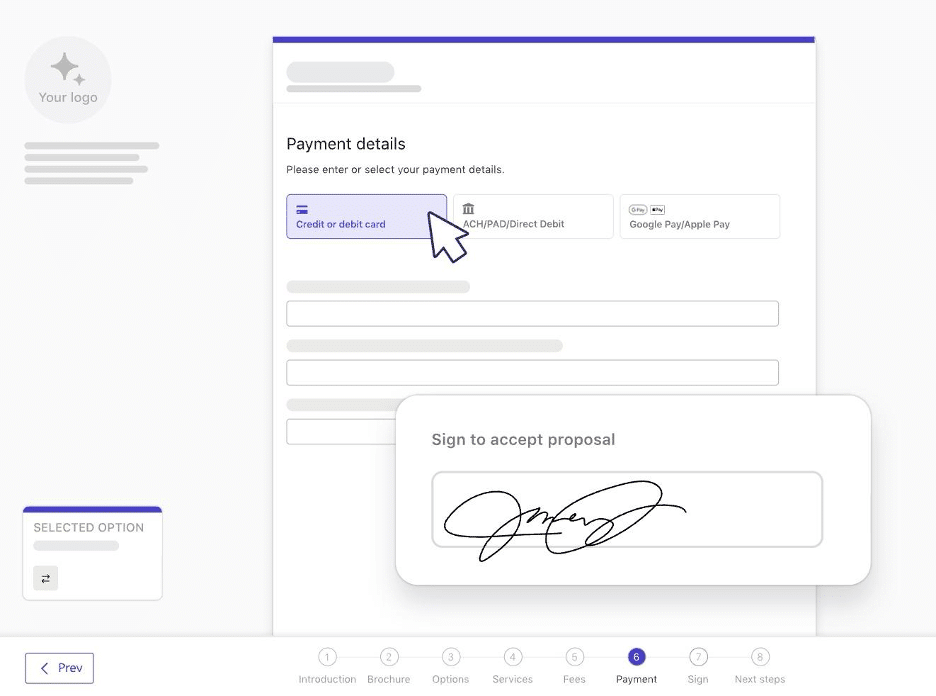
Its strength is connecting the commercial side of the engagement within the same workflow. Ignition makes the engagement letter part of the process for getting a client to accept the proposal, agree to the terms, and set up payment.
Key Engagement Letter Features
- Creation & Customization: Generates digital proposals that can embed rich formatting and marketing content.
- Service Package Templates: Features an extensive service library to list out deliverables and counter scope creep.
- Pricing & Payments: Advanced pricing configuration matrix supporting fixed fees, hourly rates, and automated deposit amounts.
- E-Signature & Audit Trail: Includes e-signing tools backed by a bank-grade legal audit trail.
- Recurring Billing Automation: Automatically sets up recurring invoices inside QuickBooks Online or Xero immediately upon contract acceptance.
- Reminders: Sends structured reminders to keep prospects moving through your sales funnel.
Engagement-to-Delivery Features
- Workflow Connection: Relies on third-party integrations (like Zapier) to signal external project managers to create work.
- Onboarding & Retention: Pushes billing data into accounting platforms and retains signed contract records in its sales dashboard.
| Pros | Cons |
|---|---|
| Sophisticated client-facing proposal layouts. | Expensive as a standalone software tool |
| Best-in-class proposal presentation | Creates an operational data silo |
| Seamless automated payment processing and recurring billing setup. | Requires third-party integrations for full internal task and workflow management. |
Pricing
Ignition uses a tiered pricing model:
- Solo: $39/month
- Core: $99/month
- Pro: $229/month
- Pro+: $399/month
Ratings
Ignition is rated 4.7 on both Capterra and G2
Best For
Firms with heavily established standalone task management systems that prioritize deep payment gateway automation and complex billing layouts, dynamic sales proposals, automated client billing, and clear service scope packaging.
DocuSign
DocuSign is an electronic signature and agreement management platform used by businesses across industries.
For firms that primarily need a reliable way to send engagement letters for electronic signature, track their status, and maintain a record of completed agreements, DocuSign can handle the core signing workflow without requiring a broader practice management platform.
Key Engagement Letter Features
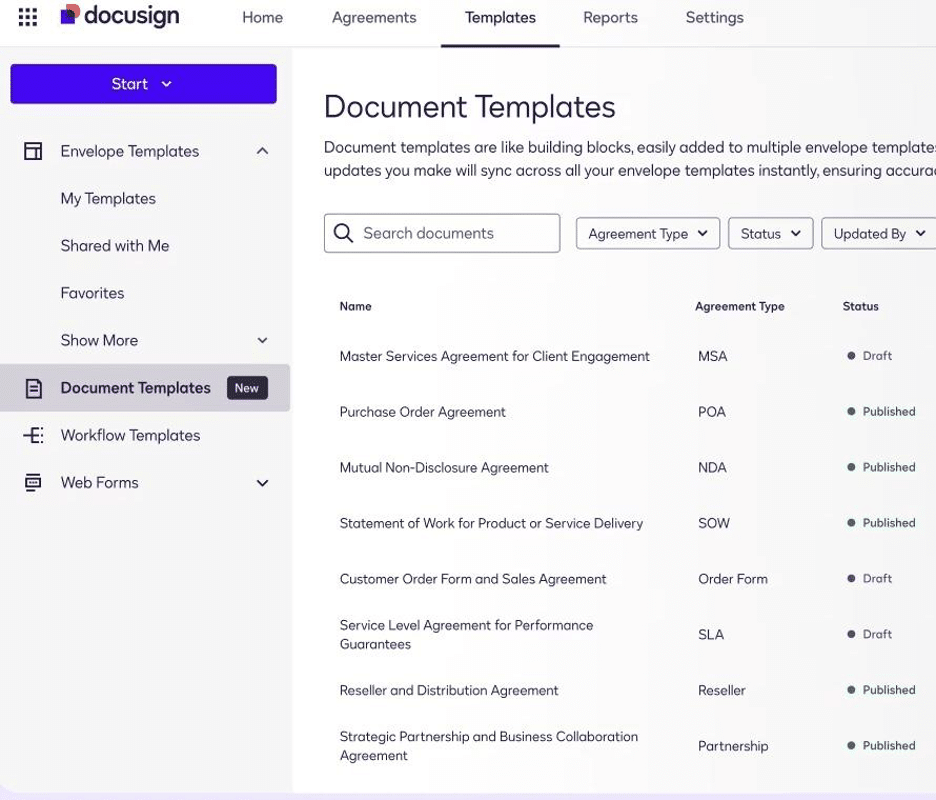
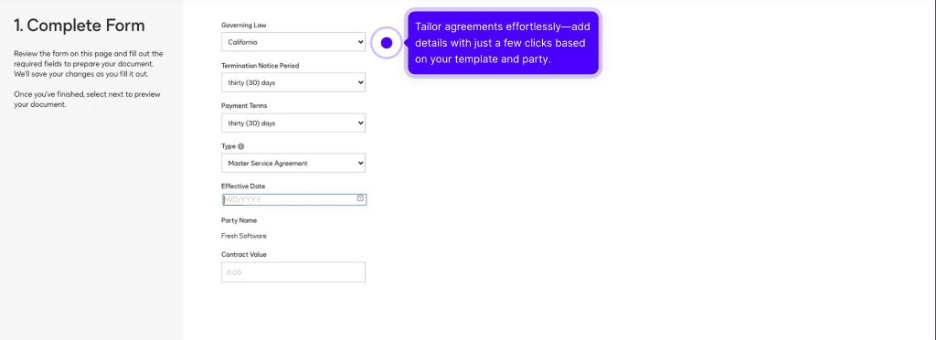
- Creation & Customization: Combines file uploads (Word or PDF documents) with manual field mapping to create engagement letters.
- Templates: Reusable document field overlays can be saved for frequently distributed contracts.
- E-signature & Security: Provides bank-grade encryption, strict tamper-evident seals, and legal audit trails.
- Tracking & Reminders: Offers robust, transaction-based status monitoring with automated expiry notices.
- Pricing & Billing: Cannot calculate service packages or process variable recurring billing natively.
Engagement-to-Delivery Features
- Document Retention: DocuSign CLM/e-signature offers enterprise-grade security and compliant cloud archiving (e.g., SOC 2, HIPAA, ESIGN Act compliance).
| Pros | Cons |
|---|---|
| Instantly recognizable name that builds immediate client trust | Forces firm owners into manual data entry |
| Industry-standard trust and legal validity | Per-envelope costs can increase quickly |
| Deep integration network. | No built-in accounting service packaging |
Pricing
DocuSign uses a tiered per-user pricing model:
- Personal: $11/month
- Standard: $30/month per user
- Business Pro: $45/month per user
Ratings
DocuSign is rated:
Best For
Firms requiring universal brand recognition, strict legal compliance, or broad standalone electronic signature capabilities.
Canopy
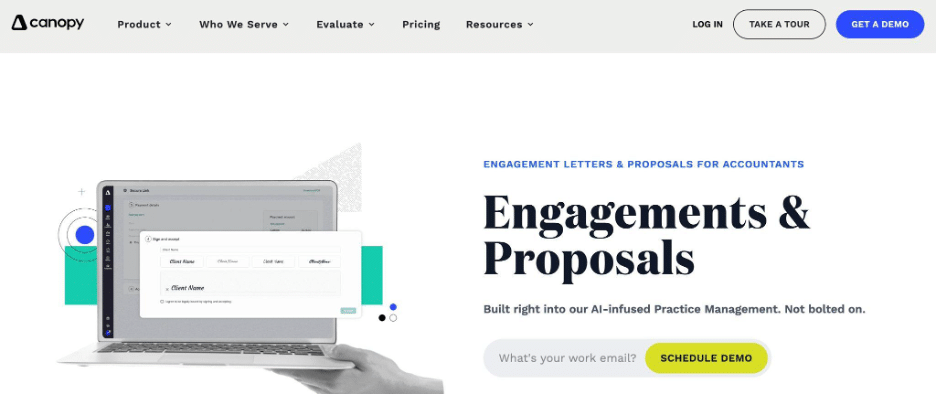
Canopy is a cloud-based practice management platform designed for tax and accounting firms, combining engagement management with client management, document management, workflow, and billing tools.
Canopy provides a more connected alternative to standalone e-signature software. Its engagement workflows can help firms manage client agreements alongside the records, documents, and work associated with those engagements.
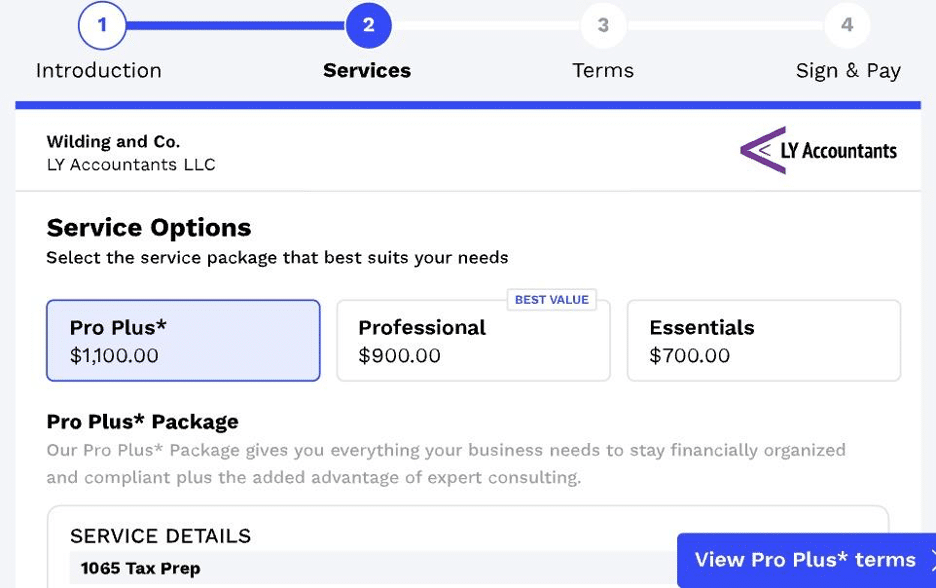
Key Engagement Letter Features
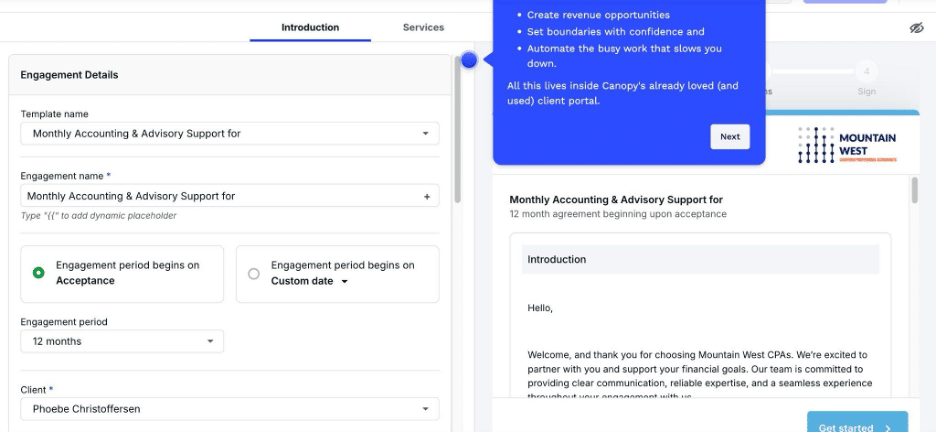
- Creation & Formatting: Provides standard letter-building capabilities directly inside client interaction streams.
- Reusable Templates: Stores standardized legal letters mapped to dynamic client CRM tags.
- Proposals & Pricing: Itemizes service lists and presents straightforward price quotes alongside engagement terms.
- E-signature & Tracking: Native e-signing execution built into the platform to avoid external add-on costs.
- Audit-Trail & Reminders: Logs full transaction steps and provides basic automated signature chasing.
Engagement-to-Delivery Features
- Workflow Connection: Contracts exist alongside tax resolution modules, time tracking, and task structures.
- Client Portal: Signed letters are instantly pinned inside Canopy’s secure client portal.
- Document Retention: Exceptional built-in document management architecture for long-term file security and retrieval.
| Pros | Cons |
|---|---|
| Exceptional document management features | Features are fractured across independent, paid add-on modules, which can inflate total costs for growing firms. |
| Detailed tax resolution support. | Setting up custom engagement templates is time-consuming |
| Automatic tax triggers | Scope edit is inflexible |
Pricing
Canopy uses a tiered per-user pricing model:
- Standard: $74/month per user
- Plus: $109/month per user
- Enterprise: custom
Ratings
Canopy is rated:
Best For
Small-to-large, tax-heavy accounting practices that need a structured practice management platform with robust document storage, secure client portals, and specialized tax resolution workflows.
Related:
Compare Financial Cents vs Canopy
The Best Canopy Alternatives for Firms in 2026
Karbon
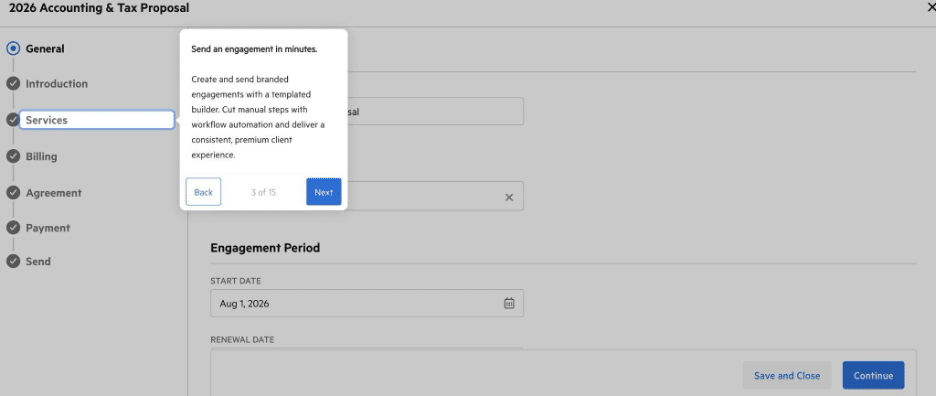
Karbon’s enterprise-grade collaborative practice management software was built for team communication, deep task dependencies, and complex workflow automation.
Its engagement letter capabilities fit into that broader practice management ecosystem, allowing firms to manage engagement documents alongside client records, team communication, tasks, and ongoing workflows. Karbon places its engagement letters within the wider context of the client relationship and the work required to deliver it.
Key Engagement Letter Features
- Creation & Proposals: Drafts clear agreements using internal template standards linked to client accounts.
- Service Packages & Pricing: Itemizes standardized deliverables to maintain firm-wide pricing consistency.
- E-signature & Tracking: Built-in digital signature tracking fields display outstanding items in a centralized team workspace.
- Audit Trail & Reminders: Complete system logging paired with automated client nudges triggered by missing documentation.
Engagement-to-Delivery Features
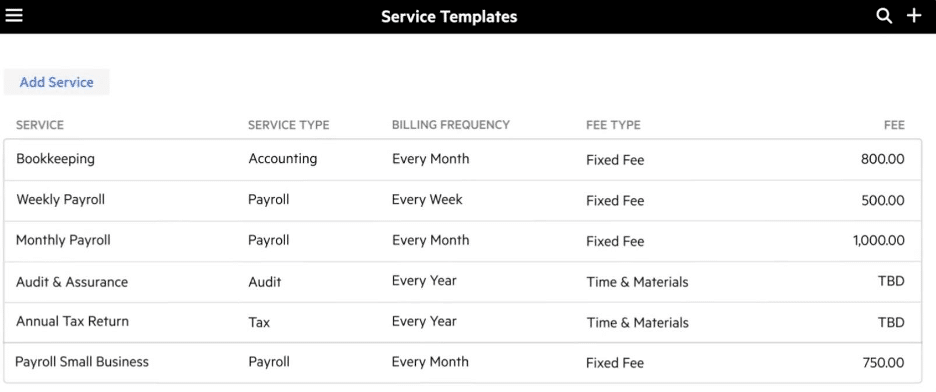
- Workflow Connection: Contract completions combine with Karbon’s highly structured project templates and collaborative communication dashboards.
- Client Portal: Features automated Client Tasks that securely exchange files with clients.
- Document Retention: Links completed files directly into active team communication lines.
| Pros | Cons |
|---|---|
| Robust team collaboration features | Steep learning curve |
| Exceptional Task automation capabilities | Complex onboarding configuration |
| High visibility into work management | High per-user entry fees |
Pricing
Karbon uses a tiered per-user pricing model:
- $59/month per user
- $89/month per user
- Enterprise: custom
Ratings
Karbon is rated:
Best For
Growing mid-to-large practices with multi-staff teams managing fast-moving, collaborative workloads that need engagement contracts tied directly into robust workflow templates and team-wide communication workspaces.
Related:
Compare Financial Cents vs Karbon
The Top Karbon Alternatives in 2026
TaxDome
TaxDome is a feature-rich practice management platform built to centralize client interactions, from organizers and chats to engagement letters and invoicing, within a single client portal.
Its engagement letter functionality is part of a broader client-management experience. Firms can use the platform to send agreements for electronic signature, manage client communications and documents, and keep engagement-related information alongside other client activity.
Key Engagement Letter Features
- Creation & Templates: Creates standardized legal agreements that are tied to dynamic digital tax organizers.
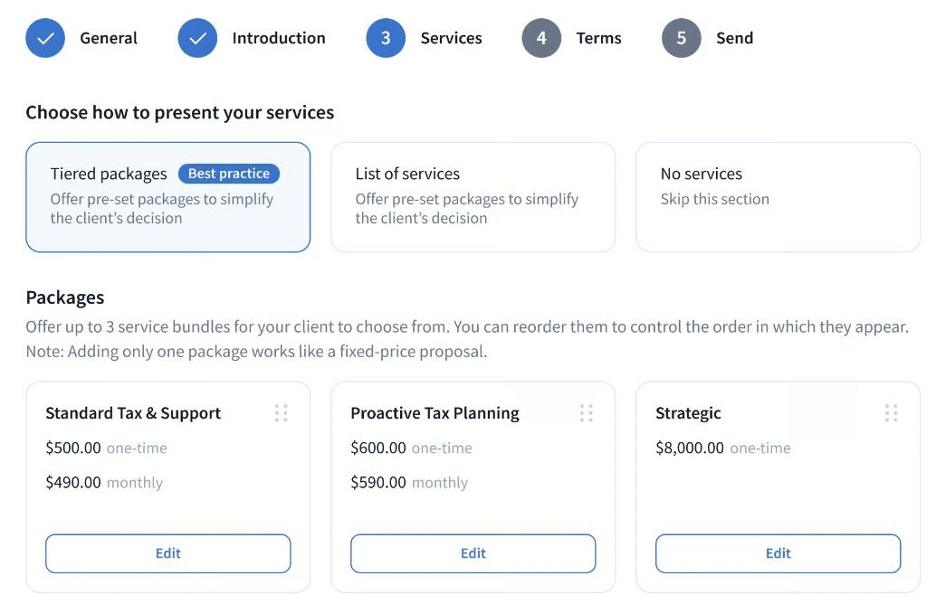
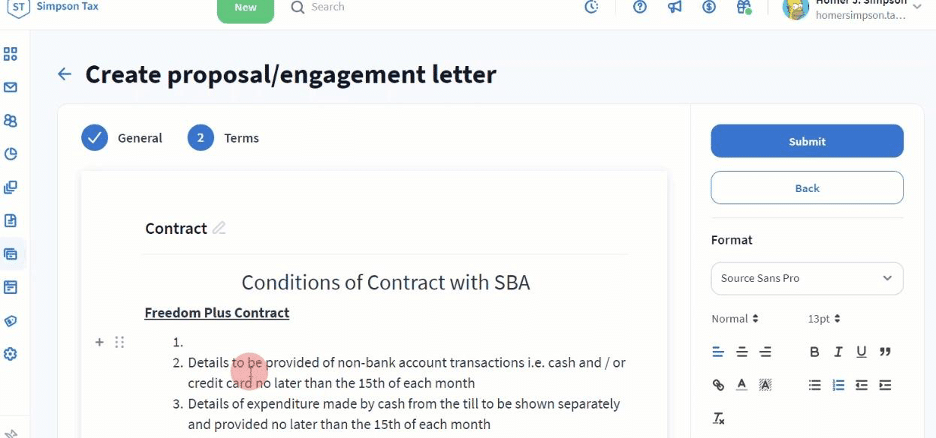
- Proposals & Customization: Combines engagement text with a service selection dashboard.
- E-signature & Tracking: Built-in electronic signature verification dashboards connected to client portals.
- Audit-Trail & Reminders: Full administrative logging backed by automated, multi-step pipeline reminders.
- Recurring Billing capabilities: Connects with major processing applications to lock in payments upon contract signing.
Engagement-to-Delivery Features
- Workflow Connection: Operates via a rigid pipeline automation structure where a client signing an agreement can automatically advance a job card to a new stage.
- Client Portal: Taxdome is built around its client portal. Firms can even share folders with clients in addition to document uploads to keep the engagement moving.
- Document Retention: Built-in secure folder structure for compliant record retention.
| Pros | Cons |
|---|---|
| End-to-end pipeline automation | The user experience can feel clinical, dense, and overwhelming for non-technical clients |
| Unlimited document storage and e-signatures | Long implementation cycle |
| Extensive features reduce tool sprawl | Rigid annual billing commitment |
Pricing
TaxDome uses a tiered per-seat pricing model:
- Essentials: $800/year, per seat
- Pro: $1000/year, per seat
- Business: $1200/year, per seat
Ratings
TaxDome is rated 4.7/5 on both Capterra and G2.
Best For
Growth-oriented tax and accounting practices seeking deep, hands-off pipeline automation to run end-to-end client lifecycles, from initial proposal signing and document intake to final service delivery and payment collection.
Related:
Compare Financial Cents vs Taxdome
The Best Taxdome Competitors and Alternatives in 2026
Knuula
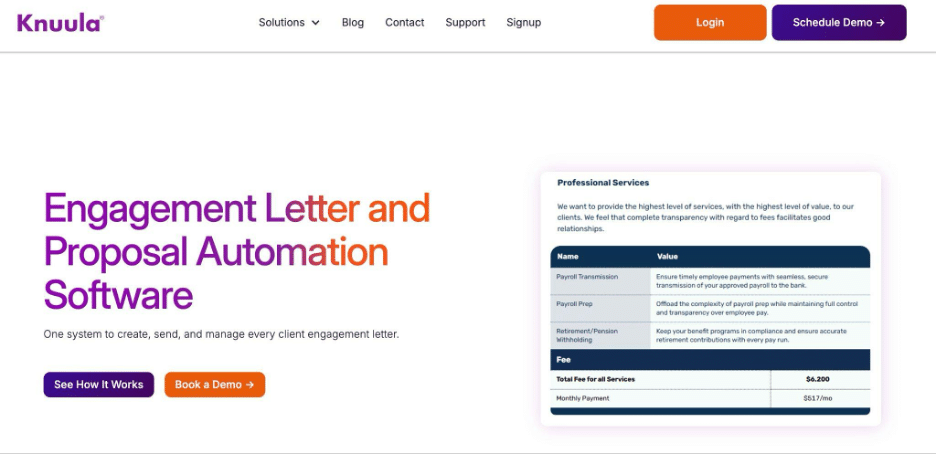
Knuula is an engagement letter and proposal platform built specifically to simplify the process of creating, sending, signing, and tracking client agreements, with features tailored for firms managing a high volume of engagements.
Its accounting-specific focus makes it useful for standardizing engagement documents and reducing the administrative work involved in preparing and following up on client agreements.
Key Engagement Letter Features
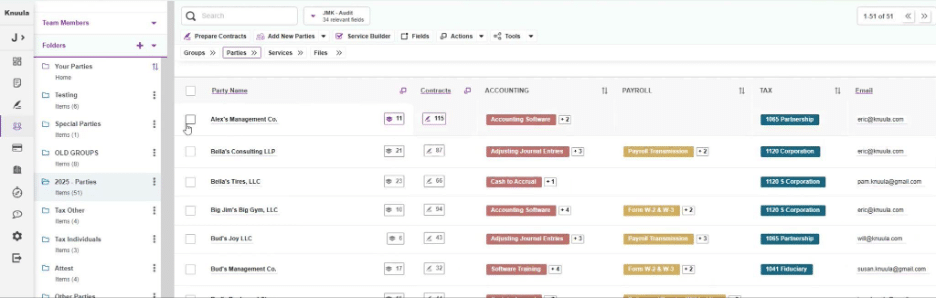
- Adaptive Customization: Uses conditional logic engines that automatically inject variable text blocks based on the services or entity type selected.
- Bulk Letter Generation: Allows firms to map client spreadsheets to master legal templates and generate hundreds of tailored letters simultaneously.
- Custom Proposals: Packages pricing and services into clear, menu-driven agreements.
- E-Sign & Tracking: Offers native digital signatures supported by a clean, centralized tracking dashboard showing outstanding signers.
- Reminders: Implements automated, customizable client follow-up.
Engagement-to-Delivery Features
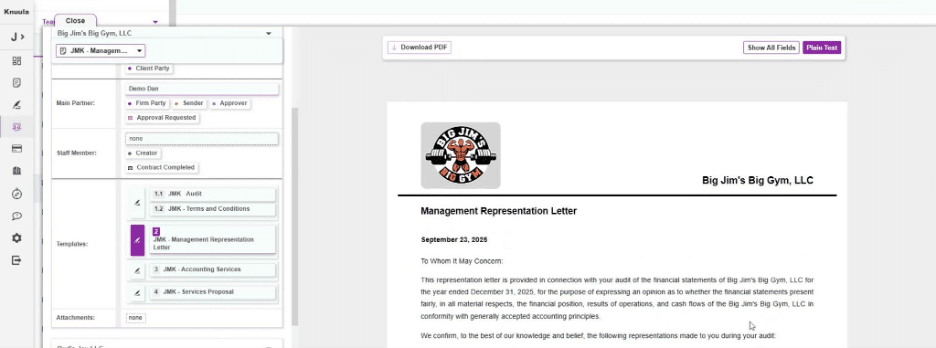
- Document Retention: Provides solid archival tools for retaining executed agreements to satisfy compliance parameters.
| Pros | Cons |
|---|---|
| Exceptionally powerful conditional logic for complex contracts | Lacks deep workflow automation |
| Highly efficient at deploying high-volume bulk mailings before tax season. | Requires manual data transfers to transition a client from signature to service delivery. |
| Clear focus on engagement letters. | Lacks client portals |
Pricing
Available on request
Ratings
N/A
Best For
Solo practitioners and small accounting or tax practices seeking an affordable, straightforward tool to quickly generate and collect e-signatures on standard engagement letters without paying for complex practice management features.
Features to Look for in Accounting Engagement Letter Software
The best engagement letter software for accounting firms does more than make it easier to get a client signature. When evaluating your options, look for features that improve the workflow without adding unnecessary cost or complexity.
The most important capabilities include:
Built-in E-signature
Built-in E-signature enables clients to review and sign an engagement letter without printing, scanning, or switching between multiple tools.
Keeping e-signatures within the engagement workflow also means the firm doesn’t have to export a signed document or manually update its status in another system.
Templates
Engagement letter templates let firms standardize the language and structure they use for recurring services while tailoring the scope, fees, client responsibilities, and other terms to each engagement.
This standardization reduces drafting time, promotes consistency across the firm, and makes it easier to keep engagement language current as services, policies, or requirements change.
Your software should also support separate templates for the services your firm offers. For example, firms performing assurance work can use an audit engagement letter template as the basis for defining the audit’s scope, responsibilities, terms, and deliverables.
Software can standardize how letters are created and distributed, but the underlying language still needs to follow sound engagement letter best practices, including clearly defining the scope, responsibilities, fees, limitations, and termination terms.
Scope and Fee Clarity/Packaged Pricing
The software should make it easy to define what’s included in an engagement, what the client is responsible for, and what they’ll pay for those services. If your firm sells service packages or recurring services, look for a platform that connects those packages and prices to the engagement.
This clarity gives both the firm and the client a reference point for what was agreed before work begins.
Billing and Payments
A platform that connects engagement acceptance with payment authorization, invoicing, or recurring billing eliminates another manual handoff in the client onboarding process.
This feature allows the client to authorize a payment method (such as an ACH account or credit card) when accepting the engagement.
Recurring/Annual Re-engagement Automation
Since accounting firms often work on recurring or annual engagements, your engagement letter software should generate updated engagement terms, adjust dates, and trigger signature requests without manual intervention.
The more of these re-engagement tasks your tool can do, the less the risk of an engagement continuing under outdated terms or relying on someone to remember to send a new letter.
Tracking & Reminders
The best accounting engagement letter software gives your team a centralized view of which engagements have been sent, viewed, signed, declined, or are still awaiting action. Partners and operations teams wouldn’t have to search through individual inboxes or client records to identify outstanding engagements.
Automated reminders will follow up with clients who haven’t completed their engagement to reduce the need for staff members to monitor and chase signatures manually.
Storage and Retrieval for Compliance
Signed engagement letters should be stored securely and remain easy for authorized team members to retrieve when they need to verify scope, fees, service periods, client responsibilities, or other agreed terms.
Look for a centralized system with appropriate encryption, access controls, permissions, and document history. Audit logs provide visibility into when an engagement was sent, viewed, signed, or modified and who performed those actions.
Integration with Your Practice Management
A basic integration may simply transfer the signed document or client data, but a deeper one uses engagement acceptance to initiate onboarding and recurring workflows.
The closer the connection between the signed scope and the firm’s delivery process, the fewer handoffs your team has to manage manually.
This is why workflow management software for accounting firms matters as much as the engagement letter itself. When the signed scope feeds directly into your firm’s task management, nothing gets lost between the agreement and the work.
Dedicated Tool vs. Built Into Your Practice Management
One of the most important factors when choosing engagement letter software is how you want the engagement letters to interact with the rest of your firm’s operations.
Dedicated engagement and top accounting proposal tools such as Ignition usually offer deeper proposals, pricing, payment collection, and e-signature capabilities. As valuable as that is for firms whose biggest priority is improving how they sell services, establish fees, and collect payments, the trade-off is that the signed agreement still needs to be handed off to the platform where the firm manages the client work.
Practice management platforms with built-in proposals and engagement capabilities, such as Financial Cents, take a more connected approach. They provide sufficient capabilities to create and sign engagements while storing the agreement alongside the client record, onboarding process, documents, tasks, and ongoing work. Some specialized proposal or payment features may be less extensive than those found in dedicated platforms, but the firm has fewer systems to integrate and fewer details to transfer manually.
The rule of thumb: If your priority is advanced proposals, pricing, and payment workflows, choose a dedicated tool. If your priority is moving signed scope directly into onboarding and client work, choose an integrated practice management platform.
How to Choose the Right Engagement Letter Software for Your Firm
Engagement letter software that clashes with your daily workflow will only create administrative bottlenecks. To get a tool that aligns with your firm, start by looking at your engagement volume, existing tech stack, and the amount of manual work surrounding engagement letter management.
Match the Software to Your Firm’s Workflow
Small and Solo Firms
For smaller firms, simplicity and cost usually matter more than an extensive feature set. Look for easy-to-use templates, electronic signatures, reminders, basic tracking, and transparent pricing.
If your current process works reasonably well and you only need to eliminate printing, scanning, and manual follow-up, a lightweight e-signature tool may be enough.
Seasonal Tax Practices
For tax firms, the challenge is often volume rather than complexity. Look for reusable engagement templates, the ability to carry forward client information, easy updates to scope and fees, automated reminders, and clear visibility into which clients have and haven’t signed.
The right software should make annual re-engagement easier without turning the process into repetitive manual steps.
Before moving the process into software, make sure the underlying agreement covers the services, responsibilities, deadlines, fees, and terms relevant to tax work. This tax engagement letter template provides a practical starting point that firms can adapt before setting up their reusable software template.
Bookkeeping and CAS Firms
Bookkeeping and CAS firms often need engagement software that can handle recurring services and changing scopes. Prioritize service packages, clear pricing, payment authorization, recurring billing, and an easy way to update agreements when a client adds or removes services.
The closer your engagement workflow is to billing and recurring client work, the easier it will be to keep what you’re delivering aligned with what the client agreed to pay for.
If you’re looking for a starting point, this bookkeeping engagement letter template covers the essential terms most bookkeeping firms need in place before starting recurring work
Growing and Scaling Firms
As firms grow, the major issue is coordination. Look for software that keeps signed agreements connected to client records, onboarding, documents, billing, and ongoing work.
This responsibility often falls to the firm’s administrator or operations manager. Workflow software for accounting admins and ops managers can help them track unsigned engagements, manage the handoff into onboarding, and ensure the agreed scope reaches the team responsible for delivering the work.
Beyond the number of users, the key question to ask is how well a tool reduces the handoffs that become increasingly costly as more people get involved in delivering client work.
Large and Enterprise Firms
Larger firms should pay particular attention to governance and standardization. Look for role-based permissions, approval processes, audit history, multi-party signing, and centralized control over engagement templates.
Template governance is particularly important when multiple teams or offices are sending engagement letters. You want staff to be able to customize client-specific details without accidentally changing approved language.
Minimalist Practices
Not every firm needs a full practice management platform. If you already have systems for proposals, billing, onboarding, and workflow, and your main problem is getting documents signed and stored reliably, a dedicated e-signature tool may be the most suitable choice. There’s no point paying for workflow automation you won’t use.
Look Beyond the Advertised Price
The subscription price is only one part of the cost. Before choosing a platform, consider the total cost of ownership, which includes:
- Subscriptions and seats: User limits, client limits, document allowances, and the cost of moving to a higher tier.
- Signature volume: Some platforms include a set number of signature requests and charge additional fees beyond that allowance.
- Payment processing: If the platform handles ACH or card payments, consider the transaction fees.
- Integrations: Whether the integrations you need are included or require additional subscriptions.
- Setup and implementation: Consider configuration, permissions, training, and migration.
- Template migration: Moving your existing engagement letter library into a new system can take time, especially if you have different templates for different services.
- Parallel tools: If the engagement platform doesn’t replace your existing proposal, billing, client portal, or practice management software, evaluate the cost of maintaining both systems.
On that note, a $45-per-month standalone tool may not be cheaper if it leaves your team maintaining several disconnected systems. Just as an integrated platform of $75 may be cheaper if it replaces multiple manual handoffs.
Test the Workflow Before Committing
Don’t evaluate engagement letter software by simply sending yourself a test document and checking whether the signature works. Test the entire multi-step, multi-staff workflow.
At minimum, walk through:
- Create a prospective client
- Build a proposal or select a service package
- Customize the engagement letter
- Send it for signature
- Test the reminder and follow-up process
- Complete payment authorization or billing setup
- Sign the agreement as the test client
- See what happens after acceptance
- Find the signed agreement as a team member
- Connect the engagement to onboarding, recurring work, or other delivery processes
- Change the scope or pricing and test how the system handles the revised agreement.
Also test the workflow from the perspective of different people on your team. A partner may need to approve an engagement, an operations manager may need to track outstanding signatures, and a preparer or bookkeeper may need to find the signed scope before starting work.
Don’t forget: you’re not just testing whether the software works. You’re testing whether your firm’s process works better because of it.
If the platform combines proposals and engagement letters, test it using a realistic service package rather than placeholder content. An accounting proposal template can give you the scope, pricing, deliverables, and terms needed for a more representative test.
Turn Signed Scope Into Organized Work With Financial Cents
An engagement letter is a promise about work. The more closely your software connects that promise to the work your team actually performs, the easier it becomes to keep scope clear, start work on time, and align billing with what the client agreed to.
The right choice, however, depends on the operational gap you’re trying to close. If you simply need reliable signatures, a dedicated e-signature tool may be enough, especially if your firm already has a mature system for proposals, billing, onboarding, and workflow.
But if your team is constantly moving information from a proposal tool to an engagement-letter tool, then to billing, and finally into practice management, another standalone tool will just create another handoff—and potential point of failure. It’ll make more sense to prioritize software that connects the engagement directly to the work it authorizes.
The second option reflects Financial Cents’ approach. Its Proposals and Engagement Letters features are built into the practice management platform to give small, mid-sized, and growing firms a way to manage the agreement alongside the client work.
You can create branded proposals, present service packages and pricing, include engagement terms, and collect electronic signatures without sending clients to a separate signing platform. Proposals can also connect with billing and payment processes, while automated reminders and status tracking give the team visibility into which proposals and engagements still need attention. Once the client accepts, the signed agreement remains connected to the rest of the engagement.
Financial Cents’ client portal and workflow tools bring client communication, documents, and tasks into the same environment, whilereporting gives firms visibility into how that work is being delivered.
That has enabled Joelle Kindret to automate her firm’s service delivery once a client signs their onboarding form.
If you’re trying to remove the manual steps between winning the client, agreeing to the scope, getting paid, onboarding, and delivering recurring work, an integrated practice management platform like Financial Cents could be the best choice you make. Start a free 14-day trial of Financial Cents today.
Frequently Asked Questions (FAQs)
For recurring or annual engagements, firms often review their letters to make sure the scope, fees, service period, and client responsibilities remain accurate. Engagement software can simplify this process by allowing firms to reuse prior information, update the relevant terms, and send revised agreements for signature.
Software becomes more valuable as the volume and complexity of engagements increase. Features like reusable templates, signature tracking, automated reminders, renewal workflows, payment authorization, and connections to client work can reduce the administrative effort surrounding each agreement.
Don’t compare subscription prices alone. Consider signature or document limits, payment processing fees, integrations, implementation costs, and the other software your firm will still need for proposals, billing, onboarding, and workflow.
Some platforms let clients authorize ACH or card payments as part of the engagement process, while others focus primarily on document signing.